


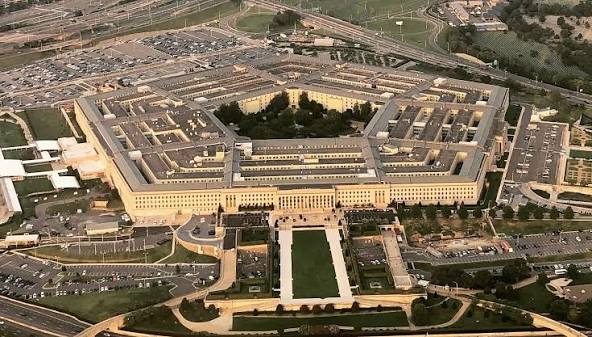
Pentagon Develops 90-Day Self-Sufficiency Standard for Major U.S. Bases
Ninety days is the proposed measure of independence for major U.S. military installations under a developing Pentagon requirement. Fox News Digital reported on Oct. 25 that bases in the continental United States would have to sustain essential operations without outside support for at least that long, covering electricity, water, fuel and communications.
The requirement is part of FORTRESS, short for Federal Operations for Resilience, Troop Resources, Energy, Supply, and Survivability. Defense Secretary Pete Hegseth unveiled the initiative on Sept. 30 with a pledge that every major installation would be able to generate power independently of the civilian grid. A subsequent memo outlined plans for a dedicated program office.
The technical challenge extends well beyond installing more backup generators. A 90-day standard requires planners to define which operations are essential, calculate how their demands change under different conditions and account for dependencies between systems. Electricity supports pumps, water treatment, communications, maintenance equipment and logistics infrastructure. Losing one service can therefore reduce the usefulness of several others.
Microgrids are only one layer
FORTRESS envisions microgrids, large battery systems and portable nuclear reactors. A microgrid combines local generation, storage, controls and electrical loads, allowing a facility to disconnect, or “island,” from the wider utility network during an outage. The Department of Energy’s explanation of microgrid islanding shows why controls and load management matter alongside generating capacity: a base must disconnect safely, restart local resources and prioritize critical buildings without overloading the isolated system.
Batteries can bridge interruptions, stabilize variable generation and provide time to start other power sources. They are not, by themselves, a practical 90-day energy supply for a large installation. Long-duration independence requires sustained generation, stored fuel or another dependable energy source, plus maintenance support and replacement components. Portable reactors could provide continuous generation, but each deployment would still involve siting, safety, security, operating and regulatory requirements.
The Army announced awards of up to $2.2 billion in August to develop nuclear microreactors at five bases, including Fort Bragg and Fort Hood. Those projects provide a starting point rather than a complete solution for hundreds of installations with different missions, utility connections, climates and infrastructure conditions.
Existing resilience goals illustrate the scale of the proposed change. A 2022 systems-engineering study noted that Navy installations generally used seven days of autonomy, while Army and Marine Corps requirements could reach 14 days depending on the mission. Moving to 90 days is not merely a longer version of the same design. Fuel storage, equipment duty cycles, maintenance staffing, water availability and spare-parts inventories all become more consequential as the required operating period grows.
The requirement reaches into supply chains
FORTRESS also calls for reserves of fuel, critical minerals, electronics, spare parts, medical supplies and munitions. For the most critical dependencies, it would require at least two qualified supply or production pathways. A proposed Civil Reserve Manufacturing Network would identify commercial factories that could prepare to shift toward defense production during a crisis.
That approach recognizes that an electrically independent base can still be constrained by a missing pump, control module, filter or other replaceable component. Two qualified sources can reduce dependence on one supplier, but maintaining them may increase procurement and qualification costs. Some components also have limited shelf lives or require controlled storage, making a nominal 90-day inventory more complex than filling warehouses once.
The system boundary will be one of the most important policy decisions. “Essential operations” cannot mean powering every building normally for three months. Installations will need verified load priorities covering life safety, command functions, communications, water, maintenance and personnel support. Research on military microgrids has found that mission demands can change substantially when additional aircraft, ships, vehicles or personnel arrive. A design sized around average daily use may fail when the base is asked to support an unusually demanding mission.
Cost and schedule remain open
The Pentagon has released neither an official cost estimate nor a completion schedule. A senior defense official told Air & Space Forces Magazine that roughly 500 continental U.S. bases were being assessed and that full implementation could take decades. The magazine estimated the expense could reach tens of billions of dollars, if not hundreds of billions.
Those costs would not be distributed evenly. Some installations already have local generation, renewable-energy assets or microgrid controls; others may require major upgrades to electrical distribution, water systems and fuel storage. Private financing and utility partnerships can reduce immediate appropriations for selected energy projects, but investors generally need predictable revenue or savings. Resilience equipment that is valuable mainly during rare, prolonged disruptions can be harder to finance on ordinary operating economics alone.
A credible 90-day standard will therefore need more than a common duration. It will require installation-specific load models, acceptance tests, maintenance plans and recurring exercises demonstrating that critical systems can operate together while isolated. Until the Pentagon defines those verification rules and attaches a funded schedule the 90-day target remains an ambitious systems requirement facing decades of infrastructure work.
| More aerospace and engineering stories, right in your MSN feed. Follow AMI on MSN |
By Thomas Caldwell — AMI’s senior editor for mechanical and mobility engineering, covering vehicle electronics, systems integration, electrification, chassis systems, propulsion, and safety policy.



