


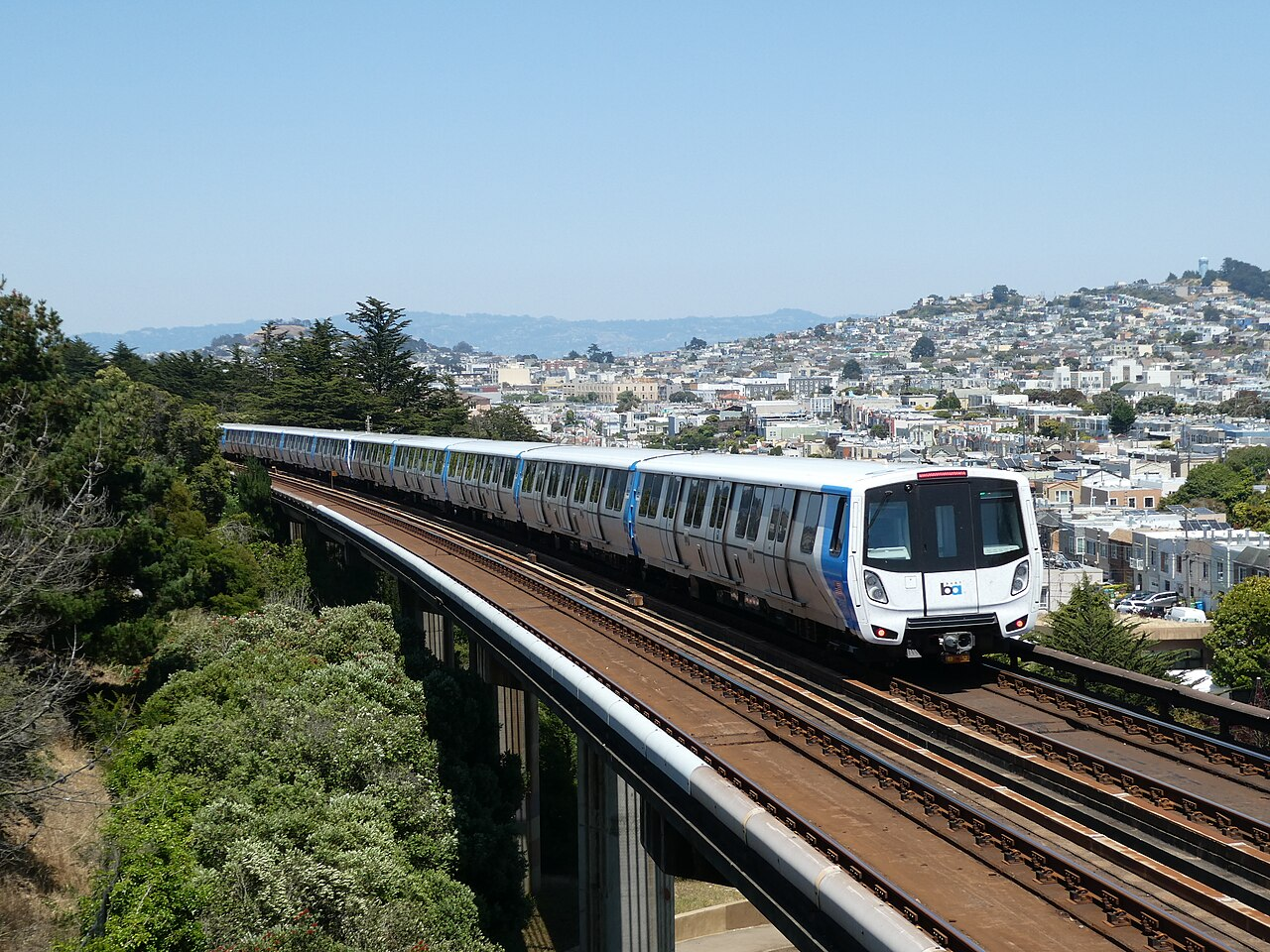
BART Warns of 63% Train-Hour Cut as $980 Million Tax Nears
Bay Area voters face a direct cost-versus-access decision on Nov. 3: approve a 14-year sales-tax increase estimated to raise $980 million annually, or leave Bay Area Rapid Transit confronting a $375 million deficit and a contingency plan that would cut train hours by 63% beginning in January 2027.

Measure RTM would add 0.5 percentage points to the sales-tax rate in Alameda, Contra Costa, San Mateo and Santa Clara counties, and one percentage point in San Francisco. Revenue would support BART, Muni, Caltrain, AC Transit and other transportation services. The tax would apply broadly to taxable purchases, while its proceeds would be distributed differently in each county.
The choice is unusually stark because BART is not proposing a modest timetable adjustment if new funding fails. Its announced plan also includes 30% increases in parking and ride fees, 600 layoffs and continued deferral of employee benefits. Those measures would spread the impact among riders, workers and people who pay to park at stations.
A fare-dependent system lost its former funding balance
BART’s operating model explains why improving ridership has not closed the gap. Before the pandemic, fares and parking fees covered roughly 71% of its budget. In 2026, they account for about 32%. Ridership has risen approximately 14% from a year earlier, according to BART spokesperson Christopher Filippi, but remains around half its pre-pandemic average.
That combination creates a structural capacity problem. Train service carries substantial fixed costs for staffing, control systems, stations, power and infrastructure even when fewer passengers board. Cutting train hours can reduce variable costs, but a 63% reduction would also make the system less useful. Longer waits and narrower operating periods can drive away more paying riders, weakening revenue as service contracts.
The sales tax would change the funding mix by replacing part of the lost fare base with a region-wide consumption tax. That provides more predictable revenue than passenger volume, but it also shifts costs beyond transit users. People who rarely or never board a train or bus would pay the higher rate on covered purchases for 14 years.
Access and tax fairness pull in opposite directions
Opponents, including the Contra Costa Taxpayers Association, argue that a sales tax is regressive because lower-income households generally spend more of their income than affluent households. Association President Marc Joffe has called for agencies to reduce compensation and benefits, reconsider BART’s San Jose expansion or redirect existing transportation funding instead.
Supporters acknowledge the distributional concern but argue that service loss would impose its own unequal costs. Sara Greenwald of 350 Bay Area Action said trains and buses would become less frequent and some bus routes could be canceled without the funding. Her organization estimates an average cost of $8 per month for residents outside San Francisco.
These burdens would not fall on precisely the same groups. The tax would be collected across five counties, while the sharpest consequences of reduced service would land on riders whose work, school or medical trips depend on operating hours and reliable connections. Higher BART charges would add another burden for those who continue riding after service is reduced.
Oversight is built in, but the tax does not end cost scrutiny
BART says it has already eliminated more than 670 vacant positions, frozen strategic hiring and management salaries, and shortened trains to reduce energy consumption. Filippi cited $516 million in operating savings from 2020 through 2025.
A broader independent review found approximately $1 billion in cumulative operating savings since fiscal 2020 across BART, Muni, AC Transit and Caltrain. If voters approve Measure RTM, a second review would examine additional fixed, variable, administrative, operating and capital savings. Operators would have to adopt implementation plans, and the Metropolitan Transportation Commission could withhold measure revenue for noncompliance. An independent committee would also review whether tax receipts were distributed as required.
Those controls address the accountability question without removing the underlying tradeoff. Further efficiencies could reduce costs, but the ballot decision turns on whether they can plausibly bridge a deficit created after BART’s fare-and-parking contribution fell from 71% to 32% of funding.
Voters are therefore deciding more than whether to subsidize the current timetable. They are choosing who should carry the financial risk of maintaining regional transit capacity: consumers paying a higher sales tax across five counties, or riders and employees absorbing fewer train hours, higher charges and job losses starting in January.
| More aerospace and engineering stories, right in your MSN feed. Follow AMI on MSN |
By Thomas Caldwell — AMI’s senior editor for mechanical and mobility engineering, covering vehicle electronics, systems integration, electrification, chassis systems, propulsion, and safety policy.



