Sydney Airport Safety Reports Detail Fatigue Risk as Virgin Crossed Qantas Path
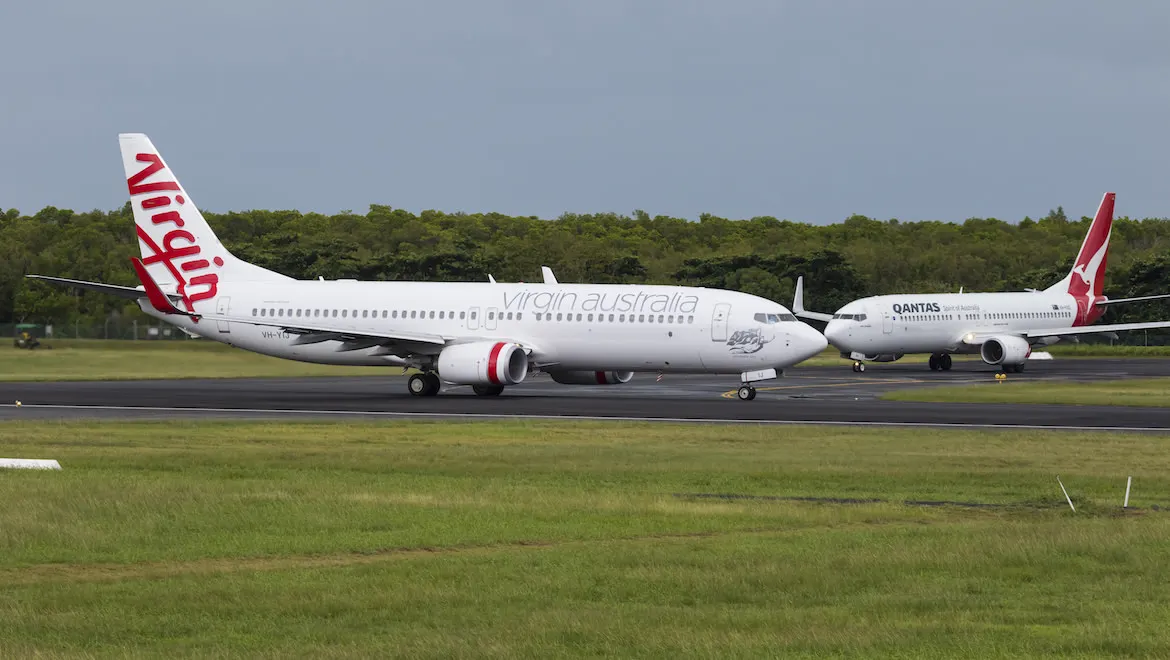
A Virgin Australia jet passed in front of a Qantas aircraft at Sydney Airport while the lone tower controller had a high predicted fatigue level, according to preliminary reports from the Australian Transport Safety Bureau. The Qantas crew recognized the developing conflict and stopped using normal braking. Investigators have made no finding that fatigue caused or contributed to the incident.
The August 17 event tested several safety barriers in quick succession. The controller instructed Virgin Australia flight VA1589 to follow a Qantas aircraft, vacate ahead and hold short of runway 25. The Virgin captain read back only the hold-short instruction, but the missing “follow the Qantas” element was not detected. The crew of Qantas flight QF420 then saw the Virgin Boeing 737 approaching an intersection without appearing likely to give way and stopped before the Virgin aircraft crossed in front.
The readback was an early opportunity to catch the problem
Readback and hear-back procedures form a closed communication loop: a crew repeats an instruction, and the controller checks that the operational meaning has been received correctly. In this case, the Virgin crew repeated one part of a multi-part instruction, while the controller did not identify that another part was absent. The Virgin crew remained unaware that a conflict had occurred until the Qantas crew queried it.
An incomplete readback is important because it represents a recoverable error rather than an inevitable path to conflict. Detecting the omission would have allowed the instruction to be clarified before aircraft position and movement became the primary defenses. Once that opportunity passed, the system depended more heavily on surveillance, direct observation and the crews’ awareness of nearby traffic.
The tower controller’s ability to monitor the intersection may also have been constrained. The controller told investigators that equipment inside the tower cab restricted the view of that part of the taxiway. The preliminary report records that limitation but does not establish whether it affected the controller’s actions. It nevertheless gives investigators a specific systems-integration question: whether the combination of physical sight lines and available controller displays provided adequate awareness when radio communication did not produce a complete shared understanding.
Predicted fatigue is a risk measure, not a diagnosis
The controller had been rostered to finish at 8:50 p.m. the previous evening and restart at 5:30 a.m. They were alone in the tower and recorded as having a high predicted fatigue level. The controller described their mental state as “fine and alert” and said they were fit for duty.
Those facts address different parts of fatigue management. A roster model estimates risk from factors such as work and rest timing; it does not determine an individual’s actual condition or explain a particular performance lapse. The ATSB’s final analysis will need to consider whether the predicted risk was being controlled effectively, rather than treating the model’s output as proof of impairment.
The preliminary report also states that Airservices Australia did not have a fatigue-management system approved by the Civil Aviation Safety Authority. Airservices said it would “review the findings once these investigations are complete.” The controller was removed from duty for the remainder of August 17, but no permanent operational or regulatory change has been announced in connection with the event.
A second conflict highlights airport geometry and detection
Another incident on August 25 shifts the investigation from radio readback toward the design and supervision of ground movements. A controller cleared Jetstar flight JST745, an Airbus A320, to push back from bay 59 onto a taxiway. About 30 seconds later, QantasLink flight QLK427D, a Dash 8, was cleared to travel along the same taxiway past that bay.
The Dash 8 crew saw the A320 moving backward and stopped about 100 metres from the bay. The Jetstar pushback driver and dispatcher also recognized the conflict, stopped the movement and warned the flight crew. The A320 was subsequently towed back onto its bay so the Dash 8 could pass behind it.
Three controllers told investigators that pushbacks from some gates were prone to conflicts because aircraft moved directly onto an active taxiway rather than remaining within an apron area. A tower shift manager and supervising instructor described the area as a possible “black spot” where aircraft were not always detected. That combination of geometry and imperfect awareness can reduce the time available to resolve conflicting clearances, although the ATSB has not yet assigned a causal role to either factor.
The two reports are part of six ATSB investigations into Sydney Airport close calls. Staffing and rostering are recurring lines of inquiry, but investigators have not determined whether staffing contributed to the events or was an underlying condition being managed effectively. In both incidents, the final observable defense worked: flight crews or ground personnel detected the conflict and stopped. The final reports must explain why those last-line interventions became necessary after earlier opportunities to maintain separation had weakened.
| More aerospace and engineering stories, right in your MSN feed. Follow AMI on MSN |
By Thomas Caldwell — AMI’s senior editor for mechanical and mobility engineering, covering vehicle electronics, systems integration, electrification, chassis systems, propulsion, and safety policy.