


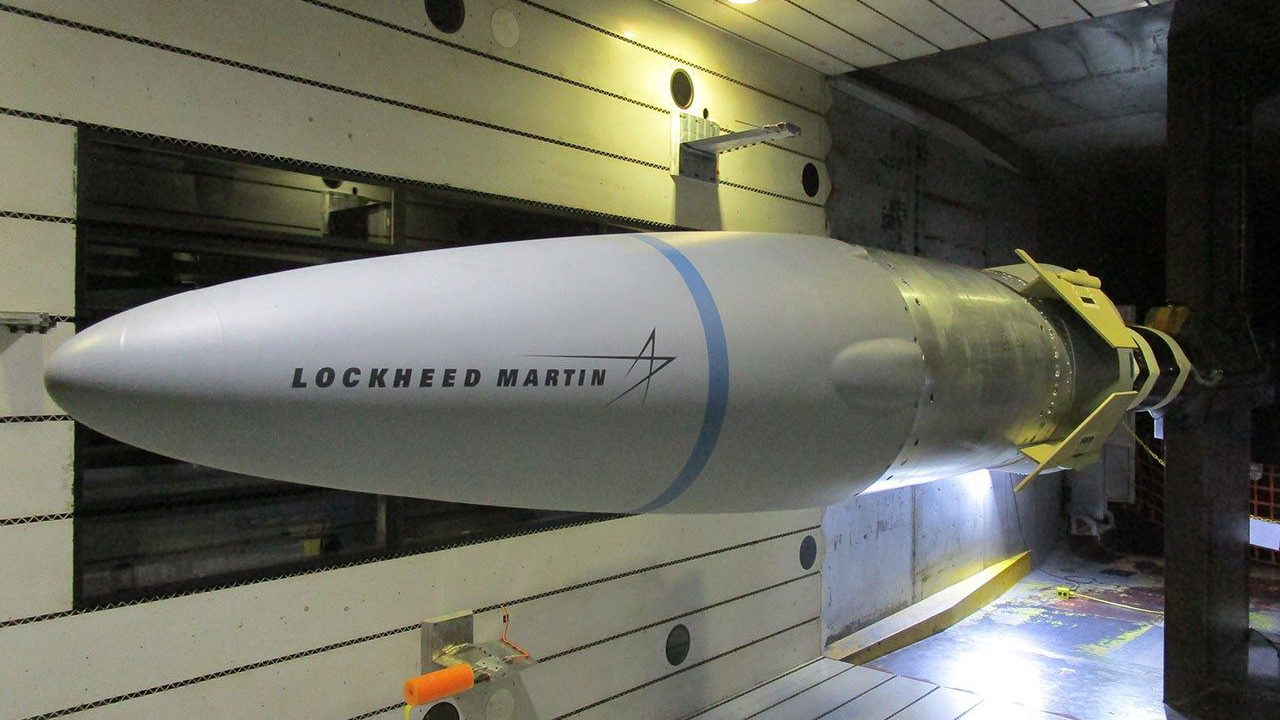
Air Force Awards Lockheed $694 Million for Missiles but Withholds Order Size
A hypersonic missile program once threatened by failed tests and purchasing uncertainty now has a $694 million production contract. Yet the Air Force’s award to Lockheed Martin leaves taxpayers without two basic measures of what that commitment will provide: the number of missiles ordered and the delivery schedule.
The contract moves the AGM-183A Air-Launched Rapid Response Weapon, known as ARRW, from prototyping and flight testing into production and fielding. Awarded September 29, 2026, it was announced by the Air Force on October 26 and confirmed by Lockheed Martin the following day. The service said quantities and delivery dates will remain undisclosed for operational-security reasons.
That makes the award both a firm change in program status and an incomplete public accounting of the purchase. The Air Force has committed $694 million to produce a weapon that the public cannot count, while the lack of delivery dates makes it impossible to determine from the announcement when operational units may receive it.
From technical setbacks to production
ARRW development began in 2018 under an initial Lockheed Martin design contract worth up to $480 million. The Air Force originally targeted operational capability in 2022, but a launch attempt failed in April 2021 and additional unsuccessful tests followed. The program recorded a successful flight test in May 2022, although its procurement path remained uncertain.
In March 2023, Air Force acquisition officials indicated that missile purchases would not proceed at that stage. Interest returned in 2025, and the fiscal 2026 budget included procurement funding. The new contract therefore represents a substantial reversal: after years of technical setbacks and funding uncertainty, ARRW has crossed into production.
Air Force Secretary Troy Meink called the decision a “turning point” in the service’s advanced-weapons roadmap. Production authorization, however, is not the same as field availability. Manufacturing output, deliveries, aircraft integration, training and maintenance preparation will determine when the weapon can move from a contract award to operational units.
The B-52 is the first launch aircraft
ARRW is a boost-glide weapon designed to exceed Mach 5. A solid-fuel rocket booster accelerates the weapon before releasing a maneuvering hypersonic glide vehicle. The Air Force describes it as a standoff system intended for high-value, time-sensitive targets, allowing the launch aircraft to release it from a distance.
The B-52 Stratofortress is the initial planned launch platform. The large bomber has already supported ARRW testing and can carry the sizable weapon externally. ARRW has reportedly also been tested on the B-1 bomber, but the Air Force has not announced an operational deployment on that aircraft. For now, the B-1’s test involvement should not be read as a completed fielding decision.
The aircraft connection is a central part of the production challenge. Delivering missiles alone will not establish an operational capability; the service must also complete the applicable integration work and prepare aircrews and maintainers. Those efforts can proceed alongside manufacturing, but the undisclosed schedule prevents a public assessment of whether the two tracks will converge quickly.
Lockheed is expanding production space
Lockheed Martin is adding 47,000 square feet to Building P-20 at its Troy, Alabama, facility. The company says the project will triple its existing ARRW manufacturing capacity and generate new U.S. jobs over four years. It invested $67 million in expansion work and equipment before receiving government funding.
The factory investment indicates that Lockheed was preparing for production before the contract became public. It does not reveal how many completed weapons the Air Force bought, because a production award can include costs beyond individual missiles, including work needed to establish and support manufacturing capacity.
More spending is possible but not final. The Air Force’s fiscal 2027 budget request includes another $452 million for ARRW production, subject to congressional approval. That request points toward continued procurement, while the current contract remains the confirmed commitment.
ARRW has cleared a threshold that appeared doubtful three years ago, but the next meaningful milestones remain hidden from public view. Until the Air Force releases a quantity or delivery information, the clearest figures are the $694 million award and Lockheed Martin’s larger factory not how many missiles taxpayers will receive or when the first operational units will get them.
| More aerospace and engineering stories, right in your MSN feed. Follow AMI on MSN |
By David Whitaker — Associate editor for AMI’s aerospace and drone systems desk, translating flight systems, aircraft programs, spaceflight, and UAV developments into accessible technical stories.



