


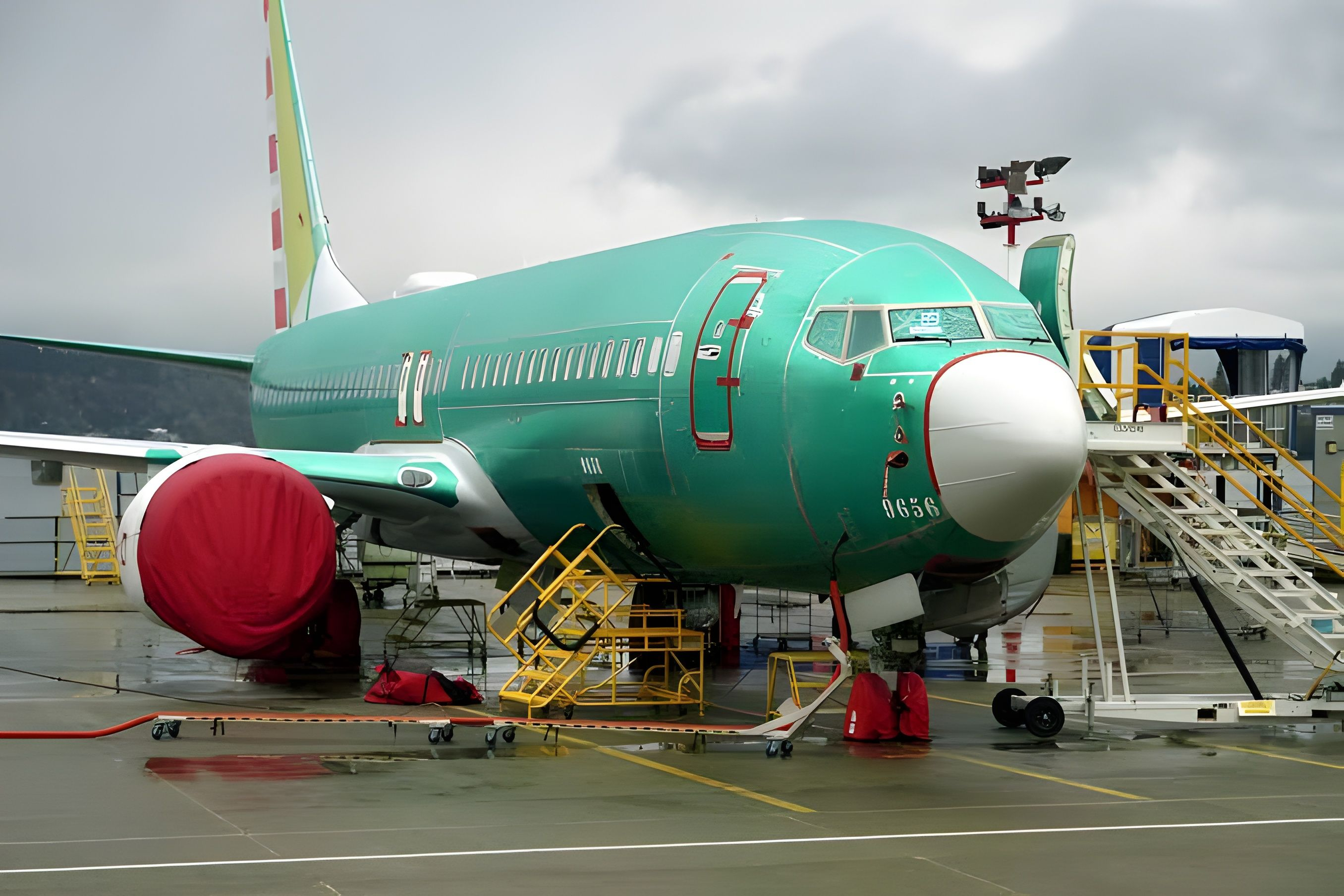
Boeing Will Miss 500-Jet 737 MAX Goal as Wing Output Lags
Boeing’s final-assembly performance is improving, but the company still cannot build 737 MAX wings quickly enough to meet its goal of delivering around 500 of the jets in 2026. Chief Executive Kelly Ortberg identified wing production as the program’s most significant manufacturing constraint on October 27, confirming that Boeing will fall short of the annual objective.
The numerical gap is substantial. Boeing’s third-quarter delivery figures show 124 aircraft from the 737 program, bringing the nine-month total to 367. Reaching 500 would require another 133 deliveries in the fourth quarter, or roughly 44 per month. Boeing averaged just over 41 per month during the third quarter.
That shortfall illustrates a basic constraint in high-rate aircraft manufacturing: improving work near the end of an assembly line cannot compensate indefinitely for insufficient output near its beginning. Boeing builds all 737 MAX wings in Renton, Washington, and wings are among the first major components assembled. If that operation cannot consistently support the planned pace, fewer aircraft can flow through the rest of the production system.
Boeing has reduced final-assembly rework by 40% since the beginning of 2025, indicating that aircraft are moving through later manufacturing stages with less corrective work. Deliveries are also ahead of last year: the company handed over 367 737s in the first nine months of 2026, compared with 330 during the equivalent period in 2025. Third-quarter deliveries increased from 121 to 124.
Those improvements have not yet raised the system’s sustainable rate to 47 aircraft per month. Boeing previously expected to stabilize at that level by summer 2026, but Ortberg now says the process will take until early 2027. Some of those flow enablers just flat out did not yield the flow savings, he said, describing planned factory improvements that produced less time reduction than anticipated.
Why the wing constraint controls the wider factory
A production rate is sustainable only when connected operations can repeatedly support it without an accumulation of unfinished work, rework or quality problems. A faster final-assembly station may improve one section’s performance, but the overall line remains governed by the operation with the least dependable capacity. In the 737 MAX system, Boeing says that operation is currently wing production.
The company is adding measures and capacity where earlier improvements fell short, while holding its planned rate at 47 aircraft per month until it can demonstrate that the pace is sustainable and produces safe, high-quality aircraft. That approach trades near-term volume for greater process stability rather than treating a monthly target as sufficient evidence that the wider system is ready.
The constraint has also changed Boeing’s next capacity milestone. The planned increase from 47 to 52 aircraft per month has moved from the first half of 2027 to the second half. Ortberg has said he ultimately wants output to reach 63 per month, but the immediate challenge is making the lower rate repeatable.
For context, Boeing had been preparing to increase monthly production from 52 to 57 aircraft before the 737 MAX grounding in March 2019. Its current schedule therefore places the program’s next major increase below the rate Boeing was approaching more than seven years earlier.
A new line cannot immediately remove the bottleneck
Boeing’s new North Line in Everett, Washington, is intended initially to add five aircraft per month to Renton’s planned rate of 47. The facility opened in July, and the first MAX 10 rolled out on October 26. Seven more aircraft were moving through the line at the time of that milestone.
However, the Everett line still requires Federal Aviation Administration production certification before aircraft built there can be delivered. That approval is separate from certification of the MAX 10 model itself. Boeing has been operating at a low rate for at least the first 10 aircraft so that each production station can be checked as the line begins operating.
The Everett expansion adds final-assembly capacity, but it does not eliminate the need for sufficient wing flow from Renton. Boeing must first stabilize at 47 aircraft per month in early 2027; only then does it expect to move toward 52 in the second half of the year. Until wing output can reliably feed both locations, the new floor space cannot by itself deliver the higher systemwide rate.
| More aerospace and engineering stories, right in your MSN feed. Follow AMI on MSN |
By Thomas Caldwell — AMI’s senior editor for mechanical and mobility engineering, covering vehicle electronics, systems integration, electrification, chassis systems, propulsion, and safety policy.



