Boeing Still Awaits Major 777-9 Test Approvals Despite 2027 Delivery Target
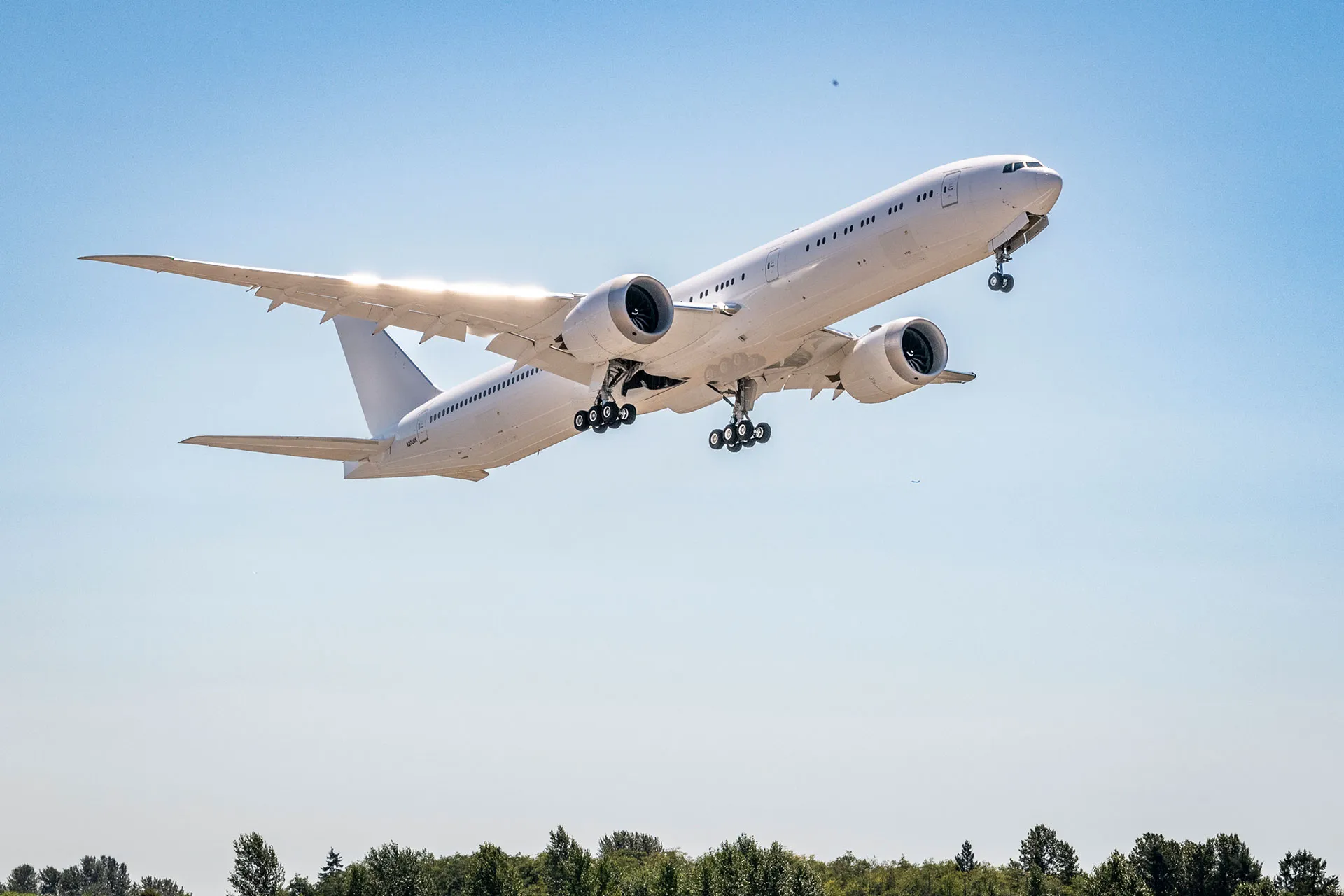
Boeing still lacks Federal Aviation Administration approval for major portions of the 777-9 flight-test campaign, even as the manufacturer continues to target the widebody jet’s first delivery in 2027. Boeing CEO Kelly Ortberg said on October 27 that the remaining work includes extended-range twin-engine operations testing, while the company’s third-quarter update maintained that the program is on track for delivery next year.
The tension is in the sequence. Boeing has received what Ortberg called some incremental authorisations for additional flight testing from the FAA, but it has not secured permission to begin the balance of the program. “We still have these big flight tests yet ahead of us,” he said during the earnings call.
That leaves Boeing defending a delivery target while two linked approvals remain unfinished: authorization to conduct the final major tests and FAA acceptance of a redesigned seal inside the aircraft’s GE Aerospace GE9X engines. Boeing said in an October 27 securities filing that it expects approval for the final flight-test phases before year-end.
A small engine component has become a certification gate
The GE9X issue centers on its mid-seal, which proved less durable than expected. GE Aerospace redesigned the component and is seeking FAA approval for the change before the end of 2026. The company has been delivering engines equipped with the upgraded seal to Boeing since August, reflecting its confidence in the redesign, but production installation and regulatory approval are separate milestones.
An FAA official said on October 20 that the agency will not issue the 777-9 type certificate until the redesigned mid-seal is certified. FAA Administrator Bryan Bedford also connected the component directly to the test campaign: “Flight testing and especially ETOPS isn’t going to get where it needs to be without resolving the seal issue.”
ETOPS, short for extended-range twin-engine operations, is the approval framework that allows a twin-engine airliner to operate on routes that can take it far from a suitable diversion airport. For a long-range widebody, this is not a peripheral capability. It affects the kinds of intercontinental routes airlines can schedule and requires evidence that the aircraft and its systems meet the applicable operational standards.
The seal therefore sits on the critical path in two ways. Its redesign requires approval as part of the engine installation, and the unresolved issue limits how far the extended-range test effort can progress. Boeing declined to elaborate on the seal’s effect on flight testing, and Ortberg did not address the component during the October 27 earnings call.
Production is continuing ahead of the remaining tests
Boeing is building approximately one 777-9 per month and expects to hold that rate through most of 2027. Chief financial officer Jay Malave said the company plans to deliver 10 to 15 aircraft in 2027. That schedule can coexist with unfinished testing because aircraft can move through production before certification, but they cannot enter customer service until the required approvals are secured and individual delivery conditions are met.
This approach preserves manufacturing continuity, yet it also increases the importance of configuration control. Aircraft assembled before certification may need to incorporate the final approved hardware and any other changes resulting from testing. The evidence does not establish what modifications, if any, the already-produced 777-9s will require, but the production count will continue growing while the certification sequence remains open.
Boeing’s financial planning assumes certification by mid-2027, although Ortberg said the company is pushing for an earlier approval. That provides some schedule room between the company’s hoped-for certification timing and its stated delivery year, but the margin depends first on the FAA authorizing the remaining tests and approving GE’s seal redesign.
The immediate milestone is now year-end 2026. Both Boeing’s expected authorization for the final test phases and GE Aerospace’s target for approval of the redesigned mid-seal converge on that window. Until those decisions arrive, the 777-9’s 2027 delivery plan remains intact on paper while its largest remaining flight tests are still waiting for permission to proceed.
| More aerospace and engineering stories, right in your MSN feed. Follow AMI on MSN |
By David Whitaker — Associate editor for AMI’s aerospace and drone systems desk, translating flight systems, aircraft programs, spaceflight, and UAV developments into accessible technical stories.