


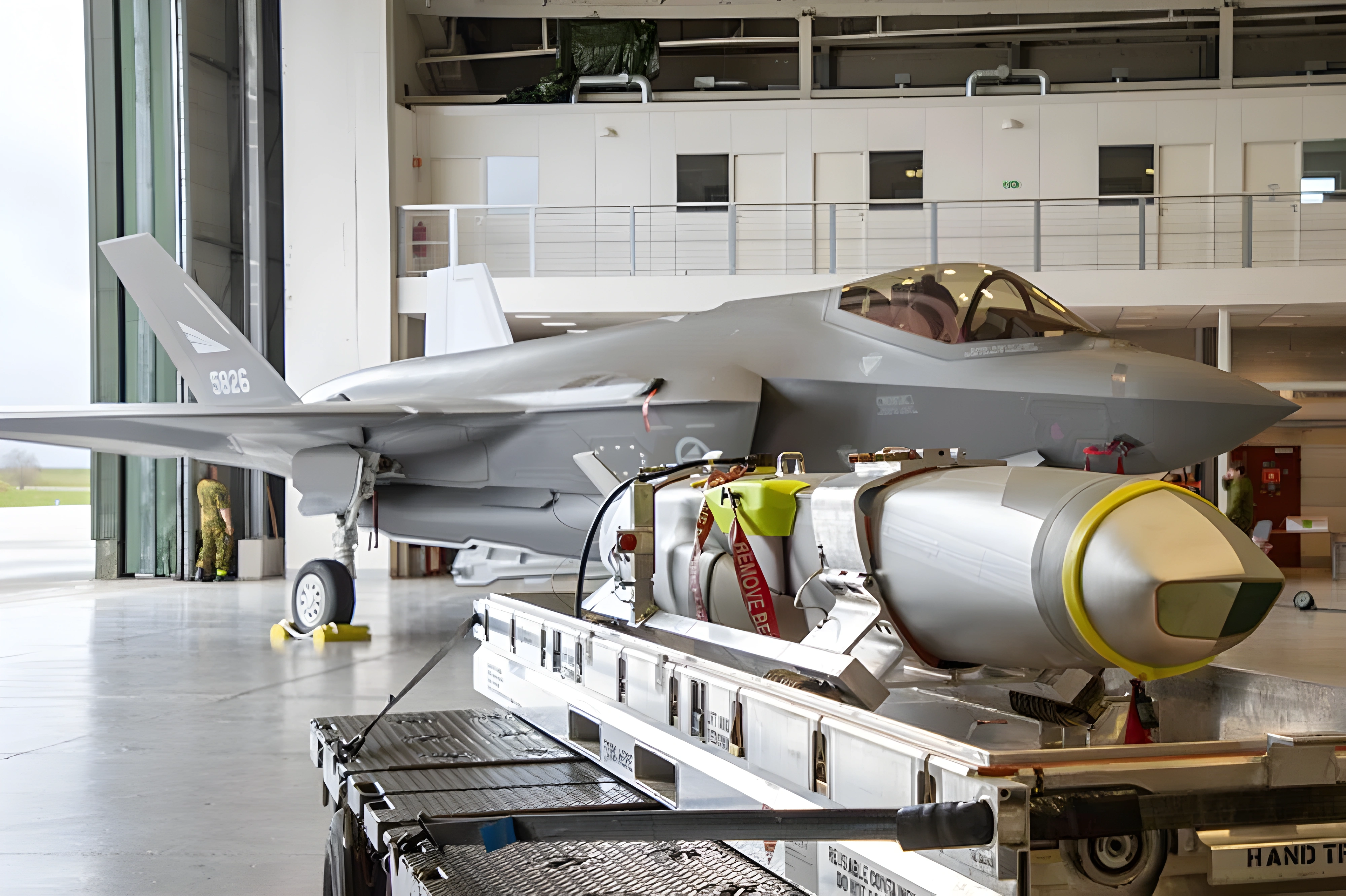
Denmark Orders First Long-Range Missiles, Including F-35 Weapon, Price Undisclosed
Denmark has committed to buying its first long-range precision missiles, including a weapon for its F-35 fighters, without disclosing the price, order quantity or delivery schedule. The decision establishes a new direction for Danish defense, but the missing contract details make it impossible to judge the program’s scale, affordability or near-term effect on military readiness.
The acquisition announced on October 22 covers two systems with different launch platforms. Norway’s Kongsberg will supply Joint Strike Missiles for Denmark’s F-35 fleet, while U.S. defense company Covenant will provide the ground-launched Anthem missile, which is to be produced in Germany. Danish Defence Minister Jeppe Bruus said the weapons would strengthen national capabilities and provide an ability to strike back if Denmark were attacked.
The procurement is tied to a Danish commitment to provide NATO with a long-range strike capability by 2030, according to the defense ministry, as reported by Defense News. That target gives the program a strategic deadline, but it does not establish when Denmark will receive the weapons or when trained units and compatible launch platforms will be ready to employ them.
A purchase decision is only the beginning
For the F-35 force, selecting the Joint Strike Missile connects the new capability to an aircraft Denmark already operates. The missile can be carried internally by the F-35A, preserving the aircraft’s low-observable configuration rather than requiring an externally mounted weapon. That is the clearest platform-level benefit in the package: Denmark is pairing a long-range air-launched weapon with the design features of its newest combat aircraft.
Actual availability will depend on more than missile delivery. Aircraft compatibility, software configuration, weapons testing, technical documentation, aircrew preparation, ground handling and maintenance support all have to align before an operational unit can field a new munition. No dates have been released for those steps, so the order represents movement toward a capability rather than confirmation that one is ready today.
The Anthem introduces a separate ground-launched component and a different support chain. Covenant unveiled the system only recently, and the company has said production at its Leipzig facility could begin in early 2027. That factory plan provides useful industrial context, but Denmark has not published a delivery position, acceptance schedule or unit count. A production start at the supplier does not identify when a particular customer will receive deployable equipment.
Quantity determines what the capability means
The undisclosed missile count is especially important. A small initial purchase could support evaluation, training and limited operational introduction. A larger order could sustain more extensive training and provide a deeper inventory, but it would also create greater storage, maintenance and budget requirements. Without quantities, the public cannot tell whether Denmark is funding an introductory capability or a substantial standing force.
Price disclosure is similarly necessary for assessing the tradeoff imposed on taxpayers and the rest of the defense budget. Missile procurement typically extends beyond the rounds themselves to include launch equipment, integration work, training material, support gear, spares and long-term sustainment. None of those cost elements has been made public for Denmark’s package. Kongsberg has said negotiations with the customer will determine the scope and value of its portion.
Some performance information may remain restricted for legitimate security reasons, but total program cost, approximate acquisition scale and delivery windows are basic oversight measures. They allow lawmakers and taxpayers to compare the promised capability with the resources committed and to track whether the 2030 alliance target remains achievable. Research into European defense procurement oversight has also found that access to information alone is insufficient when legislators lack the technical expertise needed to interpret complex acquisition programs.
Russia condemned the decision, but that diplomatic response does not change the program’s current status. Denmark has approved a consequential expansion of its defense portfolio; it has not yet publicly established how large that expansion will be or when it will reach operational units. The next meaningful milestone will be disclosure of contract values, quantities and delivery plans figures needed to turn a strategic commitment into a measurable procurement program.
| More aerospace and engineering stories, right in your MSN feed. Follow AMI on MSN |
By David Whitaker — Associate editor for AMI’s aerospace and drone systems desk, translating flight systems, aircraft programs, spaceflight, and UAV developments into accessible technical stories.



