


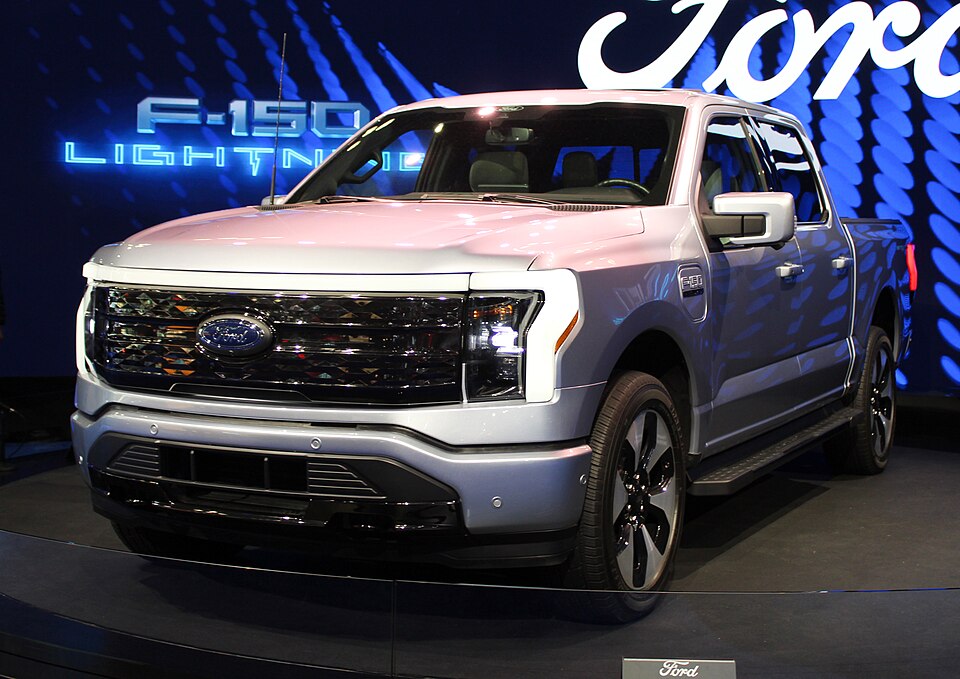
F-150 Lightning Tows 9,900-Pound RV Smoothly at 0.8 Miles per Kilowatt-Hour
A former Ford F-250 diesel owner says his 2025 Ford F-150 Lightning Flash felt smoother and more stable while towing a 36-foot travel trailer weighing approximately 9,800 to 9,900 pounds fully loaded. The favorable handling came with a major operating constraint: The combination averaged only 0.8 miles per kilowatt-hour.

The owner, identified as Rob, moved from the heavy-duty diesel to a Lightning equipped with an Extended-Range battery. From an F-250 to F-150, I’m 100% happy with the change. I wouldn’t go back, he said. His experience is one driver’s comparison rather than proof that the electric half-ton will tow better than an F-250 in every configuration or condition.
Low battery mass can help the truck feel planted
The comparison illustrates how two trucks from different weight classes can deliver very different sensations at the hitch. An F-250 is built to provide greater payload capacity and more operating margin for heavy trailers. The Lightning, however, carries substantial battery mass low within its structure, contributing to the planted feel reported during this trip.
That mass and its low placement can reduce the top-heavy sensation a driver might expect from a half-ton pickup pulling a tall recreational vehicle. In a separate test, TFLtruck found that a heavily loaded Lightning remained stable and comfortable while towing a 9,600-pound trailer. The publication connected that behavior to the truck’s chassis setup and near-even weight distribution.
Electric motors also provide smooth power without transmission shifts interrupting acceleration. Those characteristics help explain Rob’s subjective impression that he could barely feel the trailer behind the truck. They do not increase the truck’s certified payload, axle or towing limits.
A 9,900-pound trailer leaves little rated towing margin
A properly equipped Lightning with the Max Trailer Tow Package can carry a maximum tow rating of up to 10,000 pounds. Rob’s fully loaded trailer therefore operated close to that ceiling. The rating applies only to qualifying configurations, so the truck’s specific equipment and door-label capacities remain essential.
Tow rating is also only one part of the loading calculation. A trailer around this weight can place at least 1,000 pounds of tongue weight on the hitch. Passengers, cargo, accessories and hitch hardware consume more of the truck’s available payload, while the load transferred through the hitch affects axle loading. An appropriate weight-distribution-hitch setup is another important part of keeping the combination within its limits.
This is where the F-250 retains a clear engineering advantage. Its greater payload margin provides more flexibility for tongue weight, occupants and equipment. A stable-feeling combination can still exceed a payload or Gross Axle Weight Rating, so perceived composure cannot replace measured weights and the ratings assigned to the individual truck.
Trailer shape can matter as much as the scale reading
The reported 0.8-mile per kilowatt-hour result also shows why trailer weight alone does not predict electric towing range. For comparison, the test host reported 0.9 miles per kilowatt-hour in high winds while pulling a 36-foot Cherokee Grey Wolf 29TE weighing about 7,500 pounds.
Rob’s trailer was approximately 2,400 pounds heavier, but it was also about one foot taller. The host considered that additional height and the resulting increase in frontal area the more important disadvantage for highway efficiency. Added mass raises the energy needed to accelerate and climb grades, while aerodynamic drag imposes a continuing penalty at speed. A tall, broad trailer keeps pushing more air aside mile after mile.
This pattern is consistent with earlier independent testing. A MotorTrend towing evaluation found that a Lightning Platinum pulling a camper near that truck’s 8,500-pound limit could not cover 100 miles in its highway test. Lighter trailers improved the result, but trailer size and drag prevented range from rising in direct proportion to the reduction in weight.
Observed consumption becomes the useful range estimate
During Rob’s trip, the Lightning’s dashboard displayed a predicted 132 miles of remaining range. The drivers instead multiplied the battery energy remaining by their observed 0.8-mile per kilowatt-hour consumption and concluded that the automated estimate was too optimistic for the trailer. That manual calculation better reflected the combination’s current aerodynamic load.
Pull-through charging bays allowed the 36-foot rigs to recharge without being uncoupled. Permitted 30-amp and 50-amp campground hookups also supported overnight charging, although drivers need to confirm each campground’s electric-vehicle policy before connecting to an RV pedestal.
The diesel F-250 remains the stronger long-distance tool in this comparison, with cited towing intervals of 300 to 400 miles and fuel stops lasting about five minutes. The Lightning delivered the smooth, planted towing experience Rob preferred, but its 0.8-mile per kilowatt-hour consumption made accurate range calculations, suitable charging locations and overnight access integral parts of moving a nearly 10,000-pound RV.
| More aerospace and engineering stories, right in your MSN feed. Follow AMI on MSN |
By Thomas Caldwell — AMI’s senior editor for mechanical and mobility engineering, covering vehicle electronics, systems integration, electrification, chassis systems, propulsion, and safety policy.




