Switzerland Plans 30 F-35As and Seeks 394 Million More Francs
Switzerland is preparing to pay more for fewer Lockheed Martin F-35As. Bern plans to seek an additional 394 million Swiss francs while targeting roughly 30 fighters, down from the 36-aircraft package presented to voters for approximately 6.035 billion francs. The final fleet size remains unsettled, but retaining all 36 would reportedly require another 1.1 billion francs.

The central tension is contractual as much as technical. The purchase was presented as a fixed-price package, but the Swiss National Council’s management committee concluded in September that Switzerland had not secured a binding fixed price from the United States. The government has since accepted six of the oversight body’s seven recommendations and announced improvements to procurement transparency, risk management and legal staffing, according to a published account of its response.
Why fewer aircraft changes more than the purchase price
Cutting approximately six aircraft would reduce the planned fleet by one-sixth. That does not translate directly into a one-sixth reduction in day-to-day capability, because fleet output depends on maintenance demands, training schedules, personnel and how many aircraft must be held ready. It does, however, leave less depth for absorbing those routine constraints.
Aircraft assigned to training or undergoing scheduled and unscheduled maintenance cannot simultaneously cover operational duties. A 30-aircraft fleet therefore has a smaller numerical cushion than a 36-aircraft fleet when several jets are unavailable. Critics have focused on what that could mean for air policing and readiness, although the available figures do not settle whether 30 aircraft would be sufficient for Switzerland’s requirements.
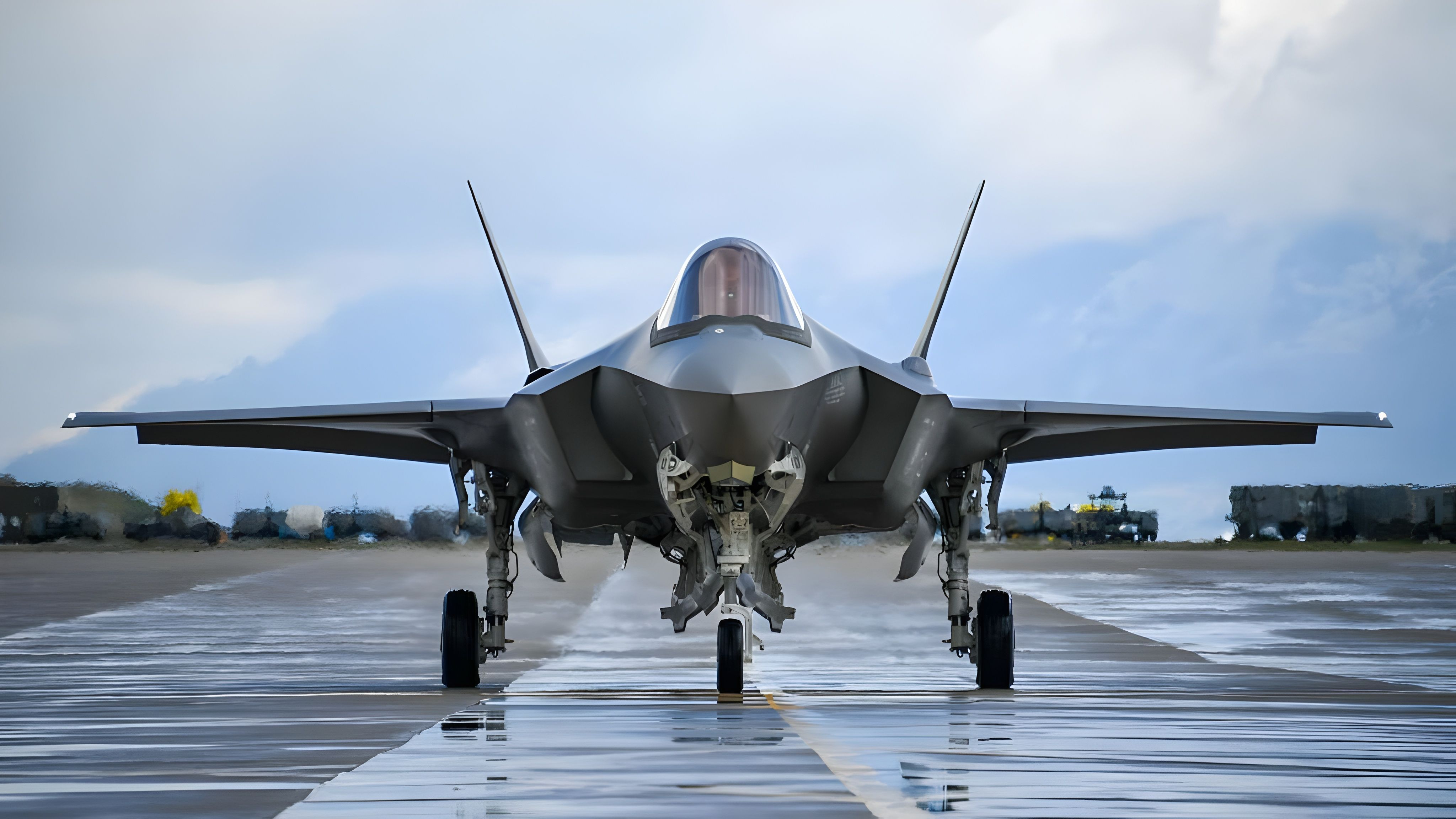
The counterargument rests on capability per aircraft. The F-35A combines low-observable design with newer sensors and networked operations, and supporters contend that 30 of the new fighters would provide more capability than the mixed force they replace. Switzerland currently plans to retire its F-5E/F Tiger II fighters and eventually its F/A-18C/D Hornets.
That comparison is valid within limits. Better sensing, information sharing and survivability can allow a newer aircraft to perform tasks differently from an older one, but technology does not make fleet size irrelevant. One aircraft cannot occupy two places at once, and advanced onboard systems do not remove maintenance or training requirements. Switzerland is effectively weighing greater capability in each aircraft against fewer aircraft available across the fleet.
The sales structure limited Switzerland’s leverage
Switzerland is buying the aircraft through the U.S. Foreign Military Sales system rather than negotiating a conventional direct commercial purchase with Lockheed Martin. Under that system, the U.S. government uses the Defense Department’s acquisition process to procure equipment and services for an international customer.
The structure offers administrative support and can lower unit costs by combining purchases, but it gives the customer less direct involvement in contractor negotiations than a direct commercial sale. The U.S. Defense Security Cooperation Agency also notes that major Foreign Military Sales packages commonly include training, spare parts and initial support, making simple aircraft-price comparisons incomplete. Its Foreign Military Sales overview explains that package-based approach and the different roles of the buyer and U.S. government.
For Swiss taxpayers and voters, the accountability issue is more immediate: the stated ceiling helped define public approval, yet the revised plan combines extra funding with fewer aircraft. Inflation, raw-material costs and supply-chain complications affected the price, but the parliamentary finding shifts attention toward how contractual risk was communicated and managed. The government’s planned procurement reforms address that institutional problem even if they cannot restore the original economics of this purchase.
Production is moving while the number remains open
Switzerland selected the F-35A in 2021 after evaluating it against the Eurofighter Typhoon, Dassault Rafale and Boeing Super Hornet. Its evaluation rated the F-35A as the strongest overall capability and the lowest-cost option over 30 years. The subsequent price dispute does not reverse that selection, and no alternative aircraft is under consideration.
The program has also moved beyond a paper commitment. The first Swiss F-35A has entered main assembly, training in the United States is planned, and the initial aircraft are expected in Switzerland in 2028. Procurement is advancing even as Bern determines how many fighters the revised budget will actually buy.
That leaves Switzerland with a concrete trade: spend 394 million francs more and accept a fleet of roughly 30, or find substantially more money to preserve the original 36-aircraft plan. The F-35A’s technology can raise capability per jet, but it cannot replace the availability margin represented by the six aircraft now at risk.
| More aerospace and engineering stories, right in your MSN feed. Follow AMI on MSN |
By David Whitaker — Associate editor for AMI’s aerospace and drone systems desk, translating flight systems, aircraft programs, spaceflight, and UAV developments into accessible technical stories.