


Verizon Says Starlink Mobile Needs $500 Billion; Musk Says Three Years
Starlink Mobile’s proposed transformation into a full U.S. wireless carrier has produced two sharply different estimates. Verizon CEO Dan Schulman says SpaceX could need $300 billion to $500 billion and at least four to six years. Elon Musk responded on October 26 that the buildout “will take 2 or 3 years.”
The disagreement is fundamentally about infrastructure. Starlink’s satellites can extend service where conventional networks are unavailable, but Schulman argues that competing for mainstream urban and suburban customers would require SpaceX to construct a large terrestrial network as well. SpaceX has not publicly priced that ground buildout, so the $300 billion-to-$500 billion range is Verizon’s estimate rather than a SpaceX forecast.
Satellites do not eliminate the ground network
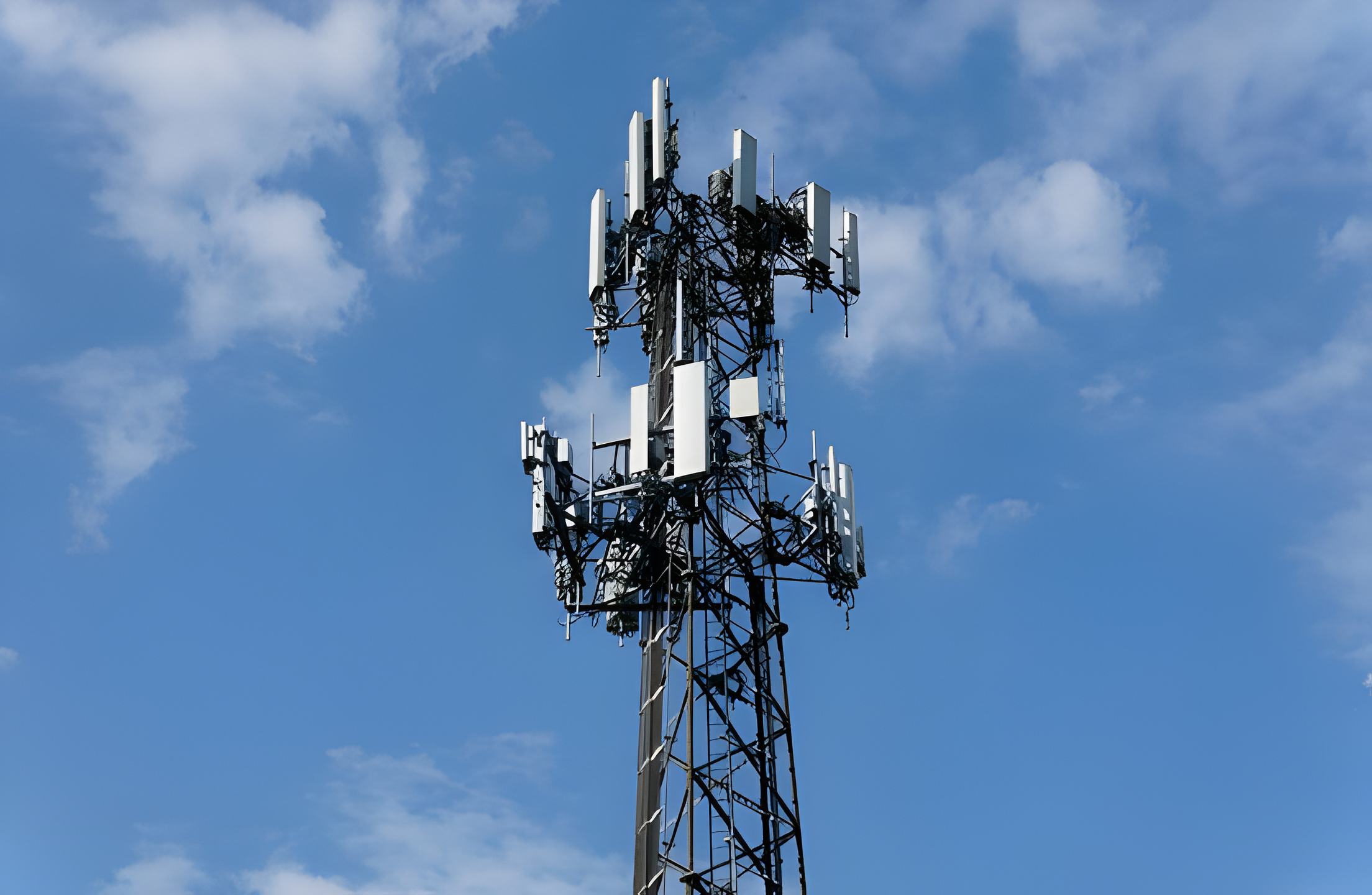
Schulman estimates that SpaceX would need 65,000 to 80,000 large cellular sites, along with radio equipment, backhaul connections and what he called “a tremendous amount of spectrum.” His cost projection assumes spending over seven or eight years and still excludes some retail, customer-service and back-office requirements.
Those additions would move Starlink Mobile beyond its clearest satellite advantage: reaching phones outside conventional cellular coverage. A nationwide carrier must also provide enough capacity and indoor reach in densely used markets. Schulman said suburban and urban areas account for about 98% of Verizon’s revenue and claimed Verizon’s terrestrial network is between 100 and 1,000 times more efficient than satellites in those markets.
That efficiency claim comes from an incumbent competitor, but it identifies the central physical constraint. Orbiting infrastructure can cover broad geographic areas, while a conventional carrier distributes radios and spectrum across thousands of local sites. Becoming a broad substitute for established carriers therefore depends on more than putting additional spacecraft overhead.
Backhaul is another major part of the build. Each ground site needs a path into the wider network, while radios, antennas, power and site access must be assembled into a functioning service footprint. The consumer-facing operation then adds activation, billing, support and device-management systems. Schulman’s estimate suggests that these less visible layers could make the terrestrial portion as consequential as the satellites themselves.
SpaceX is assembling both orbital and terrestrial pieces
SpaceX is not pursuing a satellite-only design. It has agreed to acquire up to 14 MHz of paired 800 MHz spectrum, which can support indoor coverage, and has outlined plans to install towers on property already used for Starlink facilities. Reports also indicate that its envisioned ground footprint could approach the scale Schulman described.
At the orbital layer, the Federal Communications Commission approved 15,000 next-generation satellites for direct-to-device service, while deferring some spectrum requests and placing conditions on portions of the authorization. The approval gives SpaceX a much larger permitted space segment, but regulatory clearance for satellites does not itself supply tower access, terrestrial radios or a complete customer-service operation.
SpaceX’s international rollout also shows a different path: working through established carriers. Starlink Mobile launched in Brazil through Vivo, which has 50 million customers, and Starlink said it connected more than 11 million people through VEON networks in Ukraine, Kazakhstan and Bangladesh. Those arrangements let satellite coverage complement existing mobile infrastructure rather than requiring SpaceX to reproduce an entire national carrier at once.
Verizon is leaving room for that complementary model in the United States. Schulman ruled out giving a satellite provider a mobile virtual network operator agreement on Verizon’s system, but said cooperation could still make sense for remote-area coverage. In that role, Starlink would address a terrestrial network’s geographic gaps without immediately matching its urban capacity.
Musk’s shorter timetable implies that SpaceX believes its combination of new satellites, acquired spectrum, existing Starlink properties and additional ground equipment can bypass some conventional assumptions about carrier construction. Schulman accepts that SpaceX may execute its announced plans, yet argues there is “no magic wand” for avoiding the physical network requirements.
The next meaningful measure will be the ground network SpaceX actually discloses and deploys. Until its site count, spectrum plan, spending and service architecture become clearer, the difference between three years and six years remains the difference between building a satellite extension for mobile coverage and building another nationwide carrier.
| More aerospace and engineering stories, right in your MSN feed. Follow AMI on MSN |
By David Whitaker — Associate editor for AMI’s aerospace and drone systems desk, translating flight systems, aircraft programs, spaceflight, and UAV developments into accessible technical stories.



