


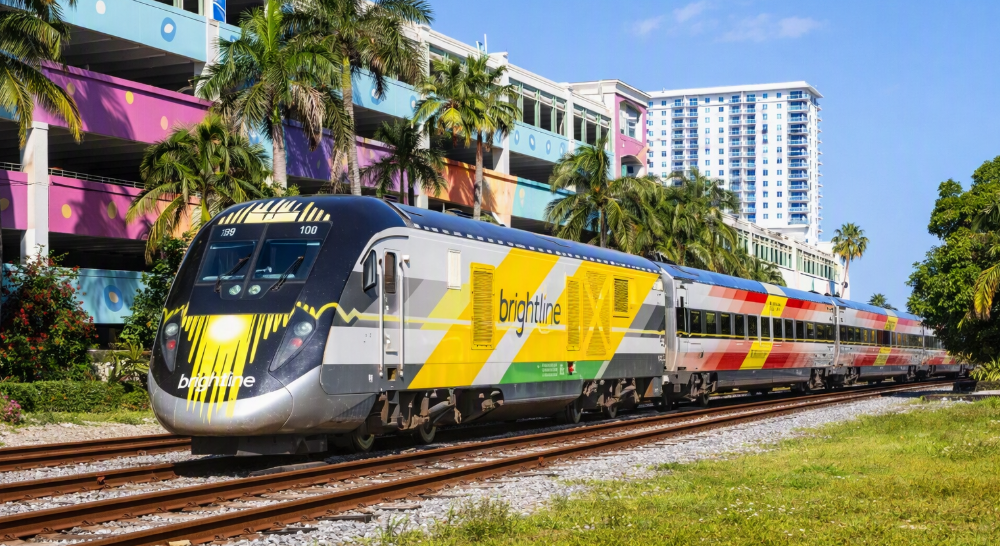
Brightline West Says Bankruptcy Won’t Affect $20.1 Billion Project Still Seeking Funds
Brightline West says the bankruptcy restructuring of its Florida sister company will not affect the planned $20.1 billion railway between Las Vegas and Southern California. The companies have separate corporate and financing structures, spokesperson Antonio Castelan said, but the western project has yet to complete its own funding package and is still waiting for a decision on a requested $6 billion federal loan.

That separation limits the direct reach of the Florida proceeding, which began with voluntary Chapter 11 petitions on September 24, 2026. Brightline West was excluded from those filings. The more consequential issue for the western railway is whether it can assemble enough grant funding, debt and private capital to move from preliminary site activity into full construction.
Separate companies, separate financial constraints
Corporate separation means Brightline Florida’s creditors are dealing with the entities covered by the restructuring, not automatically with Brightline West or its western project assets. The Florida operation, which runs passenger trains between Miami and Orlando, entered a restructuring agreement that contemplates $490 million in exit financing.
That arrangement does not supply the missing capital for Brightline West. Castelan said the western company remains focused on completing financing and advancing the project. Its principal unresolved federal request is a $6 billion loan through the Railroad Rehabilitation and Improvement Financing credit-assistance program, for which it applied in September 2025.
The distinction between a grant and a loan is important to the project’s public-cost profile. Brightline West already has a $3 billion Federal Railroad Administration grant. It also has proceeds from $2.5 billion in private activity bonds issued through Nevada and California, while Nevada officials have said those bonds create no financial risk or noncompletion penalties for the state. The requested federal loan would still require a creditworthiness review and repayment structure; it is not another grant.
Even with those components, the company describes the financing as incomplete. Brightline West has said the balance would come mainly from private equity and debt. Until that package closes, the project cannot transition into the sustained, full-scale construction needed across a 218-mile rail corridor, multiple stations and supporting infrastructure.
A larger project with a later target
The financing challenge has grown with the estimate. Brightline West’s projected cost rose from $9 billion to $20.1 billion, more than doubling. A higher estimate affects more than the headline price: it increases the amount of capital that must be committed, raises the importance of financing terms and leaves less schedule margin when funding decisions take longer than expected.
The service target has also moved. The company previously hoped to begin operations by the 2028 Olympic Games in Los Angeles. Castelan now says service is targeted for late 2029. Brightline West has described an approximately four-year delivery period once financing allows full-scale construction, so continued delay in closing the package places increasing pressure on that target.
The planned system would connect a station on Las Vegas Boulevard with Rancho Cucamonga, California, while serving additional Southern California stops. At Rancho Cucamonga, passengers could transfer to Metrolink for downtown Los Angeles. That transfer makes the project an intercity link rather than a direct train into central Los Angeles, placing additional importance on schedule coordination and the quality of the connection for prospective passengers.
Worksite activity is only one measure of progress
Crews began sewer work and parking-garage construction last year on part of the 110-acre Las Vegas station site. Garage work appears to have stopped, and crews reportedly have not been seen there for several months. That is evidence of limited activity at one visible worksite, not proof that every part of the project has stopped.
Other development work can proceed away from the station site. Brightline West has said environmental approvals and right-of-way are secured, significant design work is complete and agreements are in place with major construction contractors. Siemens Mobility has also been working on trainsets, with the first two car bodies reported complete. None of those steps substitutes for corridor-wide construction, but they show why site activity alone cannot describe the project’s full status.
For federal taxpayers, the immediate exposure includes the awarded $3 billion grant and the pending decision over a much larger loan request. For travelers, the tradeoff is time: the railway promises an alternative to driving Interstate 15, but its usefulness depends on completing the line, stations and Metrolink connection as an integrated system. The Florida restructuring may be legally separate, yet Brightline West’s own cost, financing and schedule constraints remain unresolved and late 2029 now depends on turning a partially assembled funding plan into construction capital.
| More aerospace and engineering stories, right in your MSN feed. Follow AMI on MSN |
By Thomas Caldwell — AMI’s senior editor for mechanical and mobility engineering, covering vehicle electronics, systems integration, electrification, chassis systems, propulsion, and safety policy.



