


Greece Signs $3.5 Billion Achilles Shield Deal for One Defense Network
The core of Greece’s new Achilles Shield is not any single missile interceptor. It is the command and control architecture expected to make several interceptor families and radars operate as one national system. Greece and Israel have signed a 3-billion euro ($3.5-billion) agreement for that network, covering defenses against ballistic missiles, aircraft and drones.
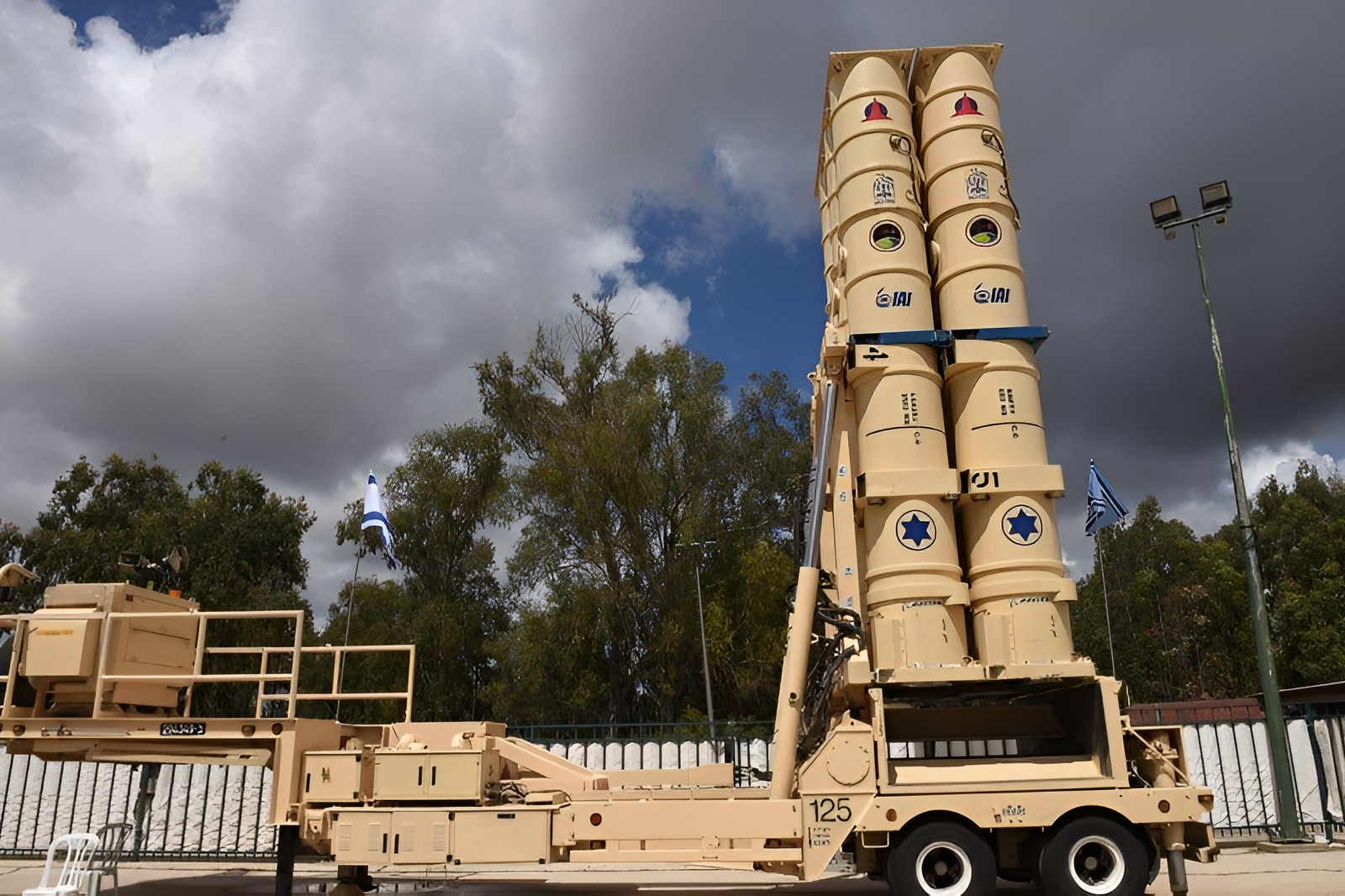
The planned architecture combines Rafael’s David’s Sling and SPYDER systems with Israel Aerospace Industries’ BARAK MX and ELTA Systems multi-mission radars. A Rafael-developed command system will connect the layers. That digital and procedural connection is what turns a collection of weapons and sensors into a coordinated defense rather than several independent installations.
Different threats require different defensive layers
Each named system occupies a different part of the design. David’s Sling is intended to intercept heavy rockets and ballistic missiles. SPYDER addresses shorter-range aerial threats, including drones, while BARAK MX is designed for a range of aircraft and missile threats. The multi-mission radars provide the sensing component needed to support the wider architecture.
Greece is also buying Drone Dome systems under a separate 26-million euro ($30-million) agreement. Those systems are intended to protect strategic sites from drones, adding a localized counter-drone element beyond the main Achilles Shield purchase. Together, the agreements commit about 3.026 billion euros, although the available details do not specify quantities, deployment coverage or delivery schedules.
The engineering value of a layered design is that one interceptor does not have to address every target category or operating condition. The harder task is coordinating those layers: establishing compatible data exchanges, presenting operators with a coherent picture and building procedures for deciding which defensive element handles a detected threat.
NATO’s description of integrated air and missile defense identifies technical, procedural and human interoperability as prerequisites. It also emphasizes training and exercises as part of integration. For Achilles Shield, that means the national command network may be the program’s most consequential component even though the interceptors are its most visible hardware.
Integration extends beyond connecting equipment
Rafael describes David’s Sling as designed for insertion into broader air and missile-defense architectures. That design claim addresses one part of the interface problem, but Achilles Shield must connect products from Rafael, Israel Aerospace Industries and its ELTA subsidiary while fitting Greece’s national command structure. The agreement as described does not document acceptance tests, operator-training arrangements, maintenance responsibilities or how readiness will be measured across the complete network.
Those omissions are important for public-cost oversight. Greek taxpayers are funding a national protection architecture, not just launchers and radar units. The useful measure of the purchase will therefore be whether the complete chain from detection through command coordination to the appropriate defensive layer can be demonstrated and sustained. A technically capable interceptor has limited system-level value if the wider network cannot consistently share information and coordinate its use.
Sustainment also has a broader scope in a mixed architecture. Several interceptor families and radar types mean separate maintenance, training and support demands, while the shared command layer becomes a common dependency. The available agreement value does not separate acquisition from longer-term support, nor does it establish how broadly the system will cover Greece’s population, military personnel and strategic infrastructure.
A large commitment inside a much larger program
Achilles Shield is part of a Greek modernization program running through 2036, with planned spending of approximately 28 billion euros. That wider effort includes F-35 fighters, more unmanned systems, cyber capabilities and upgrades to older F-16s. Greece also purchased Elbit Systems’ PULS rocket-artillery launchers in April.
The air-defense agreement alone represents more than one-tenth of that stated 28-billion euro modernization total, before counting the separate Drone Dome purchase. It has been described as the largest defense export agreement in the history of Israel-Greece relations and one of Israel’s largest defense deals overall.
Regional disputes and concern about expanding missile and drone capabilities provide the policy context, but they do not settle the program’s implementation questions. The next meaningful evidence will be system-level milestones: documented integration testing, training, delivery and acceptance across the complete architecture. Until those emerge, Greece has secured the components and the plan for one network; proving that they function as one national shield remains the defining job.
| More aerospace and engineering stories, right in your MSN feed. Follow AMI on MSN |
By David Whitaker — Associate editor for AMI’s aerospace and drone systems desk, translating flight systems, aircraft programs, spaceflight, and UAV developments into accessible technical stories.



