


Iran’s 5,000 Military-Linked Agencies Imported $2 Billion Despite U.S. Blockade
A network of more than 5,000 agencies linked to Iran’s military imported at least $2 billion in hardware, explosives and heavy-duty trucks from January 2025 onward despite Western sanctions and a U.S. naval blockade, a Reuters investigation published October 29 found. The scale offers a rare view of the industrial supply system supporting Iran’s continued drone and missile production.
The agencies have names beginning with “MOD” and share a Tehran address with Iran’s Ministry of Defense and Armed Forces Logistics. Their financial footprints appear in shipping data dating to 2016, although most were established in 2013. Reuters found no evidence that Western governments had individually sanctioned any of the numbered agencies identified in the documents.
The findings were assembled from thousands of Iranian bank and government records, corporate filings and import data. Reuters examined roughly 19,000 import records and cross-checked part of that material against shipping documents and other public information. Nearly all the imported items in the reviewed data were exempt from duty and marked as military equipment.
The imports cover production and launcher logistics
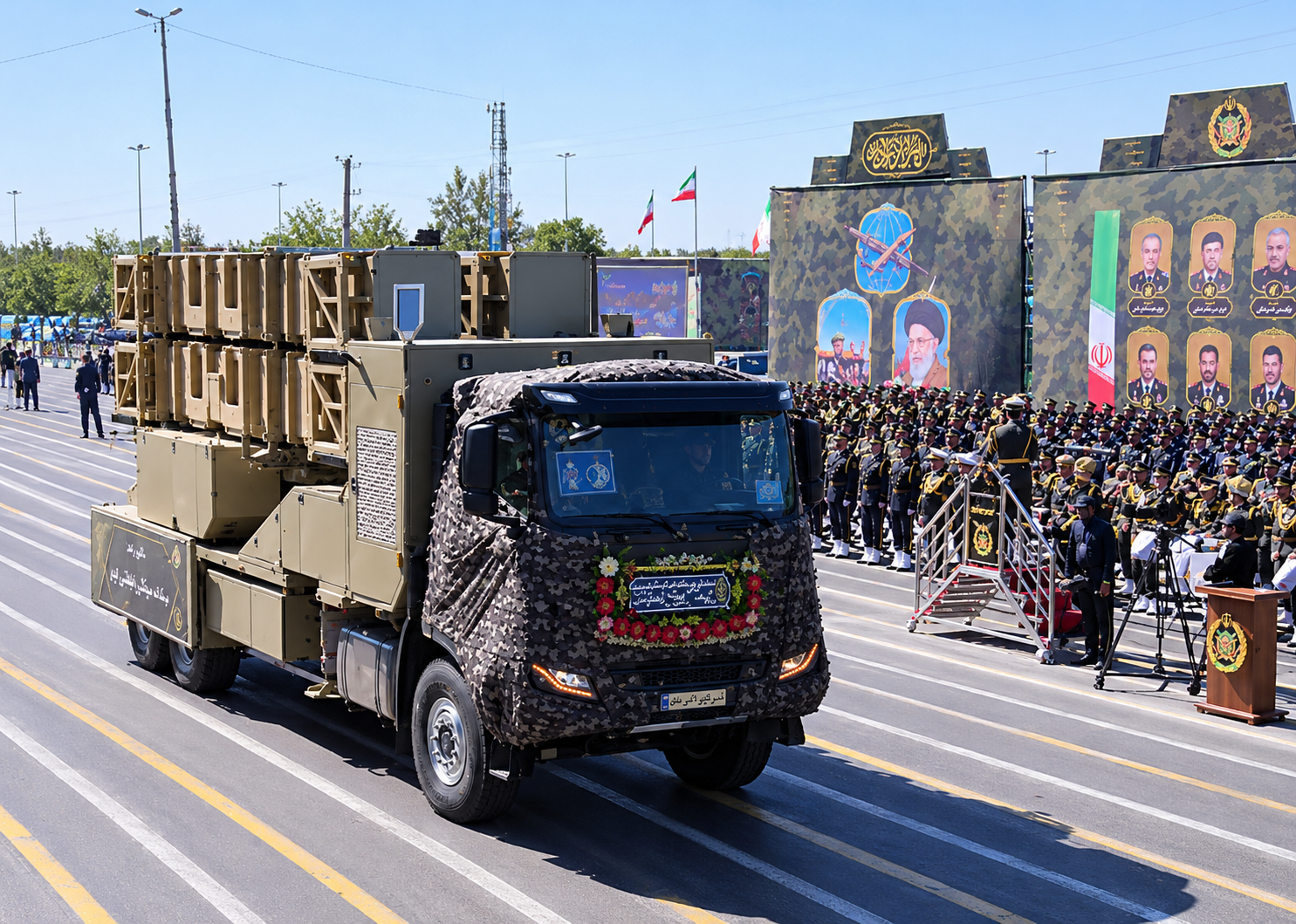
One agency, MOD 346428, imported rocket propellants, explosives, weapons components and heavy trucks during the 18 months from January 2025 through June 2026. Records for the first half of 2026 included $1.9 million in detonators, along with aircraft-engine parts, rocket-fuel ingredients and heavy vehicles associated with launcher logistics.
Other entries included computer-controlled lathes, electron-beam furnaces and particle accelerators. Those systems can support precision manufacturing and materials processing, but they also have legitimate industrial and research applications. Four sanctions and weapons experts who reviewed the findings said many of the documented materials could support Iranian drone and missile programs; dual-use potential does not establish the final use of every shipment.
Reuters and research firm 240 Analytics identified an Iranian ballistic-missile unit and Sahara Thunder, a U.S.-sanctioned drone supplier, as end users within the wider system. The U.S. Treasury has previously described Sahara Thunder as a principal commercial arm supporting the defense ministry’s drone activities.
The range of goods is significant because military replenishment is not only a matter of obtaining complete weapons. Sustained production also depends on energetic materials, engine parts, machine tools and heavy transport equipment. Restricting one class of component can slow a line, but a network spread across thousands of administrative identities presents a much larger screening and enforcement problem.
A financial structure built outside ordinary settlement
For 97% of the shipments Reuters reviewed, the import data recorded settlement “without currency transfer.” The investigation connected that pattern to a broader structure using foreign intermediaries and shell companies to spend proceeds from illicit oil sales held outside Iran. That arrangement reduces dependence on direct international payments into or out of the country.
Many goods were recorded as originating in China, Russia and Germany. A listed country of origin, however, does not by itself establish that a government, original manufacturer or exporter knowingly supplied Iran’s military. China’s Foreign Ministry said it was unaware of the situation described and opposed attempts to connect China to regional hostilities. Russia, the White House, U.S. Central Command and the United Arab Emirates did not respond to requests for comment. Iranian entities contacted for the investigation also did not respond.
The numbered structure exposes a basic enforcement gap. Sanctions can target a ministry, known supplier or named intermediary, but commercial screening generally relies on identifiers that can be matched against restricted-party lists. None of the numbered agencies referenced in the reviewed documents had been individually designated by Western governments, Reuters found, even though they shared an address with the sanctioned defense ministry.
The Treasury Department maintains that it is disrupting Iran’s economic lifelines. In a separate 2026 action, its Office of Foreign Assets Control sanctioned 10 individuals and entities accused of procuring weapons and components for the Iranian defense ministry. That action targeted named participants across several jurisdictions, illustrating the difference between designating identified facilitators and detecting a procurement structure containing thousands of administrative entities.
The newly documented network does not quantify how much of Iran’s overall drone and missile output these imports sustained. It does show that restrictions at sea did not close the broader industrial pipeline: records showed goods continuing to arrive by land, sea and air. For defense planners, the central challenge is therefore larger than intercepting finished weapons or a handful of suppliers. It is identifying the many financial, industrial and logistics links that allow production to continue when individual nodes are sanctioned.
| More aerospace and engineering stories, right in your MSN feed. Follow AMI on MSN |
By David Whitaker — Associate editor for AMI’s aerospace and drone systems desk, translating flight systems, aircraft programs, spaceflight, and UAV developments into accessible technical stories.



