Apparent Puerto Rico Flight Puts DHS’s $53 Million Gulfstream Under Scrutiny
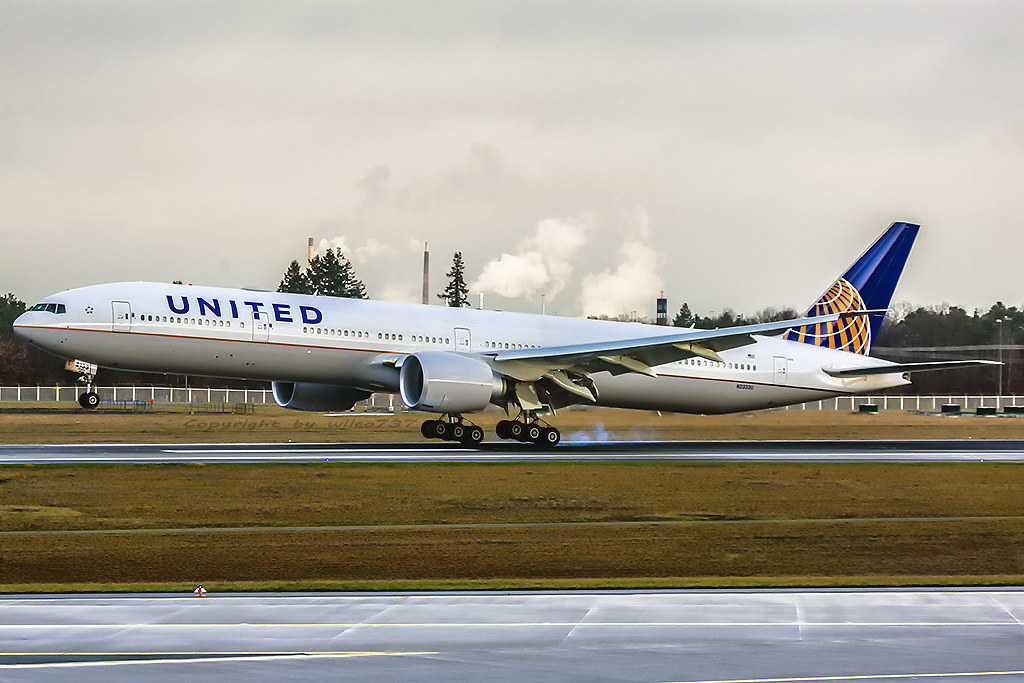
A Gulfstream G650 registered as N472US flew from Ronald Reagan Washington National Airport to San Juan on October 20, while government photographs showed senior official Tom Homan leaving a similarly painted business jet in Puerto Rico. The partially visible registration also appeared to match. Together, those records apparently connect Homan’s trip to one of two $53 million Gulfstreams recently purchased by the Department of Homeland Security, although DHS has not confirmed the aircraft’s identity.

The White House said Homan traveled to Puerto Rico “to do assessments of immigration and maritime border security efforts.” N472US continued from Puerto Rico to West Palm Beach the following day. DHS declined to confirm the jet’s location, citing security considerations, and a White House spokesperson said official travel arrangements are determined through established processes and security procedures.
The apparent trip is significant because it supplies the first concrete utilization example in a dispute that has otherwise centered on acquisition records and planned roles. DHS bought five aircraft from Daedalus Aviation for $304 million on March 24. The package included two G650s priced at $53 million each. Senators Patty Murray and Chris Murphy subsequently alleged that each jet carried an $11 million markup over its previous price.
The senators also said one G650 had been leased to FBI Director Kash Patel for 12 months, while the other was being retrofitted to transport Homan and other DHS officials. Their August oversight letter requested purchasing records, flight logs and cost analyses, challenged the absence of congressional authorization and questioned the need for another FBI aircraft. The markup and authorization claims remain the senators’ allegations rather than independently established findings.
One flight cannot resolve the fleet-cost question
A single apparent trip supplies utilization evidence, not a complete business case for owning two long-range business aircraft. The central procurement issue is whether expected demand, security requirements and scheduling constraints justified purchasing the jets instead of leasing aircraft, using charter services or sharing capacity with another agency.
Federal acquisition rules call for agencies to select the equipment-acquisition method most advantageous to the government through a case-by-case comparison. The Federal Acquisition Regulation’s equipment guidance identifies factors including expected duration and extent of use, rental or lease payments, maintenance and repair costs, potential obsolescence, servicing capability and possible use by other agencies. Federal aircraft acquisitions are also addressed by government aircraft-management regulations.
Those standards make utilization central to the analysis. A government aircraft with frequent, mission-driven use can offer scheduling control and avoid recurring charter costs. Low or irregular use can leave taxpayers carrying fixed expenses for an asset that spends much of its time parked. The available information does not provide the flight hours, dispatch rate, passenger demand or alternative-travel costs needed to place the apparent Puerto Rico trip on either side of that calculation.
The stated $53 million unit price is also only one part of the cost. Retrofit work, crew, training, maintenance, insurance arrangements, storage and support determine the aircraft’s lifecycle expense. A 2004 Government Accountability Office review of other federal fleets described lifecycle analysis as covering acquisition, operation and maintenance over an aircraft’s useful life. That historical review is not a valuation of these G650s, but it explains why the senators’ requests for cost analyses and flight records are more consequential than a comparison of purchase prices alone.
Mission need and price require separate answers
The apparent Homan flight is consistent with the role Murray and Murphy described for the second G650: transportation for Homan and other DHS officials. That helps clarify intended use, but it does not settle whether a G650 was the most cost-effective platform for that mission or whether the transaction’s price reflected configuration, retrofit, support or other included services.
The same separation is necessary when assessing the alleged $11 million markup. A previous sale price can be a useful starting point, but aircraft values can change with age, condition, maintenance status, equipment and contracted modifications. Determining whether taxpayers overpaid requires transaction-specific records showing what DHS received for the $53 million assigned to each jet. No such breakdown is available in the provided public details.
The investigation therefore turns on records rather than on the existence of one official trip. Flight and passenger logs would show actual utilization; requirements documents would explain why DHS selected two G650s; and comparative cost analyses would reveal whether purchase, lease, charter and interagency options were evaluated. N472US’s apparent Puerto Rico mission adds a real operating event to the debate, but the unresolved test is whether DHS can connect that use to the price, fleet size and acquisition authority now under congressional scrutiny.
| More aerospace and engineering stories, right in your MSN feed. Follow AMI on MSN |
By Thomas Caldwell — AMI’s senior editor for mechanical and mobility engineering, covering vehicle electronics, systems integration, electrification, chassis systems, propulsion, and safety policy.