Air Force Studies Tyndall Drone Nets Covering Space for 36 F-35s
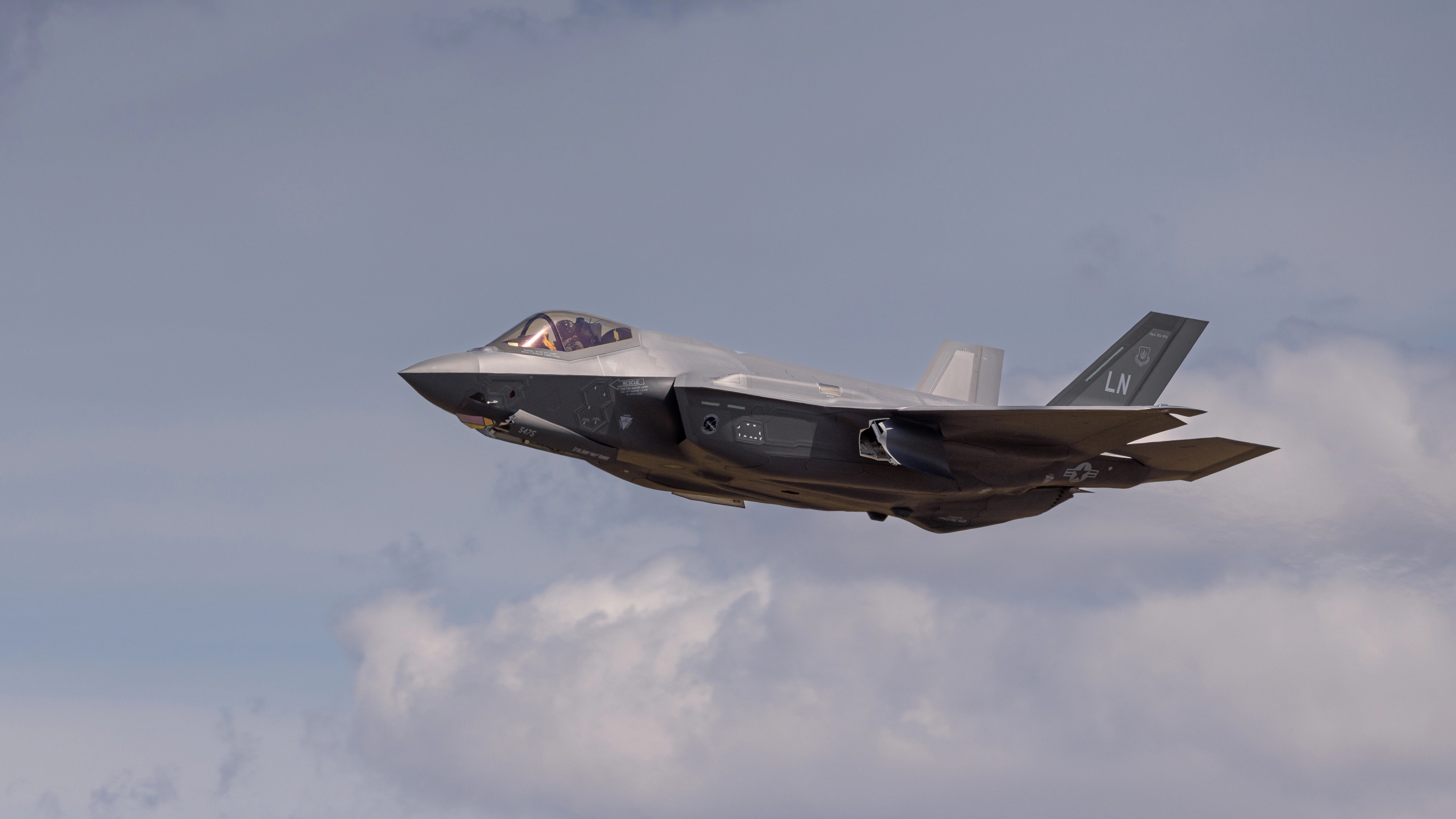
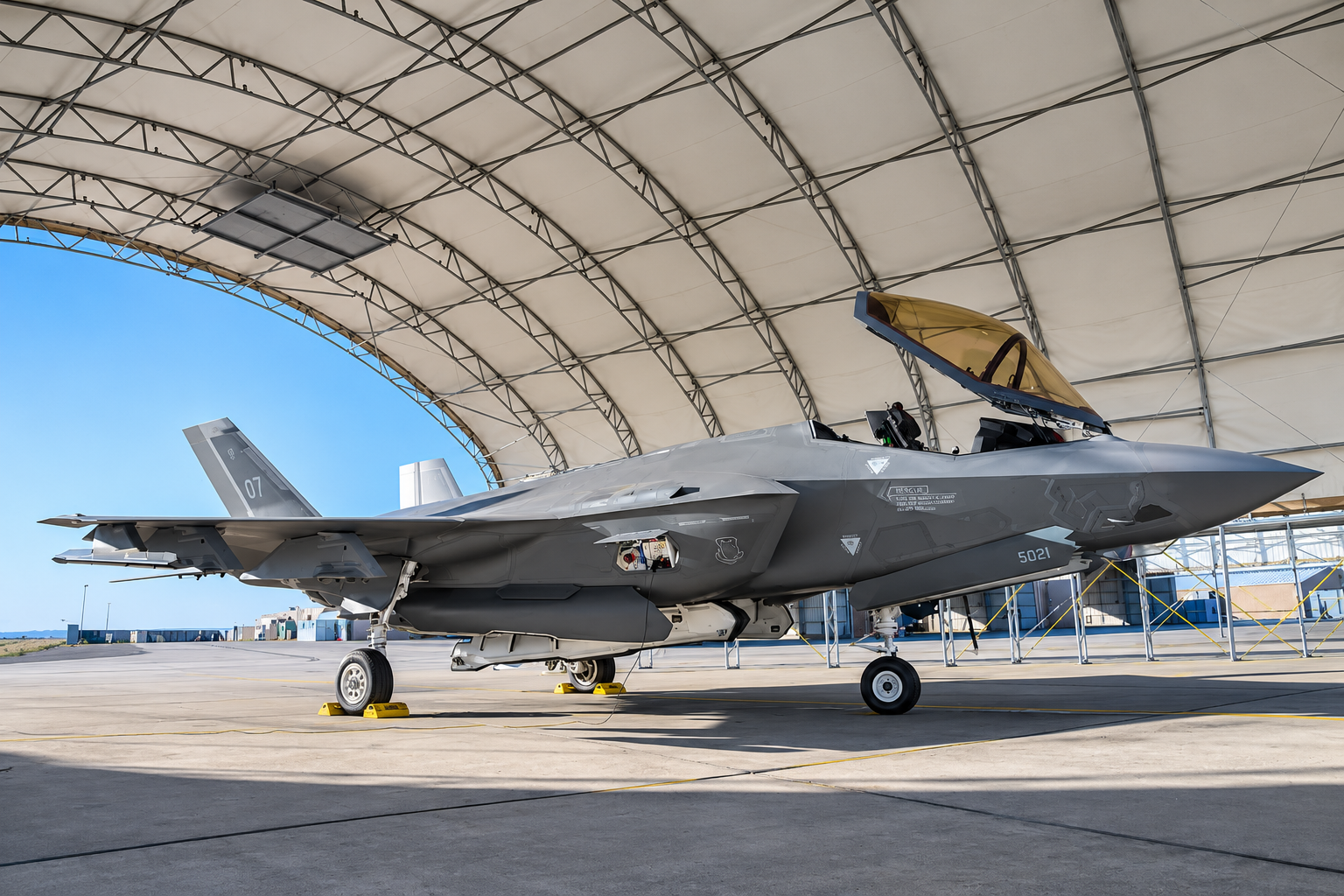
A comparatively simple net may become an added line of protection for some of the Air Force’s most advanced fighters. The service is conducting market research for retractable anti-drone netting around six aircraft shelters at Tyndall Air Force Base in Florida, with combined parking space for as many as 36 F-35As.

The 325th Contracting Squadron is seeking information from companies capable of designing, supplying and installing the system. The November 6 notice is not a contract solicitation and does not guarantee an award or installation. It instead allows the Air Force to assess available suppliers, designs and likely infrastructure work before deciding whether to proceed.
A barrier that cannot obstruct flight operations
The concept is straightforward: close the open ends of the six sunshade-style shelters so a small drone cannot enter while aircraft are parked. Executing that idea on an active flight line is more demanding. Each shelter measures 630 feet long, 65 feet wide and 30 feet high, and the netting on its north- and south-facing ends must retract quickly and easily for routine aircraft movements.
That requirement makes the system more than a fixed fence. Its supports, attachment points and retraction equipment would have to provide useful coverage without slowing aircraft entry and exit. A barrier that is cumbersome to open, difficult to reset or frequently unavailable for maintenance would lose much of its operational value.
The Air Force has also set specific material requirements. Mesh openings can be no larger than three inches, while the netting must have at least 200 pounds of tensile strength. Polyester and nylon are the preferred materials. The barrier must resist ultraviolet exposure and moisture, tolerate temperatures up to 400 degrees Fahrenheit and meet Miami-Dade County wind-load requirements.
Those environmental standards are central to the proposal’s practicality. Large sections of netting create substantial area for wind to act upon, while prolonged sun and moisture exposure can degrade polymer materials. Compliance therefore involves the complete installation including its connections and supporting structure not merely selecting mesh that can stop a drone.
Protection is limited to the smallest drone category
The required performance is aimed at Group 1 drones, the smallest class in the Defense Department’s five-group system. According to a Congressional Research Service primer on military drone categories, the groups are organized around weight, altitude and speed. Group 1 covers aircraft weighing no more than 20 pounds, operating no higher than 1,200 feet and traveling no faster than 100 knots.
The proposed netting must prevent drones in that class from penetrating the shelter without compromising the barrier. This is passive protection rather than detection or electronic defeat: the net works by physically separating a small aircraft from the parked fighters and the personnel working around them.
That simplicity offers a readiness advantage. A physical barrier does not need to identify a drone, establish a track or transmit an electronic effect before it can serve its basic purpose. It can remain in place while aircraft are parked, subject to inspection, weather limits and the need to retract it for normal operations.
Its scope is equally important. The requirement concerns only Group 1 drones and six shelters. Those structures represent part of Tyndall’s sunshade inventory, while F-35s and other aircraft also regularly park in the open. Even if every covered shelter held its stated maximum of six F-35As, the project would protect parking space for up to 36 fighters not every aircraft or parking location on the base.
A lower-cost layer rather than full fortification
The proposal reflects an Air Force preference for adding limited protection where it can be practical rather than attempting to turn every parking area into a deeply hardened shelter. Air Force Chief of Staff Gen. Kenneth Wilsbach has publicly supported “light protection against small, unmanned threats,” including nets, while arguing against major spending on hardened shelters.
That tradeoff places the emphasis on selective risk reduction. Retractable netting could protect aircraft during some parked periods without the cost and construction burden of a new hardened structure. In return, the Air Force accepts incomplete coverage, a defined threat class and additional inspection and maintenance demands for a large outdoor mechanical barrier.
The next step is not installation but an acquisition decision. Responses to the market research will help determine whether industry can meet the strength, weather, wind-load and retraction requirements on Tyndall’s existing shelters. Until the Air Force advances beyond that stage, the six-shelter system remains a studied option one that could put a physical barrier around space for 36 F-35As, but only within carefully defined limits.
| More aerospace and engineering stories, right in your MSN feed. Follow AMI on MSN |
By David Whitaker — Associate editor for AMI’s aerospace and drone systems desk, translating flight systems, aircraft programs, spaceflight, and UAV developments into accessible technical stories.