Toyota-Engined 1986 Corvette Drives After Two-Week Swap Became Three-Year Build
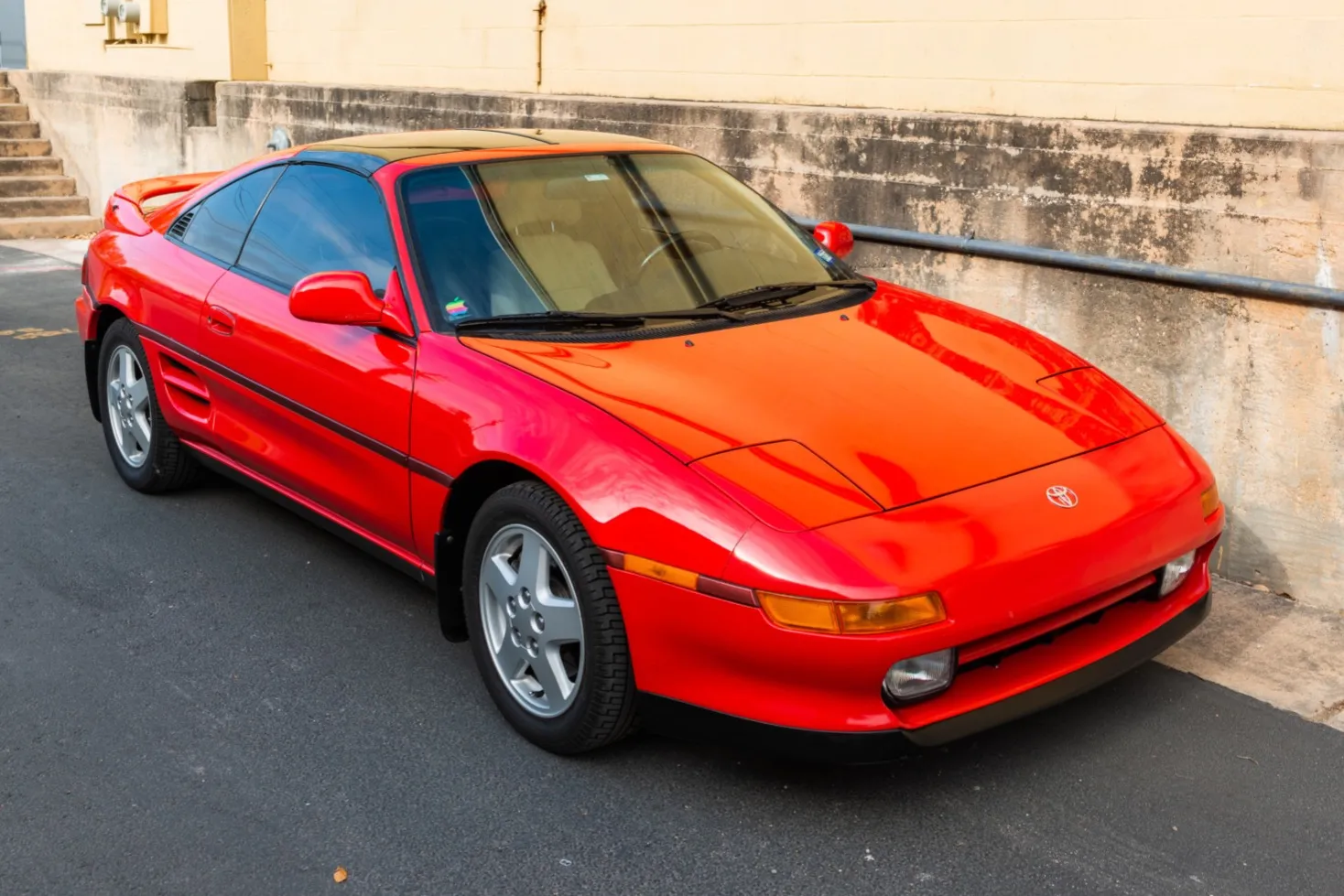
The turbocharged Toyota engine went into Conrad’s 1986 Chevrolet Corvette in roughly two weeks. Making the combination run and drive took about three years. That gap captures the central difficulty of an unconventional engine conversion: placing an engine between the frame rails is only one part of turning two incompatible sets of hardware and electronics into a functioning vehicle.
The completed C4 Corvette now runs with a Toyota 1JZ-GTE inline-six replacing its original Chevrolet V8. The car demonstrated strong turbocharged acceleration during a Roads Untraveled test drive, but it remains unfinished in several important respects. Unusually long gearing, hesitant braking, imprecise steering and a misfire under hard acceleration still need attention.
Physical fit was the first constraint
An inline-six is long relative to the V8 layout around which this Corvette was designed. Conrad and his friend Jared, an experienced mechanic, had to move the firewall back by about an inch to create clearance. They also fabricated engine mounts, changed the transmission mounting arrangement and removed the original air-conditioning equipment.
Those changes show why an engine can technically fit without fitting cleanly as part of the complete vehicle. Firewall work affects an important body boundary, while mount design must locate and support the powertrain under acceleration, braking and road inputs. Removing the air-conditioning equipment solved a packaging problem, but it also reduced the car’s original functionality. Each accommodation bought space at a cost elsewhere.
The Toyota engine is paired with an R154 five-speed manual transmission and is said to weigh roughly 100 pounds less than the removed V8. Lower engine mass can be beneficial, but that figure alone does not establish the completed car’s weight distribution or handling. Mount location, transmission mass and other removed or added components also influence the final result.
Electronics preserved the Corvette cabin
The conversion did not stop at mechanical mounts and clearance. A wiring specialist connected the Toyota electronics to the Corvette’s factory digital dashboard, allowing the original instruments and a largely stock-looking cabin to remain. That work is a visible example of systems integration: signals generated for one manufacturer’s powertrain had to produce useful information in another manufacturer’s display architecture.
Keeping the original dashboard avoids replacing the cabin with a collection of aftermarket gauges, but it adds electrical work that a simple stand-alone installation might bypass. Power distribution, sensor interpretation and instrument behavior all have to operate well enough for the driver to monitor the vehicle. The three-year schedule therefore reflects more than fabrication time; it includes the work needed to make the powertrain communicate with the rest of the car.
Transmission choice did not complete the drivetrain
The R154 manual transmission is operating with rear gearing retained from the Corvette’s original automatic-transmission configuration. The result is unusually long overall ratios. For reference, published 1986 Corvette specifications list a 2.73:1 standard axle ratio for automatic cars, with 3.07:1 available as an option.
That illustrates why selecting a transmission cannot be separated from final-drive gearing. Engine speed, transmission ratios, tire size and axle ratio combine to determine road speed in each gear. A transmission that physically bolts into the car may still produce an awkward operating range when paired with the existing differential. Conrad plans gearing changes, which could make the available engine output easier to use.
The 1JZ retains its stock bottom end and uses a large aftermarket turbocharger. Jared said the combination previously produced approximately 680 to 700 horsepower on E85. Current output on pump gasoline is estimated at 400 to 450 horsepower. Those figures describe different fuel and tuning configurations, so the higher number is not the car’s stated present output.
Drivable is not the same as fully sorted
The misfire under hard acceleration remains a direct limit on using the power consistently. The hesitant braking and imprecise steering are separate chassis concerns exposed once the car reached the road. They cannot be resolved by additional engine output, and their presence makes further diagnosis more important than chasing the earlier peak-power figure.
Road registration can add another integration layer depending on jurisdiction. In California, for example, the Bureau of Automotive Repair classifies an unlike engine installation as an engine change and requires an initial Referee Center inspection and label for vehicles subject to that process. The Corvette’s location and compliance status were not specified.
Conrad’s Corvette has crossed the meaningful threshold from an installed engine to a running vehicle. Its next phase is less visually dramatic but more consequential: correcting the gearing, tuning out the misfire and restoring dependable braking and steering behavior. After three years, the engine is no longer the main question the remaining vehicle systems are.
| More aerospace and engineering stories, right in your MSN feed. Follow AMI on MSN |
By Thomas Caldwell — AMI’s senior editor for mechanical and mobility engineering, covering vehicle electronics, systems integration, electrification, chassis systems, propulsion, and safety policy.