Chery recalls 53,882 vehicles as rear-axle weld threatens wheel control
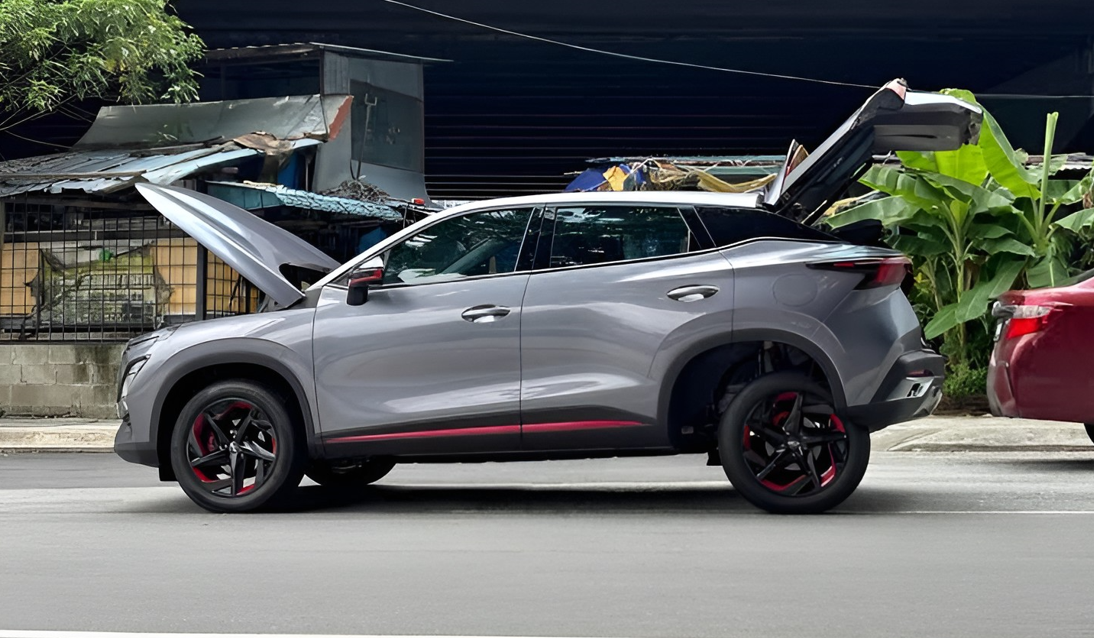
Chery is recalling 53,882 Tiggo 5x and Omoda-series vehicles in China because a manufacturing defect may leave a critical rear-axle weld too weak to maintain wheel control under extreme conditions. The campaign, registered as S2026M0146V, covers vehicles built from June 6, 2022, through December 31, 2023, and takes effect November 27, 2026.
The defect concerns the welded connection between a rear-axle trailing arm and its sleeve. Insufficient fusion or incomplete penetration during manufacturing can prevent the weld from developing the intended connection through the joint. If that connection fails, the suspension may no longer hold the rear wheel in its correct position, compromising vehicle stability and increasing accident risk.
A trailing arm manages the wheel’s fore and aft location as the suspension moves. In the torsion-beam assembly covered by the recall, its welded attachment is therefore part of the structural load path between the wheel, axle and vehicle body. A defect at that joint is more consequential than a loose trim component or isolated electronic fault: separation can directly disturb the geometry needed to keep the vehicle controllable.
Chery’s remedy begins with identification rather than automatic replacement of every axle. Dealers will inspect rear-axle production date codes and replace assemblies traced to the defective production batch free of charge. Chery plans to notify owners by text message and registered mail.
That screening approach means all 53,882 vehicles are within the recall population, but not all necessarily carry a defective axle. China’s State Administration for Market Regulation has not disclosed how many assemblies it expects dealers to replace, nor has it provided a model-by-model division between the Tiggo 5x and Omoda vehicles. Production-code screening allows the company to isolate suspect hardware without replacing assemblies that fall outside the affected batch, provided the traceability records accurately identify the relevant parts.
Malaysia is investigating a separate axle case
The Chinese campaign comes amid scrutiny of the Omoda 5 in Malaysia. On October 6, an Omoda 5’s rear axle detached while the vehicle was being driven. Malaysia’s Road Transport Department then suspended the model’s vehicle type approval, stopping new registrations while it conducts a technical investigation.
Chery Malaysia separately recalled 8,878 pre-facelift Omoda 5 C and H vehicles for inspections and component replacements. The Malaysian regulator also called for potentially affected vehicles to be identified through part numbers, production batches, vehicle identification numbers and other technical parameters. Its planned review extends to production and assembly processes, quality-control systems and weld-inspection procedures.
Malaysia had already dealt with another Omoda 5 rear-axle problem in 2024. That action covered 600 vehicles after a separate incident. Chery attributed the earlier problem to welding-equipment miscalibration following the replacement of a welding tip. The specific explanation illustrates how a seemingly routine tooling change can alter weld quality if calibration and process verification do not restore the required operating window.
The Chinese and Malaysian recalls must still be treated as separate populations. The Chinese regulator has not established that they involve the same production batch, manufacturing origin or underlying cause. No axle supplier or relevant manufacturing facility has been identified for the Chinese campaign, and the October Malaysian detachment has not been established as the cause of the Chinese recall.
Resolving that uncertainty requires component traceability and process records, not similarity alone. Investigators would need to compare axle date codes, weld parameters, equipment histories, inspection results and the physical characteristics of any failed joints. Until those links are established, the confirmed engineering response in China is narrower: inspect 53,882 vehicles, identify axles from the defective batch and replace those assemblies at no cost to owners.
Malaysia’s approval suspension will remain the more restrictive intervention because it blocks new registrations pending corrective and preventive measures. China’s November 27 campaign instead keeps the affected fleet in service while directing owners into a code-based inspection and replacement process. Whether those two responses ultimately converge on a shared manufacturing origin remains unresolved.
| More aerospace and engineering stories, right in your MSN feed. Follow AMI on MSN |
By Thomas Caldwell — AMI’s senior editor for mechanical and mobility engineering, covering vehicle electronics, systems integration, electrification, chassis systems, propulsion, and safety policy.