Korean Air Orders 103 Boeing Jets, but Cost Savings Face a Long Delay
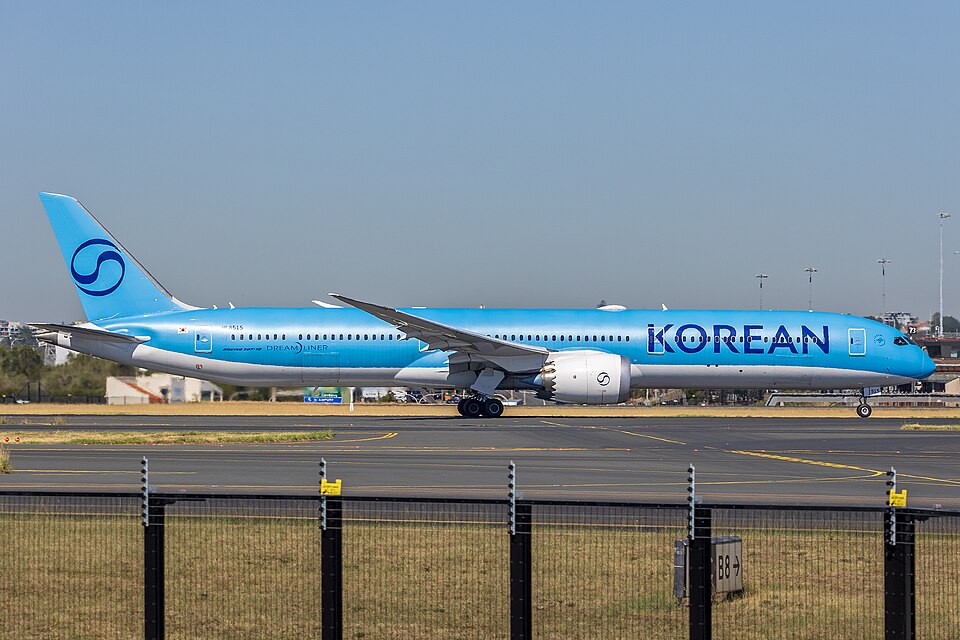
Korean Air has committed to 103 new Boeing aircraft as rising fuel prices intensify pressure to operate more efficient fleets. Yet the order will not produce quick relief: the jets carry substantial acquisition or lease costs, and deliveries from the latest order are not scheduled to begin until the early 2030s.

The order, confirmed in September and detailed by Aviation Week, comprises 20 Boeing 777-9 passenger jets, 25 787-10s, 50 737-10s and eight 777-8F freighters. Those eight freighters reconcile an apparent gap in accounts that listed only the three passenger models, whose quantities add up to 95 rather than the announced total of 103.
The scale is striking, but the timing defines the economics. Korean Air expects aircraft to arrive in stages according to route demand and plans for its existing fleet. Manufacturer backlogs mean an airline can commit capital and develop a fleet strategy years before the replacement aircraft begin reducing fuel consumption and maintenance requirements.
Why newer jets can cost less to operate
Fuel efficiency comes from a package of changes rather than aircraft age by itself. The 787-10 uses carbon-composite material in place of much of the aluminum alloy found in older fuselage designs. Reducing structural weight lowers the energy required to carry the aircraft and its payload, while newer engines and aerodynamic refinements contribute additional savings.
The 787-10 is credited with using at least 20% less fuel per seat than existing aircraft in its class. Per-seat performance is important because airlines sell capacity, not merely aircraft movement. A larger or more efficiently configured jet can burn more fuel over an entire trip while still using less for each occupied seat.
Korean Air has already begun introducing another composite-intensive widebody, the Airbus A350-900. At least half of its fuselage uses carbon-composite material, combining reduced weight with improved durability. The airline began commercial A350-900 service in late January last year.
Maintenance can provide a second operating benefit. Newer aircraft may have longer intervals between component replacements, reducing the frequency of some maintenance, repair and overhaul work. Common aircraft families can also simplify parts, training and scheduling, although Korean Air must first manage the complexity of combining its fleet with Asiana Airlines and phasing out several older types.
Age is not a fuel-consumption formula
An older aircraft does not automatically consume more fuel solely because it has spent more years in service. Fuel use also changes with the aircraft and engine model, seating density, payload, flight distance, weather, route characteristics and operating practices. A lightly loaded older jet on one route cannot be compared meaningfully with a full newer jet on another route without controlling for those variables.
Airlines therefore evaluate more than birth date when deciding whether to retain an aircraft. Its physical condition, maintenance expense, reliability, residual value and suitability for the network all affect the decision. Replacing a serviceable aircraft early can destroy remaining economic value, while keeping it too long may expose the operator to rising maintenance demands and poorer efficiency relative to newer alternatives.
Fuel prices have made that calculation more urgent. Opinet data cited in South Korea put average kerosene prices at $140.80 per barrel in the first half of 2026, 64.4% above the $85.65 average from the same period a year earlier. Jeju Air offers a smaller-scale illustration: while expanding its Boeing 737-8 fleet, the carrier reported fuel-cost growth of 42.6%, below the increase in kerosene prices, even as its number of flights rose 8.8%. Fleet efficiency was one factor rather than the only variable behind that result.
The savings arrive after the bills
Lower fuel burn and longer maintenance intervals do not guarantee an immediate improvement in profitability. Purchase payments, lease obligations, financing, crew training, spare parts and fleet-entry work arrive before all the operating savings accumulate. The financial case depends on utilization, fuel prices, financing terms and how effectively each aircraft is matched to its routes.
Production capacity adds another boundary. Boeing and Airbus retain substantial order backlogs, so airlines cannot modernize fleets as quickly as they can sign contracts. South Korean carriers including Eastar Jet and Jeju Air are already adding newer 737-8 aircraft, but broader fleet renewal is expected to continue steadily into the early 2030s.
For Korean Air, the 103-jet order is therefore a long-duration systems decision rather than a near-term answer to one expensive fuel cycle. Its efficiency gains may be significant once the aircraft are flying at scale, but the first deliveries from this order are still years away.
| More aerospace and engineering stories, right in your MSN feed. Follow AMI on MSN |
By Thomas Caldwell — AMI’s senior editor for mechanical and mobility engineering, covering vehicle electronics, systems integration, electrification, chassis systems, propulsion, and safety policy.