California Approves Three Siemens Trains With Costs Reaching $835.8 Million
California’s first three Siemens high-speed trains now carry a potential public commitment of $835.8 million. The California High-Speed Rail Authority board unanimously approved the $772.1 million package on October 28, while allowing up to $63.7 million outside the contract for import duties and tariffs.

The scale is striking because the initial fleet contains only three seven-car trainsets, or 21 cars. Yet the approved amount is not simply a vehicle purchase divided three ways. It combines $281.7 million for the trains themselves with long-term maintenance, project-specific engineering, testing, certification and allowances for future cost changes.
Hardware represents $281.7 million of the package
The physical trains average $93.9 million per trainset and about $13.4 million per car. Another $284.1 million covers 10 years of full maintenance, while $206.3 million is assigned to escalation, taxes and other charges that include testing and certification. Together, those categories produce the $772.1 million contract value.
The $13.4 million hardware average is the most useful starting point for examining the purchase, but it is not a like-for-like international price ranking. One published calculation placed it at 2.85 times the per-car figure derived from Deutsche Bahn’s 2023 order for 17 eight-car Velaro MS trains. That German purchase covered 136 cars, compared with California’s 21, giving the larger order considerably more equipment over which to spread engineering and production costs.
The trains also differ in configuration and requirements. Deutsche Bahn’s cited units have a design speed of 320 kilometers per hour, while California’s American Pioneer AP220 is designed for 350 kilometers per hour and must comply with US federal safety rules for high-speed passenger equipment. Currency assumptions, included equipment, design maturity and certification scope can further distort a simple per-car comparison.
California’s option for as many as 19 additional AP220 trainsets illustrates the effect of order size. Those trains are priced at $62.1 million per set, or approximately $8.9 million per car about one-third below the initial fleet’s hardware average. The lower option figure does not determine the final cost of a future order, but it shows how the first three trains absorb costs that can be distributed more widely in a larger production run.
The contract purchases a working rail system interface
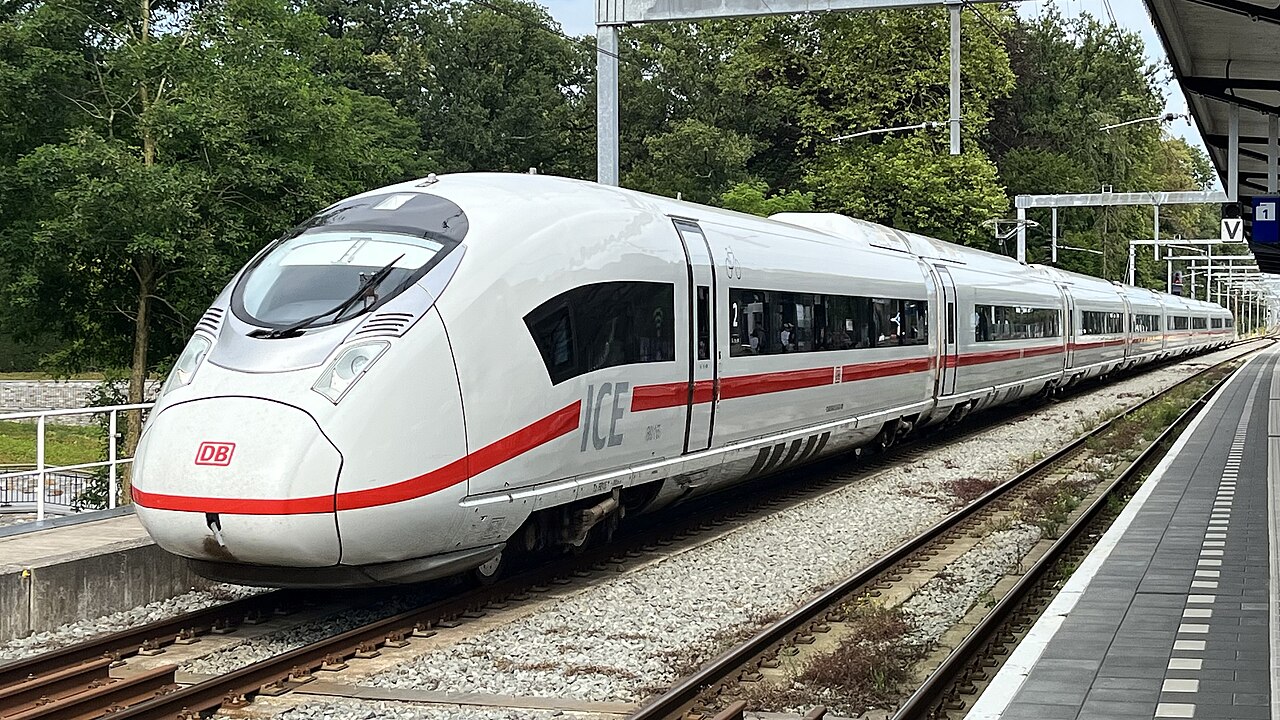
Each AP220 is a seven-car electric multiple unit based on Siemens’ Velaro Novo platform. Planned features include distributed traction, an aluminum carbody, regenerative braking, more efficient motors, batteries for emergency movement and essential onboard services, and underfloor protection intended to shield equipment from ballast thrown upward at speed.
Those features must operate as part of a larger system involving the power supply, track, signaling, operating procedures and maintenance organization. Testing and certification therefore buy more than confirmation that a train can move under its own power. They establish whether the new vehicles can safely and reliably function on California’s newly built railway under federal requirements.
The maintenance allocation similarly purchases an operating capability rather than additional cars. It includes fleet support over the first decade, when California will be developing its own workforce, parts inventory and maintenance practices. Extensions are contemplated in five-year increments for a possible support period of 30 years, making performance requirements and fleet availability important measures of value beyond the initial purchase price.
Import duties remain outside the approved contract
The three trains are expected to be built in Germany, creating the separate exposure of up to $63.7 million for duties and tariffs. That reserve raises the potential combined commitment from $772.1 million to $835.8 million, although the amount ultimately paid will depend on the duties that apply.
The Federal Railroad Administration previously granted a nonavailability waiver for specified high-speed-rail products, including aluminum car shells, after domestic supplier research did not identify qualifying US production. The waiver was limited to listed products and did not waive domestic sourcing rules for construction materials.
More broadly, FRA-funded projects must separately comply with railroad-specific Buy America requirements for steel, iron and manufactured products and with Build America, Buy America requirements for construction materials, as the agency’s Buy America guidance explains. A component waiver therefore permits defined imported items; it does not erase the project’s other domestic-content obligations or eliminate import charges.
The first trainsets are expected in California for dynamic testing around 2030. Acceptance is planned for the third quarter of 2032, followed by intended passenger service on the initial Merced-to-Bakersfield route in 2033. That schedule leaves several years between the spending decision and the point when California can measure whether the maintenance, certification and system-integration portions of the package have produced an operational fleet.
| More aerospace and engineering stories, right in your MSN feed. Follow AMI on MSN |
By Thomas Caldwell — AMI’s senior editor for mechanical and mobility engineering, covering vehicle electronics, systems integration, electrification, chassis systems, propulsion, and safety policy.