Lake Powell Nears Outlet Limits as New Drainage Tunnels Are Proposed
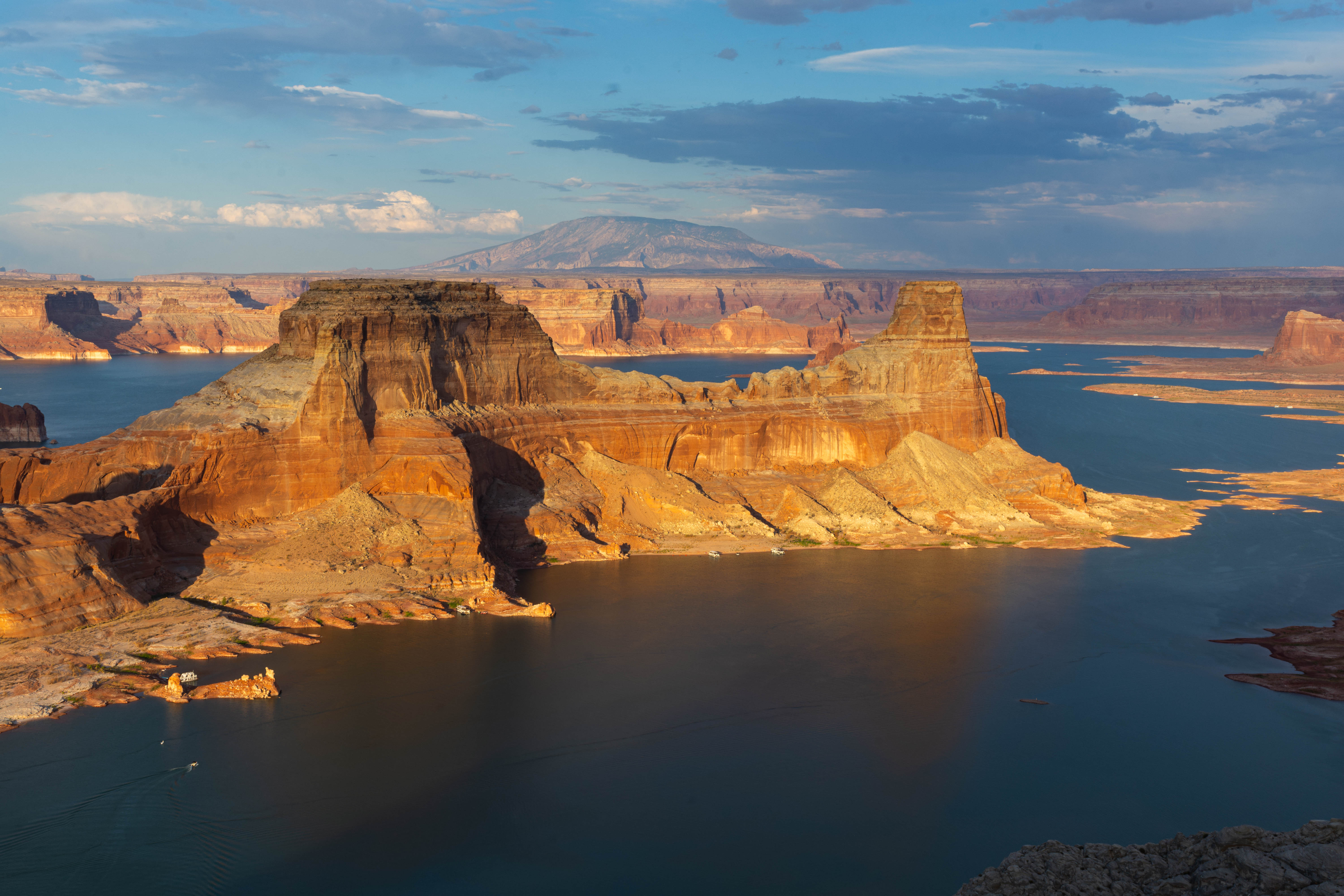
Glen Canyon Dam was built to store water, generate electricity and release the Colorado River downstream. As Lake Powell falls, however, the dam’s outlet arrangement could restrict the very deliveries it was intended to manage. That constraint is driving renewed attention to a proposal for riverbed-level tunnels that would drain the reservoir while leaving the concrete dam standing.

The Glen Canyon Institute’s “Fill Mead First” concept would route water through new diversion tunnels drilled below the dam’s existing bypass tubes. Water now stored in Lake Powell would move toward Lake Mead, about 300 miles downstream behind Hoover Dam. The physical barrier would remain, but Lake Powell as a large operating reservoir and its hydropower and recreation benefits would not.
The problem is outlet elevation, not simply water volume
Glen Canyon Dam’s eight turbines receive water through large penstocks. Those inlets depend on Lake Powell remaining above the minimum power pool. If the reservoir drops below that elevation, water can no longer reach the turbines, ending generation before the lake reaches dead pool.
The dam does have bypass tubes below the penstocks, but they offer less than half the discharge capacity of the power system. They also were not designed to carry sustained, high-volume releases over long periods. Vibration and scouring under those conditions could damage the structures. After inspecting and relining the tubes in 2025, the Bureau of Reclamation said they might work if needed, but that does not give the dam a full-capacity, permanent low-level outlet.
Dead pool is lower still: the elevation at which water can no longer pass through the existing bypass tubes toward Lake Mead. Lake Powell recently fell to a record low of less than 150 feet above that point. Eric Balken, executive director of the Glen Canyon Institute, said the dam is becoming a liability because it might actually prevent water from flowing downstream.
The proposed tunnels would alter that geometry. Placing outlets close to the historic riverbed would allow releases at reservoir levels that leave both the turbines and existing bypass system unusable. In mechanical terms, the proposal separates the dam’s water-delivery function from the high reservoir elevation required by its powerhouse.
More release flexibility would carry a high price
Glen Canyon Dam has about 730 megawatts of generating capacity. Draining Lake Powell would sacrifice that production, although advocates argue that concentrating more water in Lake Mead could increase generation at Hoover Dam. Replacement resources would still have to account for the timing and grid-support functions of hydropower, not merely its nameplate capacity. For scale, the Gemini solar plant near Las Vegas is rated at 690 megawatts, close to Glen Canyon’s capacity, but the two facilities do not provide electricity in the same operating pattern.
A smaller combined reservoir surface could also reduce evaporation. An estimated 11 percent of Lake Powell’s water is lost to evaporation annually. Kathryn Sorensen, research director at the Kyl Center for Water Policy, has estimated that complete drainage could save a couple hundred thousand acre-feet per year. “On a river that is much smaller than anyone expected, that water really matters,” she said.
The competing losses would be immediate and visible. Lake Powell supports boating, tourism and nearby businesses, and its disappearance would remove a familiar recreation economy. It would also expose Glen Canyon, potentially restoring riparian habitat and revealing geological and Indigenous cultural sites that the reservoir covered.
Downstream effects are less predictable. More sediment could move through the system, river flows could fluctuate differently, and non-native fish could enter the Grand Canyon. Jack Schmidt, director of the Center for Colorado River Studies, said the ecosystem “would change in ways that are only partially predictable.” The result would not be a return to a fully natural river; it would be a different managed system built around a standing dam and new outlets.
A decade-long project remains outside the federal plan
Engineering the tunnels would require geological investigation, hydraulic design, environmental review and construction around a major operating dam. Estimates put the process at roughly a decade and billions of dollars. That schedule means the tunnels could not resolve an immediate low-water emergency.
The federal government did not include draining Lake Powell among the options in its recently finalized 10-year environmental impact statement for Colorado River management. Lower Basin representatives have nevertheless urged consideration of infrastructure modifications, arguing that addressing the dam’s limitations could improve long-term operations.
The proposal therefore presents a stark systems trade: retain Lake Powell’s hydropower and recreation while depending on outlets designed for higher water, or build lower tunnels that preserve downstream release capacity while effectively ending the reservoir. Even if policymakers reject full drainage, falling water levels have made the absence of a durable, high-capacity low outlet an infrastructure problem that can no longer be treated as theoretical.
| More aerospace and engineering stories, right in your MSN feed. Follow AMI on MSN |
By Thomas Caldwell — AMI’s senior editor for mechanical and mobility engineering, covering vehicle electronics, systems integration, electrification, chassis systems, propulsion, and safety policy.