Reported Ukrainian Drone Alert Shuts Four Moscow Airports, Diverting 25 Flights
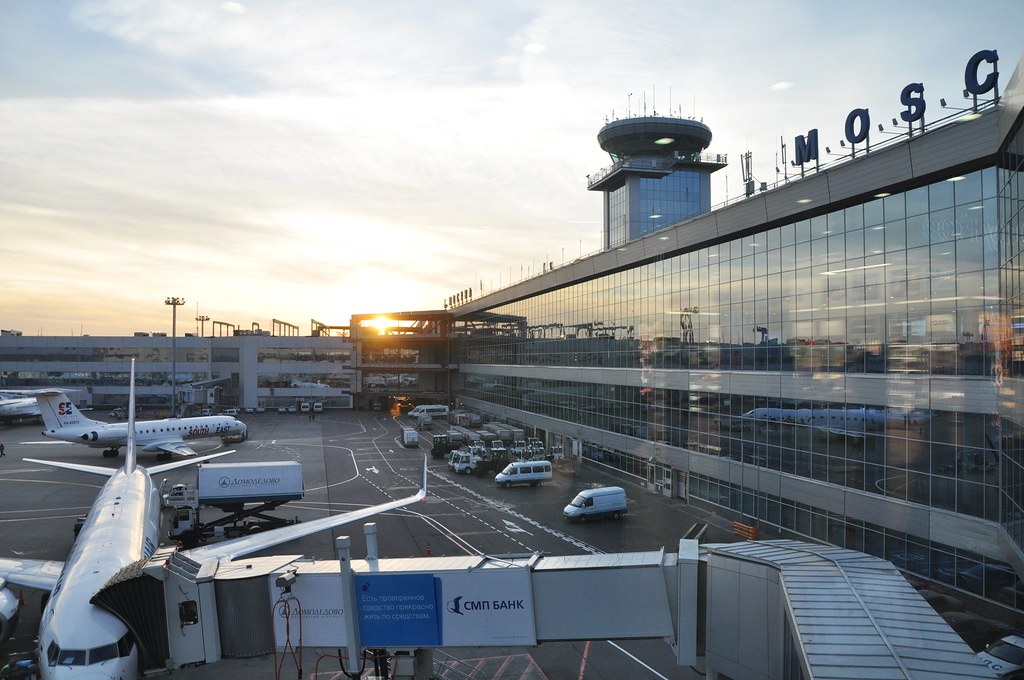
A reported Ukrainian drone alert temporarily halted takeoffs and landings at all four Moscow airports on November 9, sending at least 25 arriving flights elsewhere. Sheremetyevo, Vnukovo, Domodedovo and Zhukovsky later reopened, but the brief suspension showed how an airborne threat can remove an entire metropolitan airport network from service without confirmed damage to a runway, terminal or aircraft.
The restrictions were imposed during the evening as drones were reported flying toward the Russian capital, according to the state news agency TASS. Moscow Mayor Sergei Sobyanin said at least 23 Ukrainian drones were intercepted before reaching the city limits. The aircraft’s origins were not independently established, and their intended targets remain unknown. No passenger injuries or airport damage were reported.
Operations were also temporarily suspended at airports in Kostroma and Yaroslavl, northeast of Moscow. By late evening, the alerts had been lifted across Moscow’s four-airport system and flights were allowed to resume.
A network can lose capacity before suffering damage
The immediate aviation effect came from risk management rather than physical destruction. When authorities stop both arrivals and departures, available runway capacity effectively falls to zero for the restriction period. Aircraft already approaching the region must hold, divert or be reassigned before fuel and crew limits narrow the available choices. Flights waiting to depart remain at their gates or stands, tying up aircraft, crews and ground resources.
Closing four airports simultaneously also removes the easiest local recovery option. During a disruption at one airport, airlines and controllers may be able to redirect some traffic to another airport serving the same city. In this case, all four Moscow airports were unavailable at the same time, so at least 25 inbound aircraft had to land outside the metropolitan network rather than shift between its airports.
A diversion is more than a different landing point. The aircraft, passengers and crew finish that segment away from the planned destination, while the airline must determine how to move them onward and reposition the airplane. Ground handling, fueling, passenger processing and crew-duty constraints at the alternate airport can shape how quickly each flight returns to its schedule.
Reopening does not instantly restore the timetable
Once restrictions end, controllers cannot release every delayed departure and accept every displaced arrival at once. Traffic has to be sequenced back into finite runway, taxiway, gate and airspace capacity. Departures accumulated during the closure may compete with returning diversions and normally scheduled arrivals.
That recovery problem can carry disruption beyond the alert itself. A delayed aircraft may be scheduled to operate another flight, while its crew and passengers may have onward connections. In European aviation generally, knock-on disruption is a major component of delay: Eurocontrol found that reactionary delays accounted for 46% of delay minutes in 2024. That figure does not measure this Moscow event, but it illustrates why a short capacity loss can continue affecting an airline after an airport reopens.
The event also demonstrates why authorities treat drone reports near airports as a coordination problem spanning aviation security, air traffic management and airport operations. The International Civil Aviation Organization’s guidance on protecting civil aviation infrastructure from unmanned aircraft emphasizes coordination and consultation among involved stakeholders rather than a response confined to the airport perimeter.
The interception claim and the aviation outcome measure different things
Sobyanin’s figure of at least 23 intercepted drones is an official Russian claim about the air-defense response. The 25 diversions measure the separate civil-aviation consequence. One number should not be used to infer the route, target or effect of any individual aircraft, and there is no established one-to-one relationship between reported drones and diverted flights.
For airport operators, the operational threshold is not confirmed impact. A credible unresolved alert can be enough to suspend movement while authorities assess the airspace. That creates a difficult balance: keeping airports open preserves transportation capacity, but continuing normal flight operations during an uncertain airborne threat can expose passenger aircraft and airport activity to unacceptable risk.
Moscow’s airports resumed service without reported damage, yet the disruption had already displaced at least 25 aircraft and their passengers, crews and subsequent schedules. The episode’s defining result was therefore not physical loss at an airport, but the temporary disappearance of every local arrival and departure option across a capital-city network.
| More aerospace and engineering stories, right in your MSN feed. Follow AMI on MSN |
By Stephen Wallace — Editor for AMI’s aerospace integration and unmanned mobility coverage, focused on drone manufacturing, VTOL systems, autonomous networks, and air-ground mobility links.