Toyota and Subaru Double US EV Sales to 62,000 as Rivals Retreat
Toyota and Subaru moved in the opposite direction from much of the U.S. electric-vehicle market during the first nine months of 2026. The two automakers collectively sold almost 62,000 EVs, more than twice their year-earlier total, after introducing five models as several larger rivals withdrew electric vehicles or reduced production.
The growth did not make the Japanese partners market leaders. Together they represented about 9% of U.S. EV sales and remained behind General Motors. Toyota, however, was selling two electric vehicles for every one sold by Ford, and Rivian was the only other automaker reported to have expanded its battery-powered business over the same year to date period.
Shared engineering supported lower starting prices
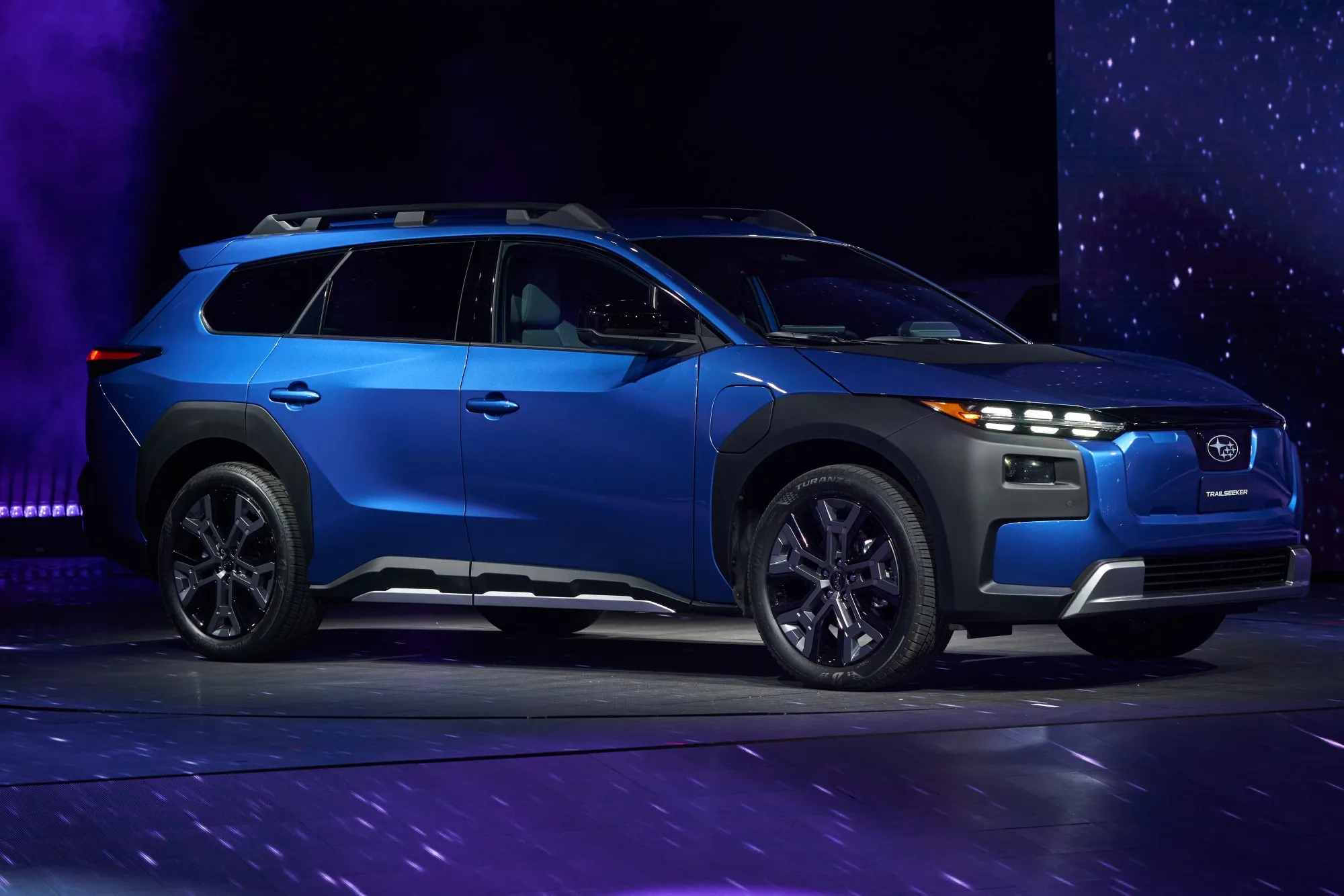
The contrast begins with product cost. Toyota and Subaru concentrated their expansion on electric SUVs priced from roughly US$35,000 to US$45,000, including the Subaru Trailseeker and Uncharted and the Toyota C-HR and bZ Woodland. Those prices placed the vehicles in familiar mass-market SUV territory rather than at the premium end of the EV segment.
By comparison, the average U.S. buyer paid US$56,220 for a new EV in October, according to a Kelley Blue Book analysis. The industry-wide average for all new vehicles reached US$51,109. Starting prices are not directly equivalent to transaction prices, but the figures show why electric SUVs beginning between US$35,000 and US$45,000 can fill a meaningful affordability gap.
Toyota and Subaru reached that range partly by avoiding two completely independent development programs. The companies shared engineering resources, underlying vehicle machinery and development costs, while using different exterior designs to distinguish their products. Subaru spokesman Dominick Infante identified that cooperation as the principal reason the new models could carry relatively affordable sticker prices. Toyota owns 20% of Subaru, reinforcing a partnership that extends beyond a conventional supplier relationship.
The arrangement illustrates the economic value of a shared platform. Expensive elements such as vehicle architecture and core electric-drive engineering can be spread across more models and two sales networks. Each brand can then tune the visible product and market positioning without paying the full cost of creating every underlying system separately.
That efficiency comes with a strategic tradeoff. Sharing major systems reduces engineering duplication, but it also gives the partners less mechanical separation between related vehicles. Subaru is already developing an independent EV platform for later vehicles, indicating that shared engineering can be an effective entry route without necessarily becoming the permanent basis of its electric lineup.
Timing met a changing market
The partners also benefited from when the vehicles arrived. Their development programs began well before the recent market shift, but the resulting SUVs reached buyers as competing choices contracted, gasoline prices rose and EV demand cooled following the expiration of federal incentives in September. Subaru of America field-operations vice-president Timothy Tagye summarized the outcome plainly: “Our timing was good.”
The broader EV market remains unsettled rather than uniformly weak. Kelley Blue Book reported that electric vehicles accounted for 6.5% of U.S. new-vehicle sales in the third quarter, up from 5.8% in the preceding quarter. Sales increased 7.7% sequentially, reaching their highest quarterly level since the federal tax credit ended, although they remained below the unusually strong year-earlier period.
Toyota and Subaru therefore gained in a market where growth was concentrated among relatively few brands. Their results support a narrower conclusion than EV-market leadership: new products can still expand sales when their body style, price and availability align with consumer demand, even while the overall transition proceeds unevenly.
Toyota continues to frame EVs as one part of a broader lineup that also includes hybrids and petrol-only vehicles. That reduces the need to make a single powertrain serve every customer, while the shared platform lowers the burden of adding more battery-electric choices. The next test comes in spring 2027, when an electric three-row Toyota Highlander and the related Subaru Getaway are expected to extend the same partnership into larger family SUVs.
| More aerospace and engineering stories, right in your MSN feed. Follow AMI on MSN |
By Thomas Caldwell — AMI’s senior editor for mechanical and mobility engineering, covering vehicle electronics, systems integration, electrification, chassis systems, propulsion, and safety policy.