Toyota Returns to Australian Wagons: bZ4X Touring Adds 151 Litres, Loses Range
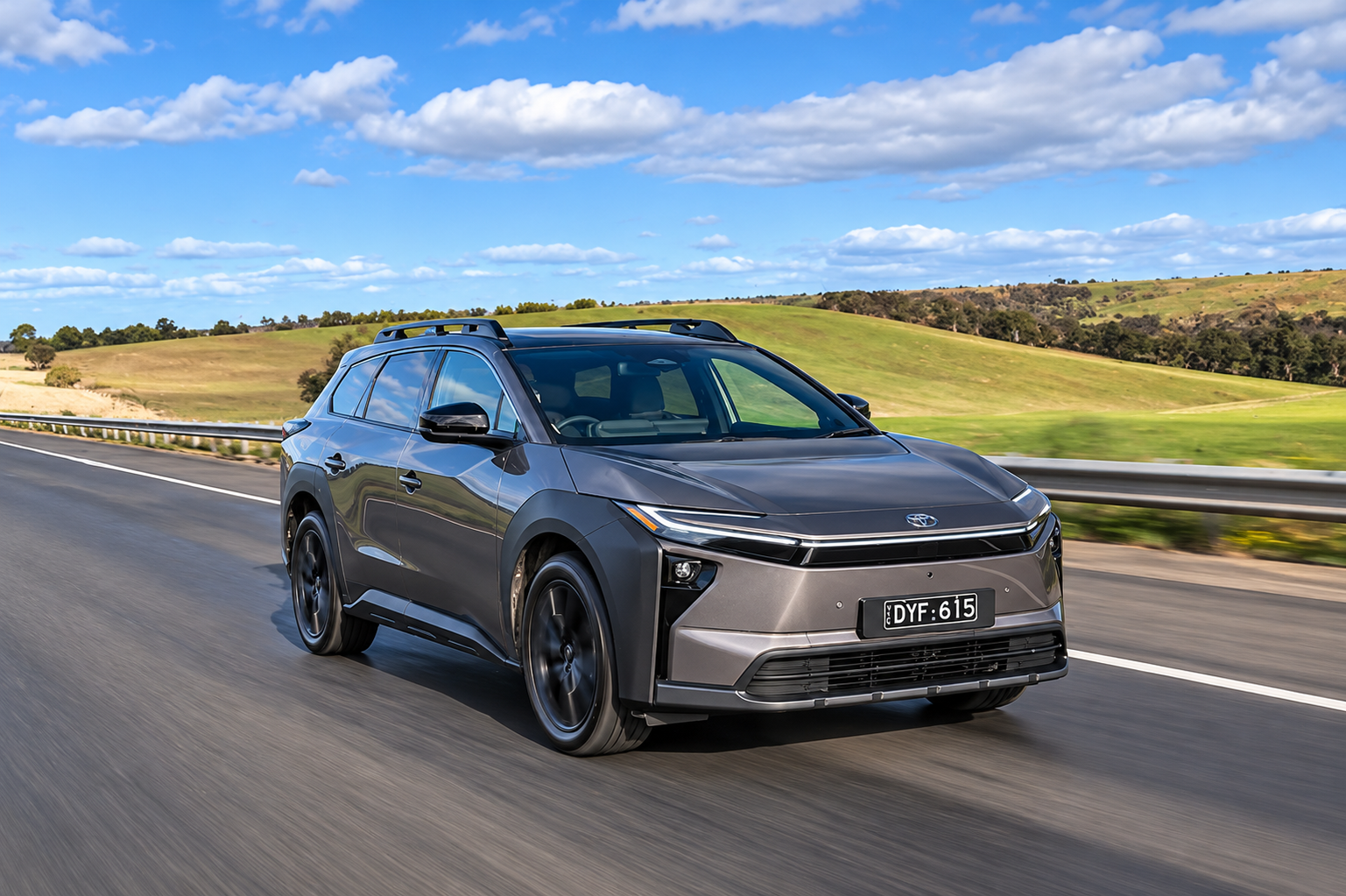
Toyota’s first wagon for Australian showrooms in about 20 years is electric. The 2026 bZ4X Touring expands cargo capacity by 151 litres over the bZ4X SUV, but the added utility comes with a higher price and a shorter claimed driving range. Toyota lists the new model in its Australian vehicle range with 603 litres of cargo space and up to 488km of range.
The comparison with the all-wheel-drive bZ4X SUV defines the Touring’s purpose. At A$69,990 before on-road costs, the sole Touring grade costs A$2,000 more than the AWD SUV. It provides 33 percent more cargo capacity 603 litres rather than 452 but gives up 29km of claimed range. It is also A$14,000 more expensive and has 103km less claimed range than the front-wheel-drive bZ4X.
More body behind the same passenger compartment
Toyota created the extra load space without extending the 2,850mm wheelbase. The Touring is 4,830mm long, and all 140mm of its additional length is positioned behind the rear axle. That packaging decision preserves the distance between the axles while allocating the longer body directly to the cargo area.
The resulting 151-litre gain is the Touring’s clearest practical advantage. It is a substantial increase for luggage and family equipment, although the cargo specification comes with one limitation: Toyota supplies a tyre-repair kit rather than a spare wheel. The vehicle also includes a 1,500-watt power outlet, while towing capacity is rated at 1,500kg braked or 750kg unbraked.
The Touring retains some crossover characteristics despite its wagon designation. It has 211mm of ground clearance, 20-inch alloy wheels and selectable Snow/Dirt and Deep Snow/Mud settings. Crawl Control operates between 2km/h and 10km/h, while the drive modes can be engaged at speeds up to 20km/h.
Quicker acceleration, but a measurable range penalty
Two electric motors, one at each axle, produce a combined 280kW and 269Nm. Toyota claims the Touring can accelerate from zero to 100km/h in 4.4 seconds, making it 0.7 seconds quicker than the bZ4X SUV. The roomier derivative therefore brings a performance increase rather than accepting slower acceleration in exchange for its longer body.
That output is supplied by a 74.7kWh CATL lithium-ion battery. Claimed energy consumption is 16.8kWh per 100km, while a week-long test returned 17kWh per 100km, a close result under those particular driving conditions. The official 488km figure follows the WLTP laboratory cycle; actual range can vary with speed, weather, terrain, accessory use and other operating conditions.
DC charging peaks at 150kW, with Toyota claiming a 10-to-80-percent charge in about 30 minutes. AC charging is rated at up to 22kW, supporting a claimed 10-to-100-percent time of approximately three and a half hours. Accessing that maximum AC rate generally requires three-phase electrical service and suitable charging equipment; many Australian homes use lower-powered connections.
Comfort does not remove the human-factors compromises
The Touring was found to be comfortable and composed, with predictable handling and a softer suspension tune than its Subaru Trailseeker twin. Four levels of regenerative braking can be selected through steering-wheel paddles, giving the driver more direct control than a touchscreen-only adjustment would provide.
Some cabin decisions are less successful from a human-factors perspective. The steering wheel can partially obstruct the high-mounted digital instrument display, and multiple functions depend on the 14-inch touchscreen. Tyre noise and intrusive speed-limit alerts were also identified during the test. These details matter because frequently consulted displays and warnings compete for driver attention even when the underlying vehicle is stable and predictable.
Standard equipment includes heated and ventilated front seats, heated outboard rear seats, a panoramic glass roof, nine-speaker JBL audio, wireless Apple CarPlay and Android Auto, and native satellite navigation. Scheduled servicing is capped at A$190 for each of the first five visits, with intervals of 12 months or 15,000km.
Toyota’s wagon return is therefore more than a change in roofline. The bZ4X Touring buys its 151-litre cargo advantage and quicker acceleration with an extra A$2,000 over the AWD SUV, while its claimed range falls from 517km to 488km. Its value rests on whether that permanent increase in usable space is worth paying more for and recharging 29km sooner.
| More aerospace and engineering stories, right in your MSN feed. Follow AMI on MSN |
By Thomas Caldwell — AMI’s senior editor for mechanical and mobility engineering, covering vehicle electronics, systems integration, electrification, chassis systems, propulsion, and safety policy.