Air France A350’s Unauthorized LAX Turn Comes Within 4,000 Feet of American Jet
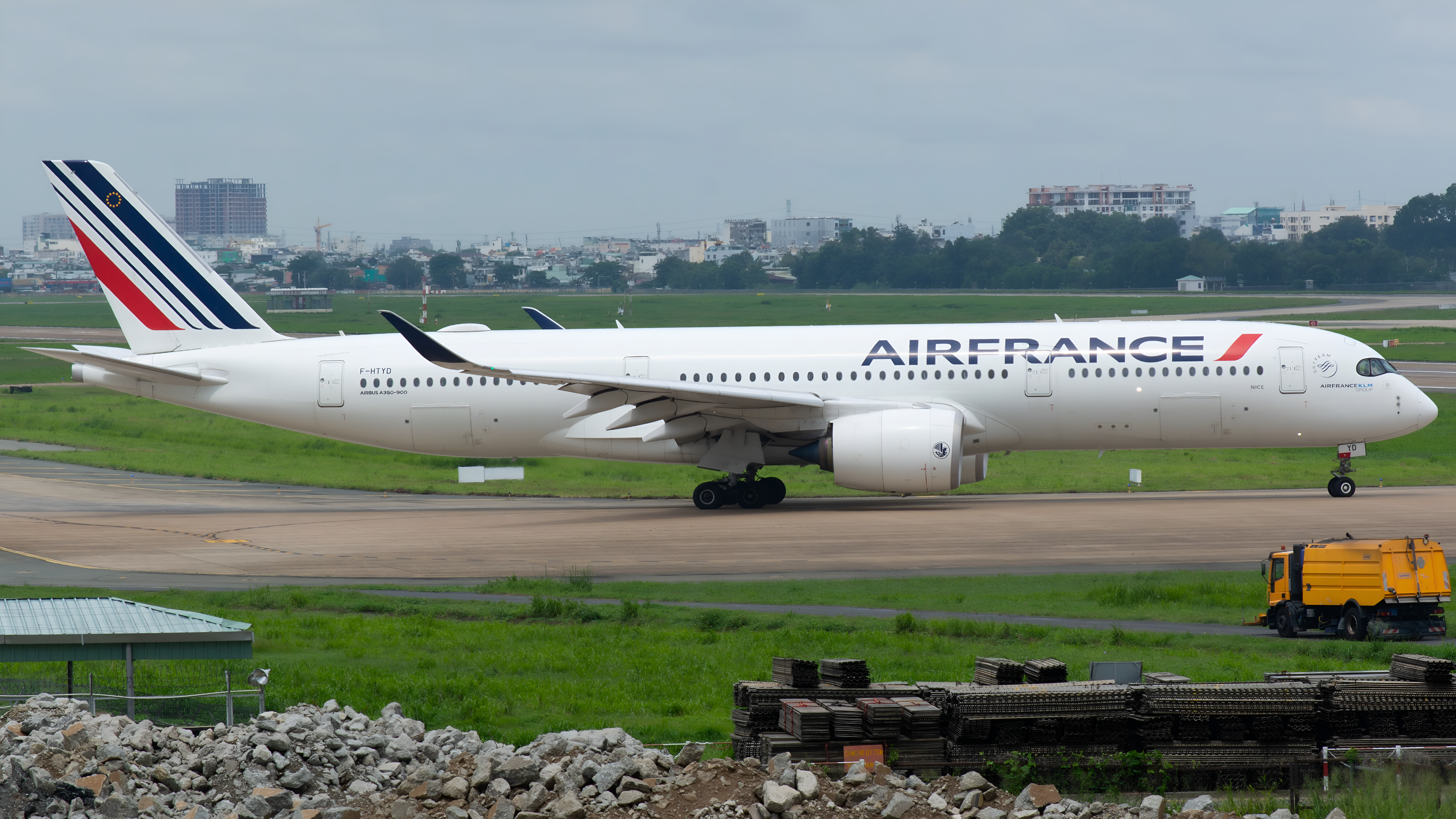
An Air France Airbus A350 departing Los Angeles International Airport made what the Federal Aviation Administration called an “unauthorized turn” to the south on November 7, putting it on a converging path with an American Airlines jet leaving a parallel runway. Flight 28 was headed to Tahiti, while American Airlines Flight 1660, an Airbus A321 bound for Dallas, had just been cleared for takeoff.

The conflict developed after the Air France aircraft turned away from its assigned departure path. The American A321 was then departing on a heading toward the A350, turning two routine parallel-runway departures into a situation requiring an immediate correction from air traffic control.
“Air France 028 heavy, fly heading 270 immediately,” the controller instructed. The controller then told the Air France crew: You were instructed to climb… not turn to a heading. The A350 complied with the corrective direction, and the aircraft began separating.
Flightradar24 tracking data indicated that the two jets came within about 4,000 feet horizontally and were within 1,000 feet of the same altitude at their closest point. Both aircraft continued safely to their destinations after separation was restored.
Why a turn can erase parallel-runway spacing
Parallel runways allow airports to move multiple aircraft efficiently because the assigned departure paths are designed to keep traffic organized after takeoff. The runway spacing alone does not preserve separation once aircraft begin turning. Their projected flight paths also have to remain compatible.
The FAA’s airport traffic-control rules specifically address parallel departures whose projected paths cross. The applicable separation depends on factors including runway spacing, aircraft categories and wake-turbulence requirements. The larger operational point is straightforward: controllers plan around the cleared routes, so an aircraft turning where it was expected to climb can quickly enter airspace reserved for another departure.
That is the key constraint exposed at LAX. The American jet’s takeoff clearance and the Air France departure could coexist while each aircraft followed its assigned path. Once the A350 turned south, the geometry changed faster than either aircraft’s overall distance from the airport might suggest.
The controller’s response was therefore direct rather than incremental. An immediate heading assignment gave the Air France crew a precise course to fly, removing ambiguity while the two aircraft were climbing. The instruction addressed the developing conflict without requiring either flight to return to LAX, and both continued after their flight paths diverged.
Afterward, the controller described the event to the American crew as a “pilot deviation,” saying: That aircraft just turned in front of you. They were instructed they were on the right departure, but you know, pilot deviation. In air traffic terminology, a pilot deviation is an action contrary to an air traffic control instruction and can lead to penalties. No enforcement outcome or formal cause has been announced in the information available.
Another close call in a difficult year
The LAX encounter follows several other close calls this year involving runway or approach-path conflicts. In June, Delta pilots abandoned an approach at Boston Logan International Airport while an American Airlines aircraft accelerated for takeoff on an intersecting runway. Also in June, a Beechcraft 76 Duchess came within 500 feet of a JetBlue passenger jet landing at Fort Lauderdale-Hollywood International Airport.
In April, a Republic Airways aircraft landing at New York’s John F. Kennedy International Airport strayed into the path of a Jazz regional jet using a parallel approach. Those events involved different airports and circumstances, and no common cause has been established.
The consequences of losing separation remain stark. Last year, 67 people died when an Army Black Hawk helicopter and an American Airlines regional jet collided over the Potomac River. At LAX, the defensive layer that mattered was an alert controller issuing an unambiguous correction while enough separation remained for the A350 and A321 to move safely onto diverging paths.
| More aerospace and engineering stories, right in your MSN feed. Follow AMI on MSN |
By David Whitaker — Associate editor for AMI’s aerospace and drone systems desk, translating flight systems, aircraft programs, spaceflight, and UAV developments into accessible technical stories.