Audacious Automotive’s 10,000-RPM Audi RS4 Restomod Starts at £350,000 Before Donor
£350,000 buys the conversion, but not the car underneath it. British tuner Audacious Automotive is preparing a 50-car production run of its IV, a coach-built restomod based on the structural, mechanical and electrical architecture of the B7-generation Audi RS4. Customers must supply or purchase that donor separately.
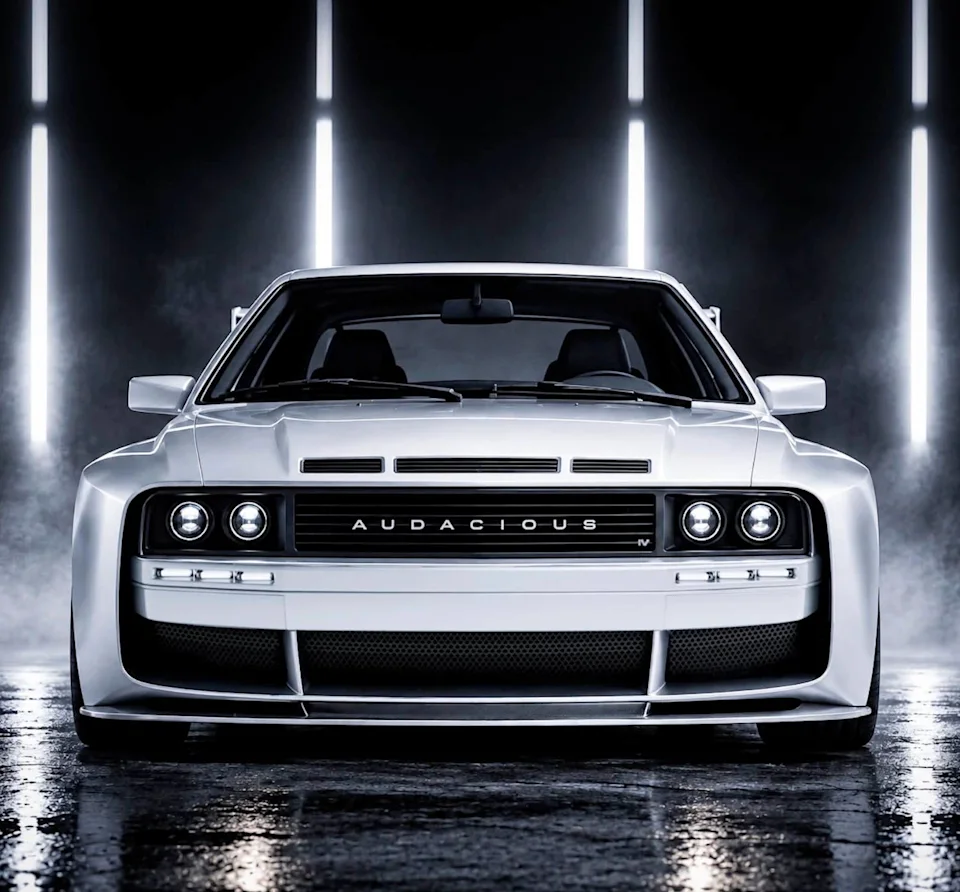
The unusual proposition pairs a Sport Quattro-inspired body with the RS4’s 4.2-litre V8, six-speed manual transmission and all-wheel-drive foundation. Audacious claims the conversion removes about 250 kg relative to a standard B7 RS4, while a supercharger raises the base configuration to approximately 600 bhp. The stated results are 0-60 mph in less than 3.4 seconds and a 200 mph top speed.
Three very different V8 propositions
The base package is only the first step. Audacious also offers a 750 bhp stage-two upgrade, with changes to the engine internals, cooling, fuelling and driveline. Above those versions are re-engineered naturally aspirated and supercharged V8 options being developed to rev to 10,000 rpm.
Outputs and acceleration figures for the 10,000-rpm configurations have not been disclosed. That leaves an important distinction between the IV’s two headline numbers: the 750 bhp package is the stated high-output option, while 10,000 rpm describes the operating range of separate engine programs. Buyers cannot assume that the highest-revving version is also the most powerful or quickest.
A five-figure engine speed is technically notable because the mechanical demands increase rapidly as rotational speed rises. Pistons, connecting rods and valvetrain components must repeatedly accelerate and reverse direction more often, while friction, heat management and oil control become increasingly consequential. High-speed valvetrain behavior is especially challenging: an SAE technical paper on high-performance engine valvetrains describes how valve float, valve bounce, friction losses and mechanical stresses become critical design considerations at elevated speeds.
Audacious has not provided the component specifications, validation mileage, service intervals or durability data for its 10,000-rpm V8. The rev limit therefore identifies an ambitious engineering target, not a complete account of how the engine achieves it or what maintenance burden accompanies it.
RS4 systems beneath a new upper body
The conversion retains the RS4’s integrated foundation, including its floor and lower body structure, suspension geometry, principal mounting points, drivetrain, brakes, steering, electrical systems and controls. That approach gives the builder an established mechanical and electronic package rather than requiring every subsystem to be developed from scratch.
Audacious then builds the IV’s angular upper body around that architecture. Metal-bodied commissions use steel and aluminium construction, while an optional carbon-fibre upper body cuts additional weight. No final curb-weight figure was provided in the main specification, so the claimed 250 kg reduction is the clearest common comparison available. The design also incorporates a large rear wing and substantial rear diffuser.
The historic reference is visual rather than mechanical. Audi’s original rally cars became closely identified with turbocharged five-cylinder power and competition-developed all-wheel drive; Audi’s own rally history traces the quattro system’s motorsport success from the 1980s. The independently developed IV instead uses the later RS4’s V8-based architecture and is not an official Audi model revival.
Its price reflects the scope and scarcity of the coachbuilding work. Production is limited to 50 individually commissioned examples, and £350,000 is only the starting conversion price. The donor B7 RS4 and optional mechanical or carbon-fibre upgrades add further cost. Although a heavily specified car has been estimated elsewhere at more than £500,000, Audacious has not provided a confirmed maximum or fully optioned price.
For prospective customers, the largest unanswered issue is not the claimed 200 mph maximum but the detail behind the 10,000-rpm engine: its final output, durability validation and servicing requirements remain undisclosed as the 50-car program moves forward.
| More aerospace and engineering stories, right in your MSN feed. Follow AMI on MSN |
By Robert McKinney — Editor-in-Chief for AMI’s automotive and mobility coverage, with a mechanical engineering background and a decade reporting on powertrain systems, EV innovation, and global vehicle manufacturing.