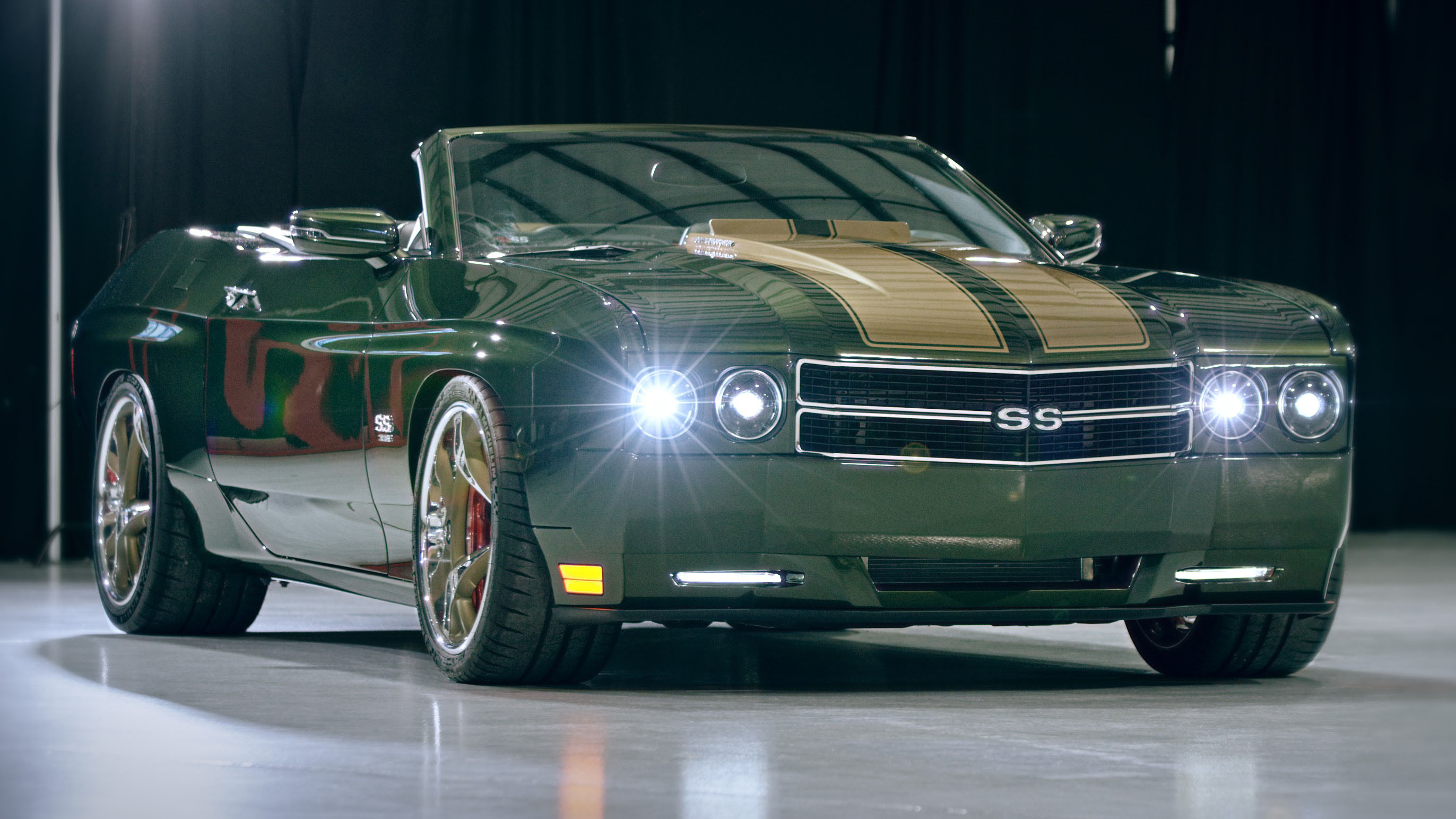
Chevelle 70/SS Owner Uses House-Paint Toner for $200,000 Car’s Wood Grain
The simulated wood inside Ron Crume’s Chevelle 70/SS begins with an automotive base coat, not household paint applied directly to carbon fiber. After scuffing that base to help the next layers bond, Crume brushed on water-based house-paint toner in burnt sienna, raw umber and black. He then dry-brushed the colors into grain patterns and used water to pull the toner into streaks.
That distinction explains how an inexpensive material from the house-paint world became part of a custom muscle car priced from about $200,000. The toner serves as a workable decorative layer on the dash panels and headliner. Automotive coatings above and below it provide the prepared foundation, color depth and protective outer surface needed for a finished vehicle interior.
Crume followed the toner with a root-beer-brown automotive candy color called James Brown. That translucent layer added shadows and visual depth without concealing the hand-worked grain beneath it. Clear coat then sealed the completed finish. Taped edges and black airbrushed drop shadows made individual areas appear to be separate boards joined with mitered edges.
The result depends less on the toner’s price or retail label than on where it sits in the coating stack. The automotive base establishes a consistent surface and background color. Scuffing gives the decorative layer a better mechanical key. The water-based toner allows the painter to manipulate streaks and grain before the automotive candy adjusts the apparent depth. Clear coat supplies the final gloss and isolates the artwork from routine contact.
It is a layered finishing system rather than a claim that house paint can replace automotive paint. Crume did not coat the car’s carbon-fiber exterior with household material. The exterior received PPG Envy Green and Madysen Gold, two automotive colors created by painter Charley Hutton.
A traditional effect inside a modern restomod
Hand-painted faux wood has a long automotive history. American manufacturers once employed skilled workers to reproduce wood grain on dashboards and trim, often because the process cost less than fitting real veneer. As documented in a history of automotive wood graining, factories used patterned plates and rollers, with brushes handling areas the rollers could not reach. Modern imitation wood is more commonly printed, making Crume’s hand-worked finish an unusual continuation of that craft.
Crume learned his method from his late mentor, Don Tippet. A lifelong painter, he painted his first car a 1978 Firebird in his father’s garage when he was 16 or 17. For the Chevelle project, he traveled from Arkansas with his wife, Lisa, to Trans Am Worldwide’s Tallahassee shop. He became the company’s first customer permitted to paint his own 70/SS there and worked alongside a shop painter identified as Keith.
The car was designated 7B after Trans Am Worldwide removed number six from the sequence at Crume’s request. The designation refers to a business that he and Lisa founded.
Carbon fiber surrounds the hand-painted trim
The Chevelle 70/SS is a modern interpretation of the 1970 Chevrolet Chevelle SS, but its underlying structure comes from a sixth-generation Chevrolet Camaro on General Motors’ Alpha platform. Trans Am Worldwide replaces the Camaro’s exterior panels with carbon fiber and reshapes the vehicle into a body six inches wider and 14 inches longer than the donor car.
Pricing begins near $200,000, while a fully equipped 454 LS6/X can exceed $400,000. The entry version uses a 6.2-liter GM LT1 V8 rated at 450 horsepower. Crume’s engine and transmission specifications were not disclosed, leaving the finishing work not an unconfirmed powertrain configuration as the defining feature of his build.
Professional refinishing also involves hazards that are independent of whether one decorative layer is water-based. Automotive base coats, candy colors and clear coats can introduce overspray and chemical exposure. NIOSH guidance for autobody painting recommends properly designed ventilation, suitable spray equipment, personal protective equipment and formal respiratory-protection practices.
Crume’s interior demonstrates why the finished appearance cannot be credited to one “secret ingredient.” Hardware-store toner supplied the grain, but surface preparation, controlled handwork, automotive candy, painted shadows and clear coat turned that modest material into convincing wood inside a carbon-fiber car costing at least six figures.
| More aerospace and engineering stories, right in your MSN feed. Follow AMI on MSN |
By Thomas Caldwell — AMI’s senior editor for mechanical and mobility engineering, covering vehicle electronics, systems integration, electrification, chassis systems, propulsion, and safety policy.