Learjet Pitch-Control Surface Broke Apart, Pieces Found 3.8 Miles Away
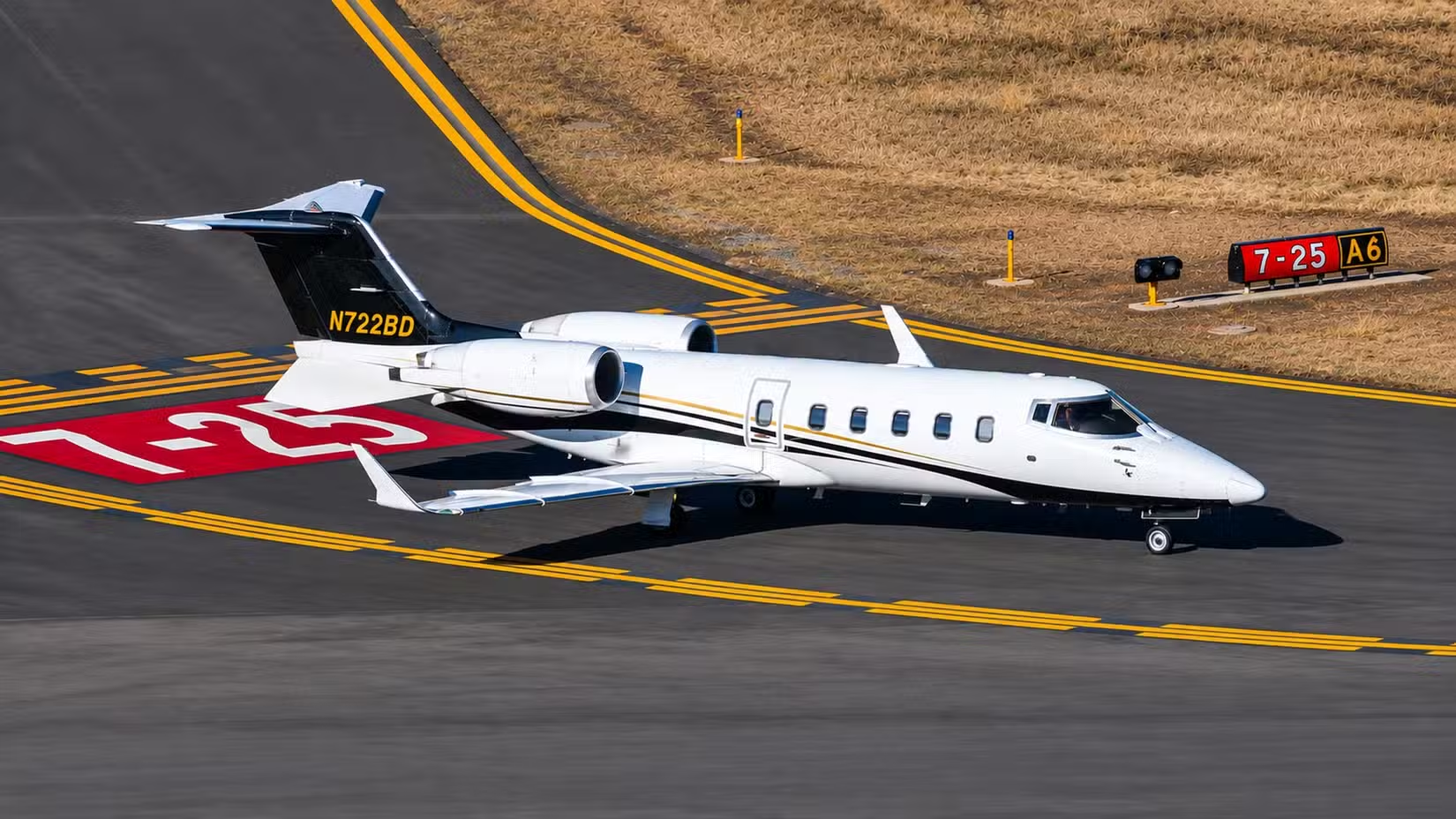
Most of a Learjet 60’s left elevator was recovered in three pieces scattered between 1.3 and 3.8 miles from the Florida crash site, according to National Transportation Safety Board Member Tom Chapman. Their distance from the impact crater makes it implausible that the elevator broke apart when the aircraft hit the ground, he said. The physical evidence establishes an in-flight separation involving a primary flight-control surface, but not whether that separation started the loss of control.
The private jet crashed near a residential area in Palm Beach County on Nov. 1 while operating a charter flight from Austin, Texas, to North Eleuthera Airport in the Bahamas. Both pilots and all seven passengers, including two children, were killed. One person on the ground suffered a leg injury, and hundreds of nearby residents were evacuated.
Why the separated elevator matters
The elevator is a movable surface attached at the tail and used to control pitch the aircraft’s nose-up or nose-down attitude. Because that function is fundamental to controlling an airplane’s flight path, finding most of the left elevator away from the main wreckage gives investigators an important boundary condition: at least part of the pitch-control structure was no longer attached before impact.
That conclusion narrows the sequence without identifying its starting point. One scenario is that the elevator separation occurred first and contributed to the loss of control. Another is that the aircraft had already entered an extreme condition in which aerodynamic or inertial forces tore the surface away. Chapman said investigators do not yet know which sequence occurred.
The distinction cannot be resolved from debris distance alone. A component found miles from the crater can show that it left the aircraft before the main impact, but its location does not explain the loads, structural condition or aircraft motion at the instant of separation. Investigators must place that finding alongside the condition of the recovered pieces, the remaining wreckage, weather information and other records.
Chapman said weather conditions at altitude, turbulence and possible structural failure are among the factors being examined. Storms remained a primary focus, while severe weather also disrupted the first stages of work at the accident site. None has been identified as the crash’s cause.
Physical examination must establish the order of failure
The recovered elevator sections can potentially help investigators distinguish damage associated with an initiating failure from damage produced by later overload. That work depends on technical examination and comparison with adjoining aircraft structure. The available findings do not yet describe the fracture surfaces or identify where the breakup began, so the two possible sequences remain investigative scenarios rather than conclusions.
The rest of the wreckage may supply the context that the separated elevator cannot provide by itself. Public works crews removed an unstable utility pole and drained water from the deep impact crater so investigators could enter and recover buried components. Much of the material collected elsewhere consisted of small fragments that had not yet been identified.
“We expect to find critical airplane components within the crater,” Chapman said. Investigators had not confirmed what evidence remained underwater, and the force of impact left the aircraft heavily fragmented. Recovery therefore serves two connected purposes: locating major systems and preserving enough physical relationships to reconstruct how the aircraft came apart.
The work remains in the fact-gathering phase of the NTSB investigative process. The agency says investigators collect wreckage information, flight records, maintenance documents, interviews and other data before analyzing the sequence and determining probable cause. That process is iterative; examination of one component can redirect attention to records or other parts of the aircraft.
Tuesday was the NTSB’s final on-site briefing, with subsequent information to be released online and through the agency’s media-relations channels. The recovered elevator has already established that a critical part of the Learjet’s pitch-control system separated in flight. Evidence from the drained crater and technical analysis of the three elevator pieces must now show whether that breakup initiated the emergency or marked the forces generated after control was already being lost.
| More aerospace and engineering stories, right in your MSN feed. Follow AMI on MSN |
By Thomas Caldwell — AMI’s senior editor for mechanical and mobility engineering, covering vehicle electronics, systems integration, electrification, chassis systems, propulsion, and safety policy.