FAA Investigates Cessna 172 Overturning Behind United Jet at John Wayne
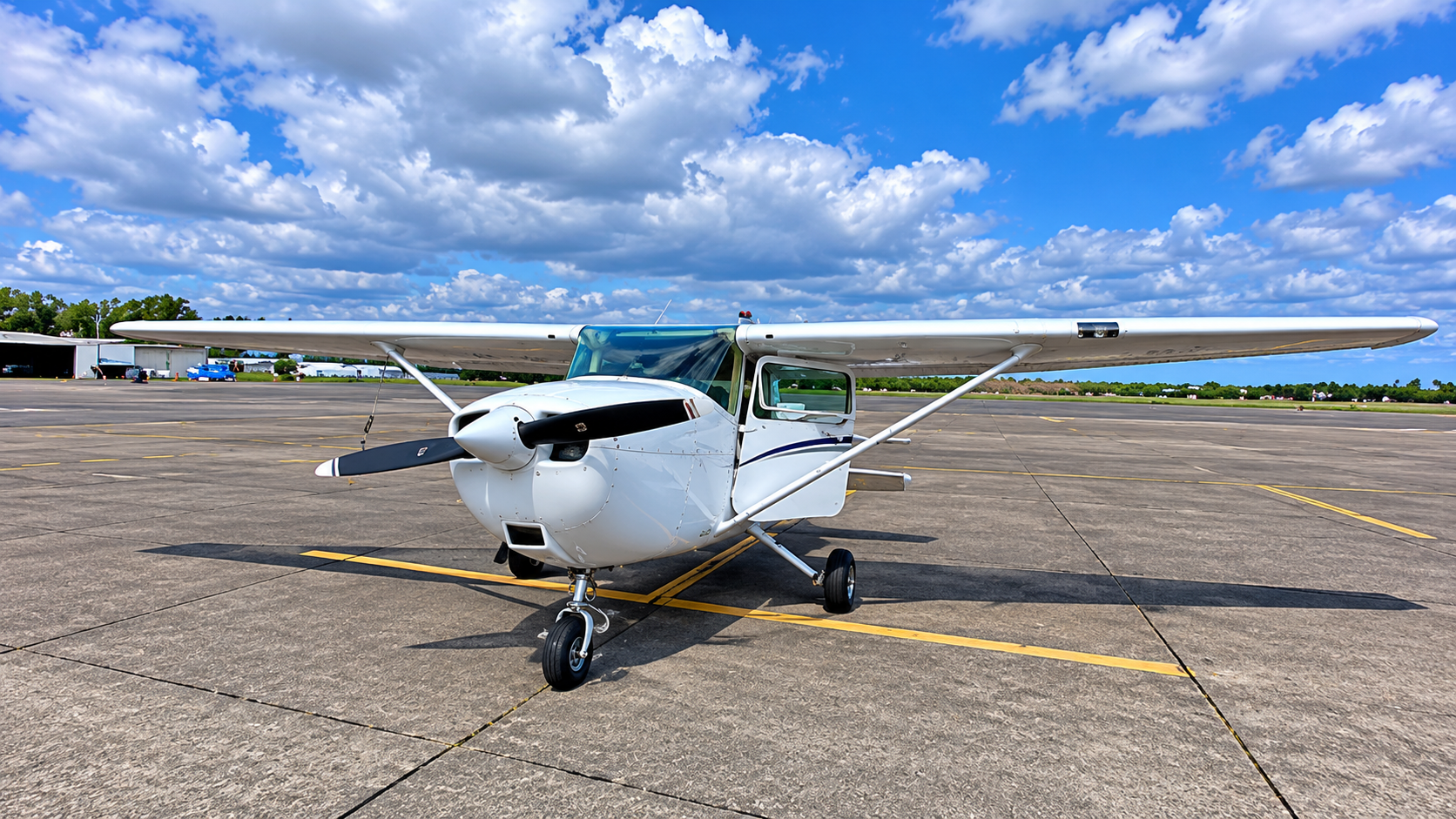
A Cessna 172 carrying a flight instructor and student overturned on the ACI Jet ramp at John Wayne Airport in Orange County at about 2:40 p.m. Saturday. Neither occupant was injured, but the Orange County Flight Center, which owns the airplane, said it was totaled.
The Federal Aviation Administration’s preliminary account identified a specific sequence: “A Cessna 172 was blown over while taxiing behind United Airlines Flight 2611 at John Wayne Airport.” The agency is investigating and cautioned that its information could change. John Wayne Airport and Orange County Fire Authority officials had not confirmed jet blast as the cause.
Instructor Jason Ryu and student Kunal Gawli were returning from a lesson and taxiing toward parking when the airplane tipped onto its roof. Ryu said the Cessna encountered “sudden, strong airflow” as he began turning left into the parking area. “At that moment, we lost, completely, the control and the airplane started to tip over,” he said.
The FAA inspected the aircraft and interviewed Ryu and Gawli on Monday. Those steps should help investigators establish the Cessna’s position and movement, the United flight’s operation, local wind conditions and the geometry of the ramp and nearby taxi routes. The preliminary statement points investigators toward jet blast, but the final sequence and contributing factors remain open.
Why jet blast can overwhelm a light aircraft
Jet blast is the high-velocity exhaust flowing behind a running turbine engine. Its reach and force vary with engine power, aircraft orientation and distance. It is particularly consequential on the ground, where a light airplane has little room to move and its aerodynamic controls may not be able to counter a sudden cross-flow at taxi speed.
A Cessna on its landing gear also presents large surfaces to airflow: its wings, fuselage and tail can generate substantial rolling or yawing moments if struck unevenly. Braking may limit forward motion, but it does not eliminate the aerodynamic force acting above the wheels. Once a wing begins to rise and the load shifts across the landing gear, the crew’s available control margin can narrow quickly.
The FAA has long treated jet blast as an airport-design and ground-operations hazard. Its archived airport design guidance on jet blast addresses exhaust velocities, their effects during ground operations and methods for reducing exposure. NASA’s Aviation Safety Reporting System has also documented light aircraft being moved, damaged or overturned by jet exhaust on ramps and taxiways.
Those records show why the John Wayne investigation cannot stop at identifying the jet ahead of the Cessna. Aircraft heading, spacing, thrust setting and the direction in which exhaust was projected can all affect exposure. Ramp geometry matters because turns can redirect exhaust toward aircraft or equipment that were not directly behind a jet moments earlier. Investigators must determine which of those conditions were present rather than infer them from the rollover alone.
Construction concerns remain an allegation
The flight center initially said the blast came from a United or Southwest airliner taking off. The FAA’s preliminary information subsequently identified United Flight 2611, while airport and fire officials had not independently confirmed the cause.
Orange County Flight Center’s director, Niki-A., also said a reconstruction and realignment project at John Wayne Airport was adversely affecting general aviation aircraft and could jeopardize flight safety. No official finding has connected that work to the Cessna’s overturning.
The construction concern nevertheless gives the FAA a concrete issue to examine: whether temporary or revised ground layouts changed spacing, traffic flow or the relative positions of light aircraft and airliners. Airport reconstruction does not by itself establish a hazard, but altered routes can change where aircraft wait, turn and cross behind one another. Those details determine whether an established jet-blast risk is being adequately controlled in a new layout.
For now, the confirmed outcome is unusually fortunate: an occupied trainer ended up on its roof during an ordinary taxi to parking, yet both people walked away without injury. Ryu said the incident would not stop him from pursuing an aviation career. The FAA’s next account will need to establish whether the preliminary jet-blast sequence fully explains the rollover and whether the airport’s changing ground arrangement played any role.
| More aerospace and engineering stories, right in your MSN feed. Follow AMI on MSN |
By David Whitaker — Associate editor for AMI’s aerospace and drone systems desk, translating flight systems, aircraft programs, spaceflight, and UAV developments into accessible technical stories.