Navy Lab Fills Seven Tomahawk Warheads, Doubles Mixer Capacity for 2027
A U.S. Navy laboratory has filled seven first-article Tomahawk warheads and installed a mixer with twice the capacity of its existing equipment, two concrete steps toward becoming an additional source for the missile program. The Naval Air Warfare Center Weapons Division, or NAWCWD, expects the new machine at China Lake to support production-rate operations around June 2027.

The seven WDU-36/B warheads were filled this fall using a 150-gallon mixer that has operated at China Lake for decades. They are inspection units rather than production deliveries: Each must pass the first-article process before the laboratory can begin supplying production warheads.
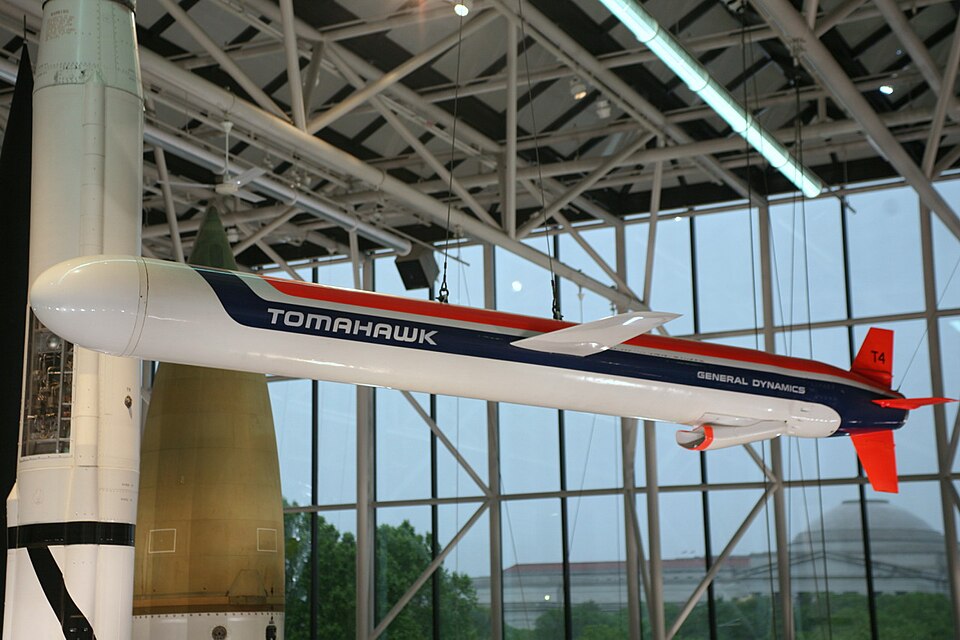
That qualification step follows an earlier demonstration using a museum Tomahawk warhead case. The team showed it could mix PBXN-107 explosive and fill the case correctly, with subsequent testing, imaging and X-rays confirming the result. Moving from one demonstration case to seven first articles gives the Navy a larger body of manufacturing work to inspect, but it does not eliminate the remaining supplier, material and workforce constraints.
A larger mixer addresses only one bottleneck
NAWCWD inaugurated its new 300-gallon B&P Littleford mixer on Nov. 9 in China Lake’s rebuilt Motor Assembly Compound. Its nominal capacity is double that of the older machine used for the first articles, making it the central equipment upgrade behind the planned production rate.
The mixer is not expected to come online immediately. Installation must be followed by the work needed to place the equipment into service within a qualified production process, with June 2027 serving as the current operating target. The schedule shows why expanding missile output cannot be reduced to ordering a larger machine or signing a bigger contract.
The Navy awarded Raytheon, the Tomahawk prime contractor, a $22.9 billion contract in August to accelerate missile production. China Lake’s role is narrower but consequential: It plans to manufacture a portion of the warheads so their availability does not delay final Tomahawk deliveries. General Dynamics Ordnance and Tactical Systems machines the warhead cases, while L3Harris is the current explosive loader.
L3Harris and NAWCWD signed a multiyear public-private partnership in September covering missile-component manufacturing. Under that arrangement, the laboratory is intended to augment industrial output while retaining its established developmental-testing role, rather than permanently displacing industry.
Specifications and supplies set the pace
The demonstration effort uncovered a major documentation problem: The Tomahawk warhead specification required a substantial update. NAWCWD spent much of the past year revising that specification and its approved supplier list. Until those documents and sources are aligned with the actual production process, added mixing volume alone cannot produce qualified hardware.
Lead times create another boundary. Some required components and materials can take as long as a year to arrive, so the laboratory purchased long-lead items before the multiyear agreement was in place. That advance buying is intended to prevent the new equipment from sitting ready while essential inputs remain somewhere in the supply chain.
People present a similar schedule constraint. More than a dozen new employees are joining the operation, but they are expected to require about a year of training before working independently. The expansion therefore depends on experienced technicians remaining available long enough to qualify both the process and the incoming workforce.
A shorter trip preserves production time
The rebuilt compound also changes how material moves through the plant. Under the older arrangement, transferring material from the mixing building to the casting location required an approximately half-mile movement that took about an hour. The new layout is designed to reduce that transfer to roughly 15 minutes across one bay.
Saving about 45 minutes is important because the casting window is limited. The dispersed plant also allows curing and casting to occur in different areas, supporting simultaneous work rather than forcing each stage into a strictly sequential flow. That is a throughput gain created by layout and handling time, not mixer size.
The facilities replace infrastructure lost when earthquakes destroyed three energetics compounds in the Salt Wells area in July 2019. Construction on the replacements began in April 2022. The China Lake project also fits a wider Navy effort to rebuild government-owned energetics capacity; a separate 15-year, $2.7 billion modernization plan is updating facilities at Naval Surface Warfare Center Indian Head Division.
China Lake’s seven first articles now have to clear inspection, while the larger mixer, revised specifications, long-lead materials and new technicians converge on the June 2027 target. Until those pieces qualify together, the additional Tomahawk warhead source remains a production line in formation rather than a source of full-rate deliveries.
| More aerospace and engineering stories, right in your MSN feed. Follow AMI on MSN |
By David Whitaker — Associate editor for AMI’s aerospace and drone systems desk, translating flight systems, aircraft programs, spaceflight, and UAV developments into accessible technical stories.