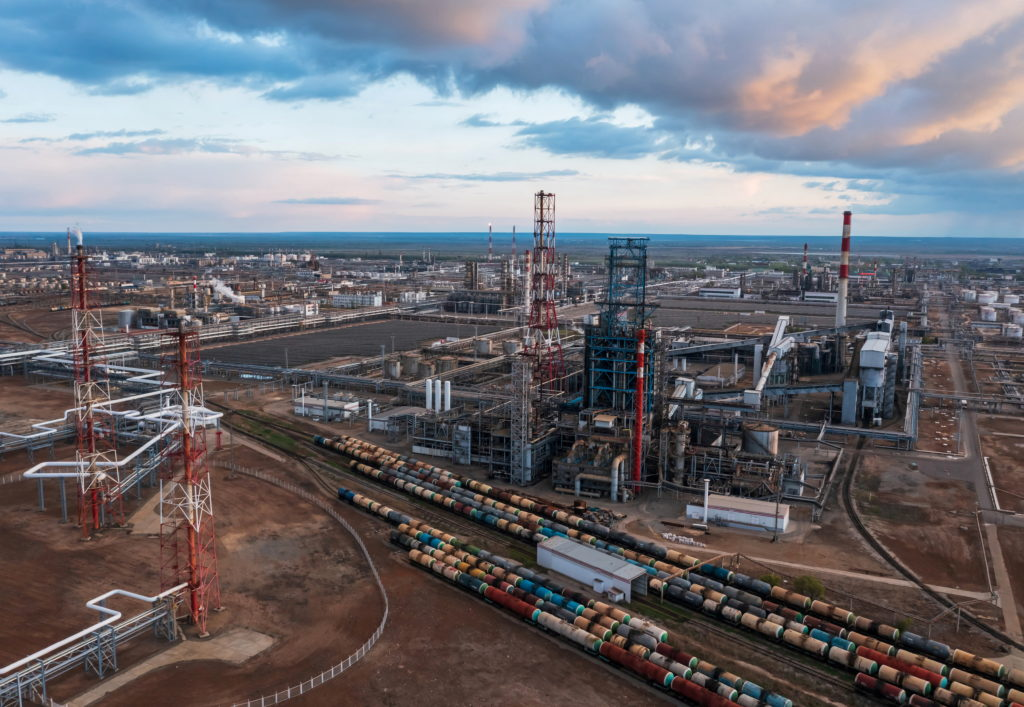
Russian Refining Recovers as Crude Exports Hit 3.65 Million Barrels Daily
Russia’s seaborne crude exports averaged 3.65 million barrels per day over the four weeks through Nov. 1, 2026, an increase of 60,000 barrels per day from the preceding four-week period. The rise, based on Bloomberg tanker tracking cited by The New Voice of Ukraine, coincided with increased processing at Russian refineries during a nearly two-week lull in Ukrainian strikes.

Those two increases create the central operating tension: a refinery recovery would normally divert more crude into domestic processing, leaving less unrefined oil for export. Instead, both refinery throughput and the rolling export average moved higher. The result illustrates that Russia’s oil network is not governed by refinery availability alone. Production, storage, port capacity, loading schedules and the timing of individual cargoes can temporarily allow domestic processing and tanker shipments to rise together.
About 38 tankers loaded 27.8 million barrels of Russian oil during the latest reported week. Estimated weekly export revenue reached a three-week high of $2.66 billion. The four-week average smooths short-term swings caused by weather, port schedules and large cargoes, but it can also retain earlier high-volume weeks after operating conditions begin to change.
Refineries and tankers are competing outlets
A refinery converts crude into gasoline, diesel, jet fuel and other products. When processing units are unavailable, crude that would have entered those plants must be stored, exported through available terminals or removed from production. When plants return to service, they provide another outlet and can support higher crude production if wells or upstream facilities had previously been constrained.
The scale of October’s recovery was substantial. Three industry sources told Reuters that Russian refinery processing reached roughly 5 million barrels per day in the second half of October, about 25% above the level at the beginning of the month. That estimate helps explain how domestic processing could rise sharply even while the four-week crude-export measure edged upward.
The two flows also serve different markets. More crude exports supply overseas refineries with feedstock. More Russian refinery processing can instead produce additional diesel and other finished fuels for domestic use or export. Industry estimates indicated that diesel production increased as refinery runs recovered, while export quotas provided an outlet for some of the additional fuel.
This distinction has practical consequences for international supply. A barrel shipped as crude does not replace a barrel of diesel at the location and time it is needed. Refineries have different configurations, product yields and feedstock requirements, while finished fuels face separate inventory and transportation constraints. Greater Russian processing could therefore improve diesel availability even if it eventually reduces the amount of crude offered to foreign refiners.
The export figure has important boundaries
The 3.65-million-barrel figure is a four-week tanker-tracking average, not a complete monthly export total. S&P Global Commodities at Sea separately estimated Russian crude exports at 2.794 million barrels per day for October. Different tracking windows, shipment classifications and accounting methods can produce materially different results, particularly when cargoes are delayed or attributed to different loading periods.
Expectations for November were already pointing toward another change. Two traders told Reuters that exports from Russia’s western ports could decline by 100,000 to 200,000 barrels per day as refineries increased output following maintenance and produced more diesel. Those preliminary loading plans remained subject to revision.
Ukraine resumed strikes late in the reported week, with at least four Russian refinery facilities reported hit from Oct. 30 onward. No later throughput figures establish how much those renewed strikes changed processing or exports. The proposed energy ceasefire also remained unresolved: Ukrainian President Volodymyr Zelenskyy said Ukraine had observed the announced pause but had not received confirmation that Russia accepted it, while the Kremlin said discussions were continuing.
The next confirmed refinery-run and tanker-loading data will show whether the simultaneous increases were a short overlap or a more durable expansion in available oil outlets. If refinery availability falls again, more unprocessed crude may be pushed toward tankers but only to the extent that production, ports, storage and overseas demand can absorb it.
| More aerospace and engineering stories, right in your MSN feed. Follow AMI on MSN |
By Thomas Caldwell — AMI’s senior editor for mechanical and mobility engineering, covering vehicle electronics, systems integration, electrification, chassis systems, propulsion, and safety policy.