Toyota Plans Indiana-Built Scion KEI-01 Pickup for U.S. Sale, Capped at 25 MPH
Toyota is bringing an unusually small pickup to the United States, but the regulatory path that makes the vehicle practical to sell also prevents it from functioning like an ordinary truck. The Scion KEI-01 is scheduled to arrive in the second half of 2027 with a federally limited top speed of 25 mph.

The right-hand-drive pickup will be assembled at Toyota’s Indiana plant and certified as a low-speed vehicle rather than as a conventional road-going truck. Low-speed vehicles are generally restricted to roads with speed limits of 35 mph or lower, although actual access depends on state and local rules. That boundary makes the KEI-01 potentially useful on campuses, farms, municipal properties and some urban routes but unsuitable for highways and many suburban arterial roads.
Toyota is also starting more narrowly than a conventional consumer launch. Initial distribution will be a low-volume, fleet-focused pilot through a small group of Scion dealers selected from the existing Toyota network. The company may consider limited retail sales later, depending on demand, market conditions and operating experience. It has not announced pricing or planned production volume.
The 25-mph limit is part of the certification strategy
Federal classification drives the central tradeoff. Under the National Highway Traffic Safety Administration’s low-speed-vehicle rules, an eligible vehicle must have a maximum speed no higher than 25 mph and a gross vehicle weight rating below 3,000 pounds. It must comply with Federal Motor Vehicle Safety Standard No. 500, which covers equipment including lights, mirrors, seat belts and a windshield.
The category does not carry the full crashworthiness requirements applied to passenger cars and conventional trucks. NHTSA has explained that vehicles capable of exceeding 25 mph fall outside the low-speed class and must instead meet the broader federal standards applicable to their vehicle type, including relevant crash, braking and lighting requirements.
For Toyota, remaining inside the low-speed category reduces the certification burden for a compact, niche vehicle. For operators, the cost is a hard performance ceiling and a limited road network. A 25-mph truck cannot simply join faster traffic because a particular trip is short, and a nearby destination may be inaccessible if the connecting road has a higher posted limit.
The safety boundary also reflects the environments for which this category was created. Low-speed vehicles were intended for controlled settings and short trips where they would have limited interaction with faster, heavier traffic. Earlier Insurance Institute for Highway Safety testing of other low-speed vehicles and imported minitrucks found major protection differences when they collided with conventional vehicles. Those tests did not involve the KEI-01, but they illustrate why road access and traffic-speed separation are integral to this class rather than incidental restrictions.
Small dimensions support specialized work
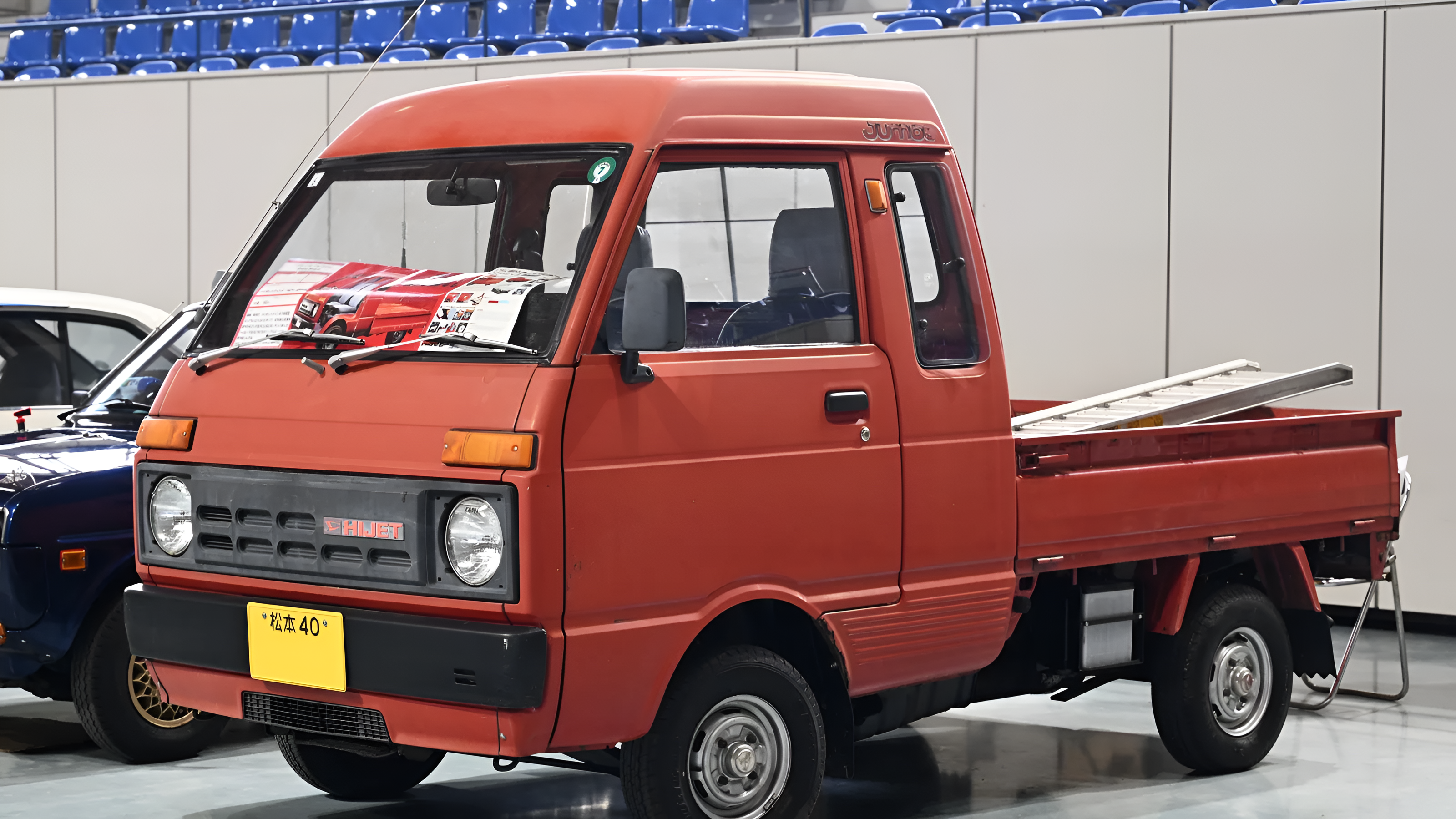
The KEI-01 measures just over 11 feet long and less than 5 feet wide. Toyota says it will use a 660-cubic-centimeter three-cylinder engine, a continuously variable transmission and selectable four-wheel drive. Its three-way fold-down cargo bed is rated to carry up to 600 pounds, while an extended cab provides sliding and reclining seats plus storage behind them. Heat and air conditioning will be standard.
Those specifications point toward operations where maneuverability and cargo access matter more than speed: moving tools around a university, carrying materials across a farm, servicing a corporate campus or making local deliveries within a compatible street network. Its compact footprint contrasts sharply with mainstream pickups such as the Ford F-150 and Chevrolet Silverado, but the KEI-01 is not a direct substitute for either. It cannot cover the same roads or provide conventional highway mobility.
The Indiana assembly plan distinguishes the truck from older Japanese kei vehicles already owned by American enthusiasts. Imported vehicles at least 25 years old can enter the country without complying with all current federal motor-vehicle safety standards, as outlined in NHTSA’s importation guidance. Toyota instead intends to build a new vehicle domestically and certify it for the limited low-speed category.
Toyota plans to invest $34 million in the Indiana operation and add approximately 50 jobs, with assembly beginning in the second half of 2027. The result will look like a tiny Toyota pickup and perform several familiar truck tasks, but its defining specification will remain the one owners encounter before payload or four-wheel drive: it stops accelerating at 25 mph.
| More aerospace and engineering stories, right in your MSN feed. Follow AMI on MSN |
By Thomas Caldwell — AMI’s senior editor for mechanical and mobility engineering, covering vehicle electronics, systems integration, electrification, chassis systems, propulsion, and safety policy.