UK Changes F-35B Maintenance After Corrosion Repair Outlasted Carrier Deployment
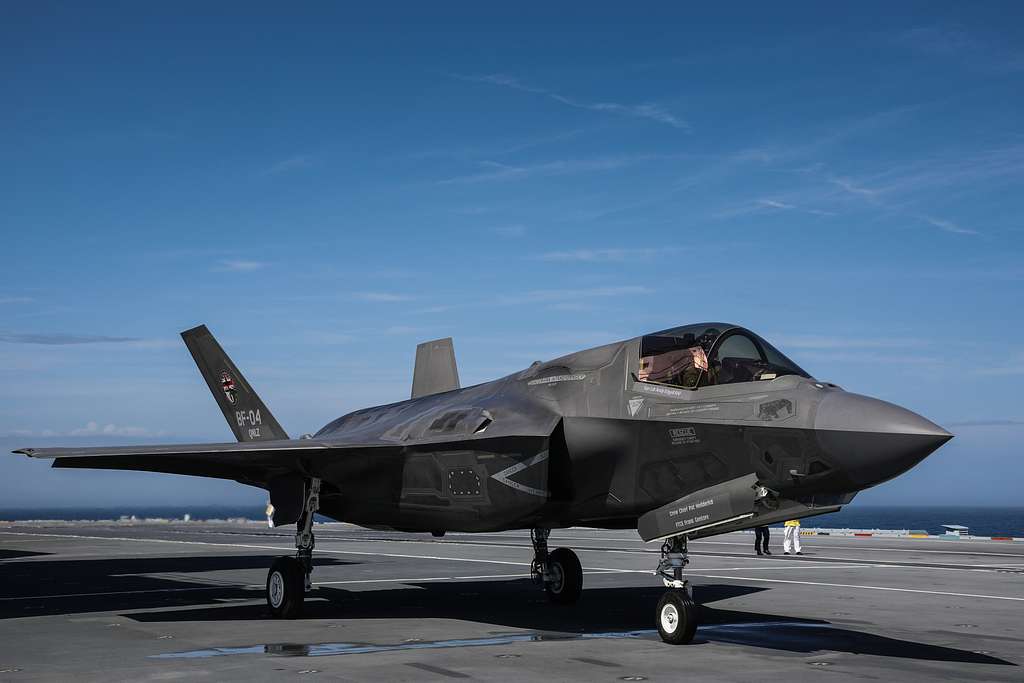
Britain’s F-35B force can generate a major operational surge, but recovering from one is proving difficult. The UK is changing how it maintains its 47 fighters after prolonged carrier exposure worsened corrosion, with one resulting repair taking longer than the nearly eight-month deployment that contributed to the damage.

The pressure emerged after Carrier Strike Group 25, also known as Operation Highmast. Eighteen F-35Bs from the Royal Air Force’s 617 Squadron and the Royal Navy’s 809 Naval Air Squadron participated, with the deployed total reaching 24 during a major exercise. An unnamed UK official, speaking under Chatham House rules at the Defence iQ International Fighter Conference, said prolonged maritime exposure increased degradation, particularly corrosion, and placed additional demand on low-observable components such as canopies.
That is a significant recovery burden for a fleet with only two frontline squadrons. Elements of the Lightning Force deployed again to RAF Akrotiri in Cyprus shortly after the carrier returned in December 2025, adding another commitment before the earlier maintenance backlog had been cleared.
Prevention is moving ahead of repair
The maintenance response now centers on moving corrosion work earlier in the cycle. Planned changes include revised procedures, transferring more practices to individual squadrons and adjusting calendar-based maintenance to create additional opportunities for preventive treatment.
We are cresting the hill – we’ve had to do a few complex repairs, the official said. The objective now is to push maintenance “upstream,” preventing corrosion rather than waiting until damage requires extensive remediation.
For carrier aircraft, that approach addresses a predictable operating condition rather than a one-time defect. Salt-laden maritime environments can keep corrosion control on the maintenance schedule throughout an aircraft’s service life. The UK Ministry of Defence acknowledged in a May 2026 response discussed by Parliament’s Public Accounts Committee that corrosion worsened by maritime exposure affects aircraft availability and will require continuing management across the program.
The fleet follows the wider F-35 program’s directed corrosion-inspection regime. Inspection and remediation take place at RAF Marham in Norfolk and through other F-35 program facilities, while the ministry works with the F-35 Joint Program Office and industry on prevention, recovery and measures intended to reduce recurrence.
A small fleet magnifies long maintenance jobs
A repair lasting longer than an entire deployment is consequential even if it affects only one aircraft. In a 47-aircraft inventory, every extended maintenance case removes a meaningful portion of the force available for training, deployment and readiness duties. The practical limit is not simply how many fighters Britain owns, but how many it can crew, arm, connect, maintain and then regenerate after use.
Consecutive commitments make that regeneration problem harder. Maintenance personnel must address routine servicing while also clearing deferred or unusually complex work from the previous deployment. Demand for canopies, corrosion treatment, spare parts and repair capacity can therefore persist well after the carrier and its aircraft return home.
The wider F-35 enterprise is also trying to improve sustainment. The Joint Program Office’s Global Sustainment Solution Reset includes higher global spare-parts holdings, expanded industrial production and repair capacity, and a review of maintenance policies. Lockheed Martin says it has invested more than $2 billion in spare parts and work addressing repair deficits across the global fleet. Those measures may strengthen the shared support system, but Britain still has to align preventive work, personnel and squadron schedules around its own carrier operating pattern.
The UK official described the recent deployments as operationally successful, but said exceptional effort and bespoke workarounds were not a repeatable operating model. The force’s five-year ambition is to move from extraordinary surges toward persistent and resilient output. Reaching that goal will depend less on proving that 24 aircraft can deploy at once than on how reliably a two-squadron frontline force can return them to service afterward.
| More aerospace and engineering stories, right in your MSN feed. Follow AMI on MSN |
By David Whitaker — Associate editor for AMI’s aerospace and drone systems desk, translating flight systems, aircraft programs, spaceflight, and UAV developments into accessible technical stories.