Ukrainian Drone Barrage Leads Russia to Restrict More Than 20 Airports
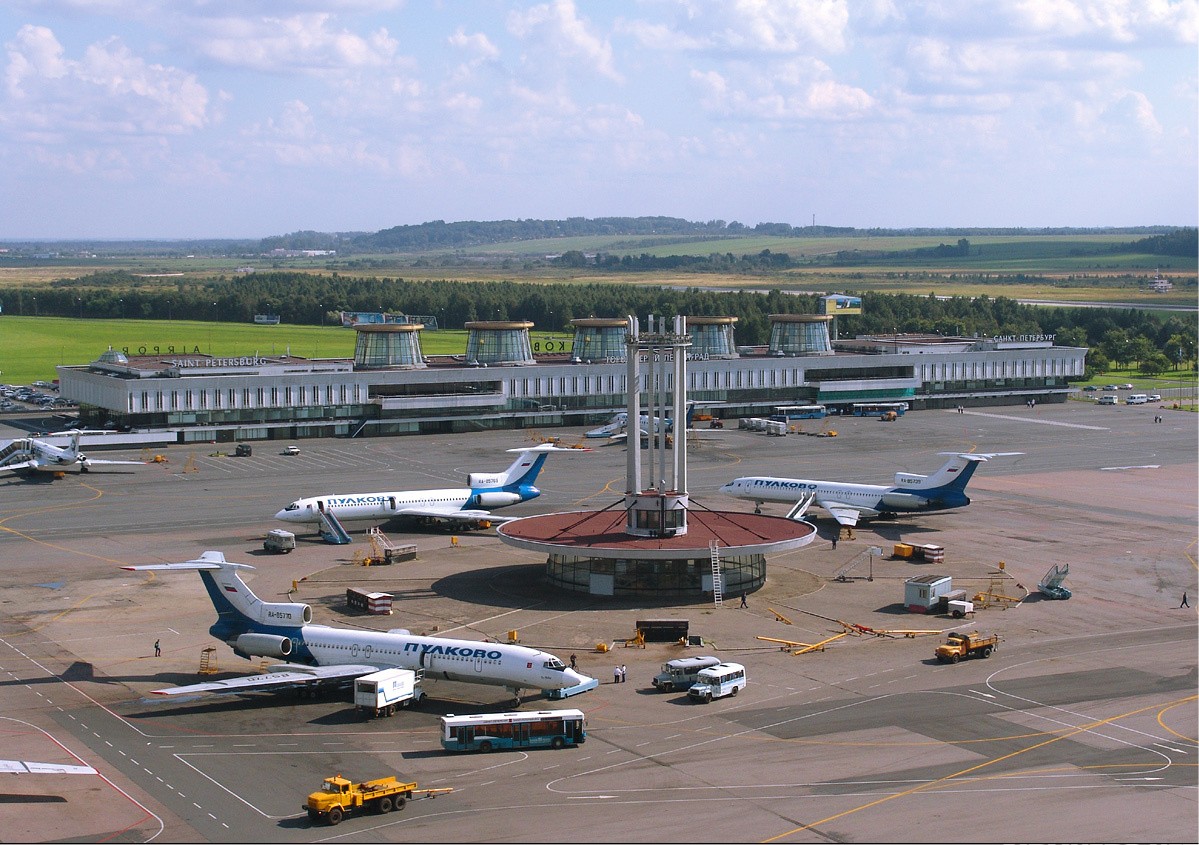
More than 20 civilian airports came under temporary flight restrictions across Russia during a large Ukrainian drone attack on November 11, 2026. Russia’s federal air transport agency, Rosaviatsiya, imposed the restrictions at facilities including Pulkovo Airport in St. Petersburg and Vnukovo and Domodedovo, two of Moscow’s four international airports.

The duration of the restrictions was not specified, and no totals were provided for delayed or canceled flights. Even without those figures, the geographic reach makes this an aviation-network event: a broad drone alert constrained access to major airports serving Russia’s two largest cities as well as facilities elsewhere in the country.
Twenty airports create a network problem
An airport restriction removes or limits usable capacity at a point in a much larger transportation system. Airlines plan aircraft rotations, crew assignments, passenger connections and ground handling around tightly sequenced arrival and departure windows. When numerous airports face restrictions within the same operating period, the potential disruption extends beyond aircraft scheduled to use the affected runways.
A flight held at its origin may arrive too late for its next assignment. An aircraft diverted or delayed can leave passengers, crews and maintenance support out of position. Busy airports can absorb only a limited number of schedule changes before congestion shifts to later departure banks or other facilities. The available information does not quantify any of those outcomes in this event, but they explain why the number of restricted airports matters more operationally than a list of reported impact locations.
The inclusion of Pulkovo, Vnukovo and Domodedovo also raises the consequence beyond a collection of restrictions at small regional fields. Major international airports concentrate airline schedules, connecting traffic and support resources. Temporarily limiting several such nodes can reduce flexibility precisely when operators need alternative arrival points and recovery options.
Safety decisions must precede certainty
Drone alerts create a difficult operating boundary for civil aviation authorities. Airport and air-traffic managers may have incomplete information about an aircraft’s identity, location, flight path or duration in controlled airspace, yet they must protect passenger aircraft during takeoff, approach and landing. Those are phases in which crews have limited room to accommodate an unexpected conflict.
The International Civil Aviation Organization’s guidance on protecting civil aviation infrastructure from unmanned aircraft emphasizes coordination among the stakeholders responsible for prevention, response and mitigation. That institutional requirement becomes harder when an alert covers many regions rather than the vicinity of one airport.
European aviation authorities have encountered the same basic capacity-versus-certainty tension outside an active conflict. The European Union Aviation Safety Agency has documented drone-related disruptions at large airports including Madrid, Frankfurt, Riga and Manchester. Its guidance is intended to help airport operators limit disruption while keeping operations safe. Russia’s November event was far broader in scale, but the underlying civil-aviation constraint is comparable: normal traffic cannot simply continue while authorities evaluate an unresolved drone hazard.
Official drone totals require attribution
Russia’s Defense Ministry claimed that at least 627 Ukrainian drones were downed across 22 regions, occupied Crimea and the Sea of Azov. That total remains an official Russian account. Leningrad regional governor Aleksandr Drozdenko separately said 150 drones were downed over his region and reported a fire and three non-life-threatening injuries at the Ust-Luga port area.
The exact attack total cannot be established from the official claim alone. The restrictions at more than 20 airports, however, provide a separate and concrete measure of the pressure placed on civilian aviation. Airport operating decisions had to be made across a wide geographic area regardless of how the final drone count is assessed.
That scale also illustrates the readiness burden created when unmanned aircraft activity and civilian traffic share a large regional picture. Detection, airspace management, airport operations and airline recovery are different functions, but they become linked during a broad alert. A response that protects one airport in isolation is insufficient when restrictions spread across a national network.
Rosaviatsiya’s action therefore represents more than a precaution at individual runways. It shows how a geographically dispersed drone event can temporarily remove capacity from multiple civilian aviation nodes at once. The still-missing duration, delay and cancellation figures will determine the full passenger impact, but the confirmed scope already establishes the central operational consequence: more than 20 airports had to place safety restrictions ahead of normal schedule continuity.
| More aerospace and engineering stories, right in your MSN feed. Follow AMI on MSN |
By Stephen Wallace — Editor for AMI’s aerospace integration and unmanned mobility coverage, focused on drone manufacturing, VTOL systems, autonomous networks, and air-ground mobility links.