Germany’s Government-Aircraft Base Move Slips to 2036 as Costs Rise
Germany’s plan to eliminate a costly split in government-aircraft operations will instead preserve it for roughly another decade. Complete relocation of the Federal Ministry of Defense’s Air Transport Wing from Cologne/Bonn Airport to Berlin Brandenburg Airport is not expected before 2036, while the planned base has nearly doubled in area and its estimated cost has climbed to approximately €1.7 billion.

Internal federal planning documents reported in November 2026 place completion between 2036 and 2038. The German Taxpayers Federation estimates that construction-price increases could push total expenditure as high as €2.5 billion, although that figure is not the government’s current official estimate. The Federal Agency for Real Estate is responsible for the construction project.
The delay extends an operating arrangement in which government passengers generally board in Berlin, but aircraft, crews and maintenance remain centered at Cologne/Bonn. The German Armed Forces describes the wing as a two-location organization, with Cologne-Wahn serving as its main base and Berlin as the central interface for government flights in the capital region.
A consolidation project has become a larger integration job
The expansion is substantial. Revised plans increased the proposed site from 304,000 to 570,000 square meters. It is intended to accommodate headquarters, security and operations buildings, maintenance hangars, taxiways and a dedicated underground refueling facility. Approximately 1,170 wing employees remain primarily based at Cologne/Bonn.
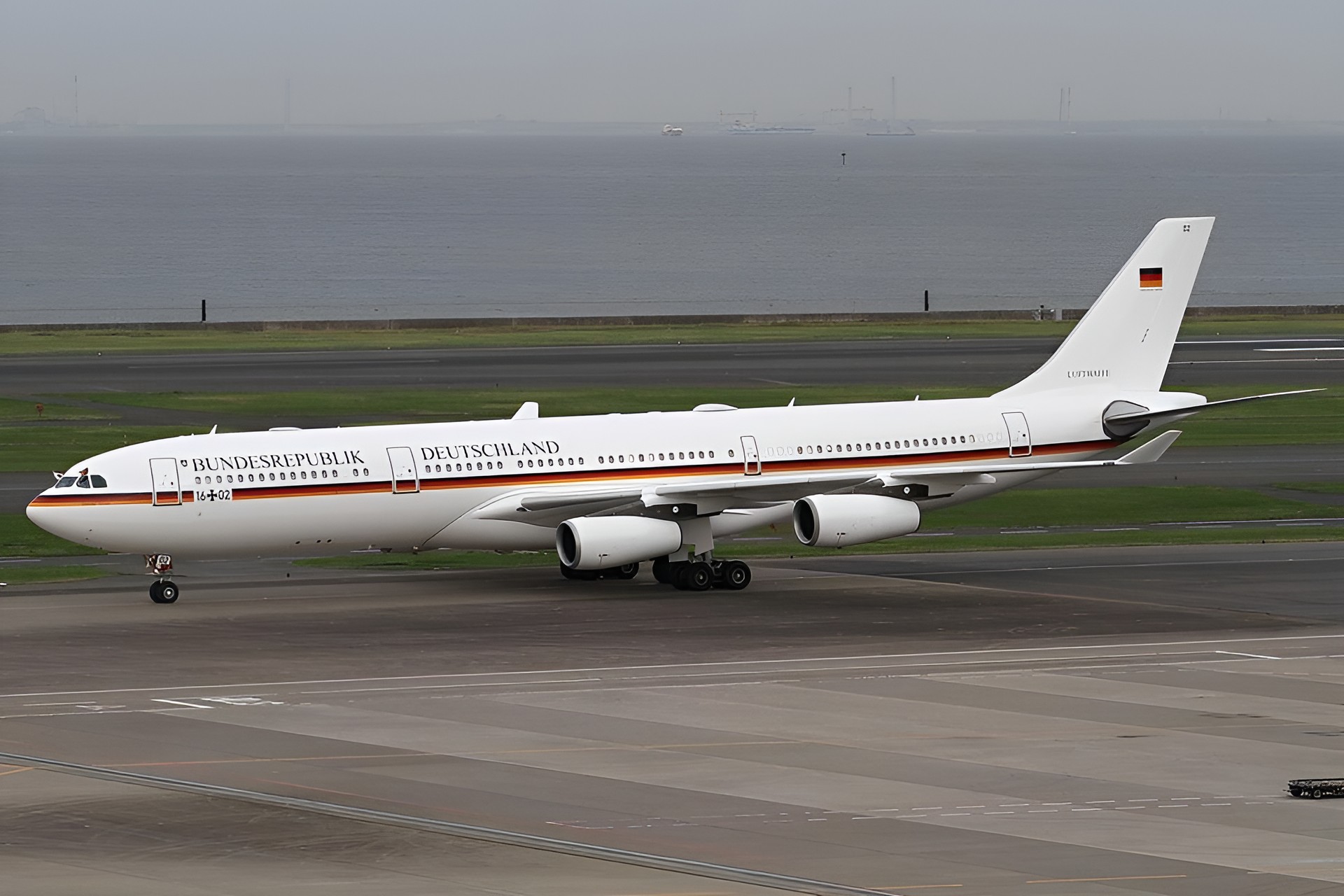
Part of that growth follows directly from fleet replacement. Germany’s long-haul government fleet now consists of three Airbus A350-900 aircraft. Each has a wingspan of nearly 65 meters and requires more hangar and apron space than the retired Airbus A340s. Larger aircraft do not merely need a longer parking line: they affect hangar clearances, pavement layout, taxi routes, servicing space and the separation needed to move equipment safely around an aircraft.
The base also must account for aircraft that have not yet been selected or delivered. The Defense Ministry plans replacements for its Airbus A319 and A321 medium-haul aircraft and Cougar transport helicopters. Designing around future fleets can reduce the risk of early obsolescence, but it also expands requirements before final aircraft dimensions, support arrangements and maintenance demands are fixed. That uncertainty is one reason aviation infrastructure programs can acquire schedule and cost pressure well beyond the buildings themselves.
Parking capacity reflects protocol and maintenance demands
The proposed 26 parking positions have drawn scrutiny from the Taxpayers Federation. The ministry says 18 would support German Air Force aircraft, including reserve and maintenance capacity. Three more are designated for protocol operations, four for visiting foreign-government aircraft and one for de-icing.
Those positions illustrate the tradeoff between visible utilization and operational resilience. A government fleet cannot plan solely around an average day. Maintenance can remove aircraft from service, state visits can produce short periods of concentrated demand, and reserve capacity supports schedule reliability. At the same time, every additional position adds land, pavement, drainage, lighting, security and servicing requirements. Public-cost oversight therefore depends on whether each position corresponds to a documented operating need rather than whether all 26 are continuously occupied.
The same tradeoff applies to the project’s overall footprint. Consolidating maintenance, crews and aircraft near the principal passenger location could reduce repositioning, but achieving that result requires replicating or moving functions already established at Cologne/Bonn. Taxpayers incur the capital cost before they receive the operating efficiencies, and the longer construction takes, the longer both cost structures overlap.
The delay preserves hundreds of repositioning flights
In 2025, 488 regular government flights were accompanied by approximately 700 empty and standby flights between Cologne/Bonn and Berlin. Some repositioning flights also support crew qualification and required training, according to the German Armed Forces, so the count cannot be treated as wholly avoidable flying. It nevertheless shows the scale of activity generated by keeping the passenger gateway and principal home base in different cities.
Berlin Brandenburg has had an interim government terminal since the airport opened in October 2020. That facility cost approximately €70 million. In 2022, plans for a separate permanent government terminal were halted after its estimated cost reached €344 million. The current base project is broader than a terminal: it must combine aircraft movement, maintenance, personnel, security, fueling and protocol capacity into one functioning aviation system.
That broader scope helps explain why the relocation is more demanding than moving offices or transferring aircraft parking. It also raises the standard for controlling requirements. By the projected 2036-2038 completion window, the interim Berlin arrangement will have been in use for at least 16 years, while the split-base model continues generating repositioning flights that consolidation was intended to reduce.
| More aerospace and engineering stories, right in your MSN feed. Follow AMI on MSN |
By Thomas Caldwell — AMI’s senior editor for mechanical and mobility engineering, covering vehicle electronics, systems integration, electrification, chassis systems, propulsion, and safety policy.