2026 Mazda CX-5 Adds Family Space but Buries Basic Controls Onscreen
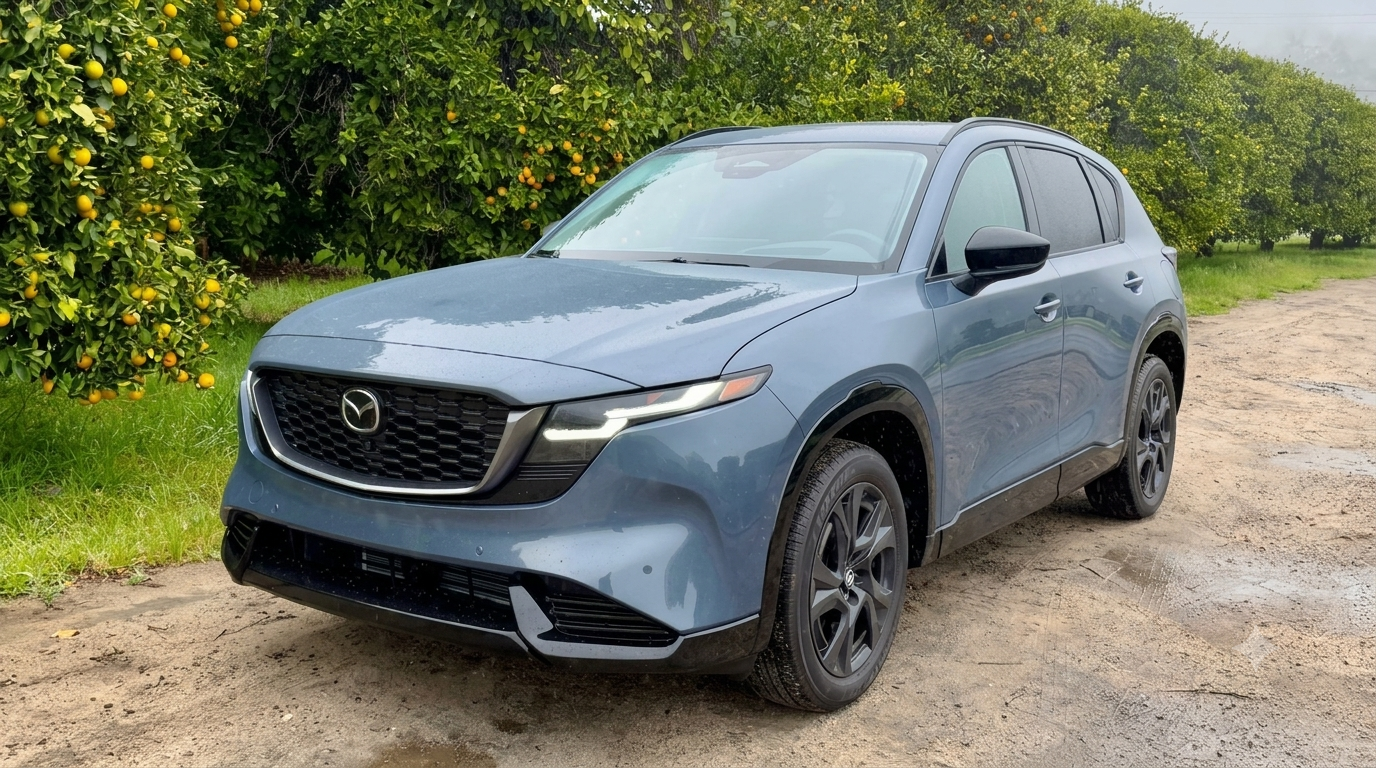
The redesigned 2026 Mazda CX-5 presents an unusual family-use tradeoff. Its larger cabin, wider-opening rear doors and expanded cargo area make children, pets and gear easier to load, yet basic seat and climate adjustments are concentrated in a touchscreen that MotorTrend found slow and insufficiently intuitive during extended use.
That conflict becomes most apparent in ordinary moments. Heating or ventilating a front seat requires tapping a small screen target and opening a secondary menu. Fan-speed adjustment also proved more difficult than expected. These are frequent cabin tasks, not optional entertainment functions, and burying them behind screen layers adds interaction time when a driver may already be managing passengers and preparing to leave.
Physical packaging is a clear improvement
The CX-5’s family-friendly changes begin at the rear doors. Their wider opening makes it easier to place a child in a safety seat and gives a dog more room to enter the back seat. The vehicle also received the highest Good+ rating in Insurance Institute for Highway Safety child seat anchor testing, according to MotorTrend. Rear air vents are standard on every trim except the base 2.5 S.
Cargo capacity rises to 33.7 cubic feet. Depressed areas on both sides of the cargo floor are designed to contain smaller items that might otherwise move around. The resulting space exceeds that of the Subaru Forester and Mazda CX-50, although the Kia Sportage, Toyota RAV4 and Hyundai Tucson remain roomier.
Those gains show what the redesign gets right at the mechanical-packaging level. Wider openings reduce the awkward reach involved in securing a child, while additional cargo volume increases the range of strollers, bags and household items that can be carried without folding the rear seats. These improvements are available without learning a new interface.
A large display does not guarantee quick control
Depending on configuration, the CX-5 uses a 12.9 or 15.6-inch infotainment display. Almost all cabin controls reside on that screen, leaving only a few physical buttons. Display size can improve legibility and provide more room for maps or information, but it does not eliminate the need for a clear control hierarchy. A common function can still be cumbersome when its target is small or it sits behind another menu.
This is a human-machine-interface issue rather than an established defect or crash finding. Still, established design guidance helps explain why interaction depth matters. The U.S. Department of Transportation’s voluntary distraction guidance recommends that in-vehicle tasks limit individual glances away from the road to two seconds and total glance time to 12 seconds. It also emphasizes reducing visual-manual demand from factory-installed electronics.
Separate AAA Foundation research on in-vehicle information systems examines how touchscreen, voice and other control methods impose different visual and cognitive demands. That research does not evaluate this CX-5, but it establishes the broader engineering concern: complexity, task duration and interface method all influence driver workload.
Driver recognition adds another layer of friction
The Premium Plus trim introduces a personalization system that can retain preferences including head up display and audio settings. In the specific vehicle tested, recognition sometimes failed and the system entered guest mode, requiring settings to be restored. MotorTrend reported some improvement in infotainment reliability over several months, but its central criticism remained ease of use rather than reliability.
Voice control offers the most direct workaround. The Google-based system, upgraded with Gemini artificial intelligence, can process compound requests such as changing cabin temperature and fan speed together. That can reduce the need to navigate several screen targets, particularly when the vehicle is moving.
The workaround carries a continuing cost, however. Google Built-In is included with the Premium Mazda Connected Services plan, which costs $15 per month after a one-year trial. Over time, that turns easier access to routine controls into a service expense rather than a permanent benefit of the vehicle’s hardware.
The 2026 CX-5 therefore solves one family-use problem while creating another. Its doors, anchor access and 33.7-cubic-foot cargo area improve the physical work of loading a family, but its screen-centered controls can slow the electronic work of getting everyone comfortable. After the first year, the most practical way around that interface may cost another $15 every month.
| More aerospace and engineering stories, right in your MSN feed. Follow AMI on MSN |
By Thomas Caldwell — AMI’s senior editor for mechanical and mobility engineering, covering vehicle electronics, systems integration, electrification, chassis systems, propulsion, and safety policy.