Deep Learning Boosts Industrial Robot Vision in 5G Era
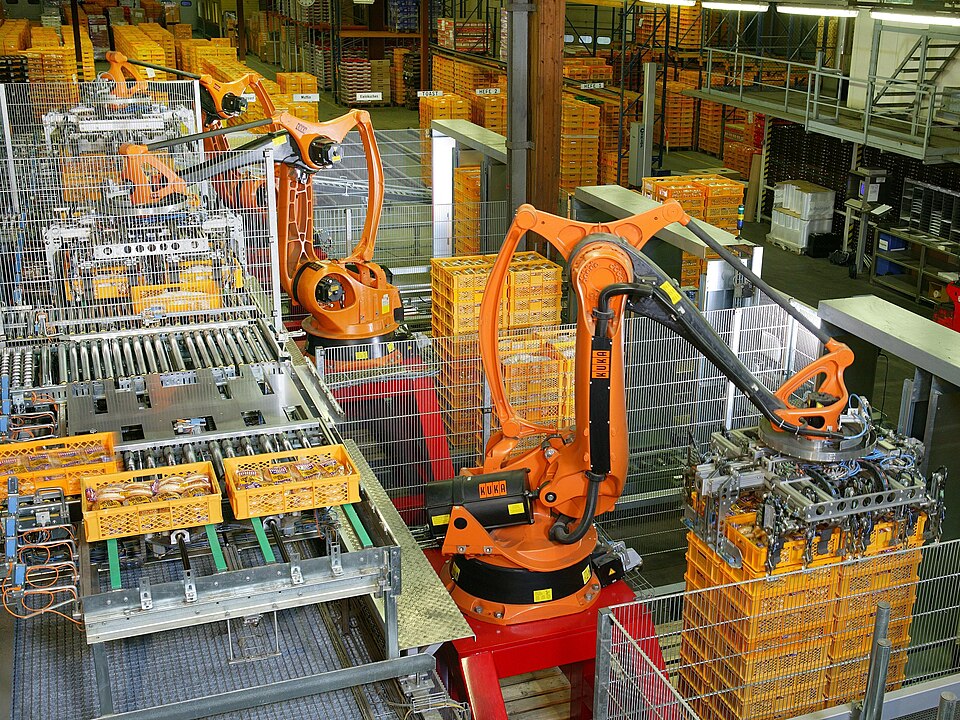
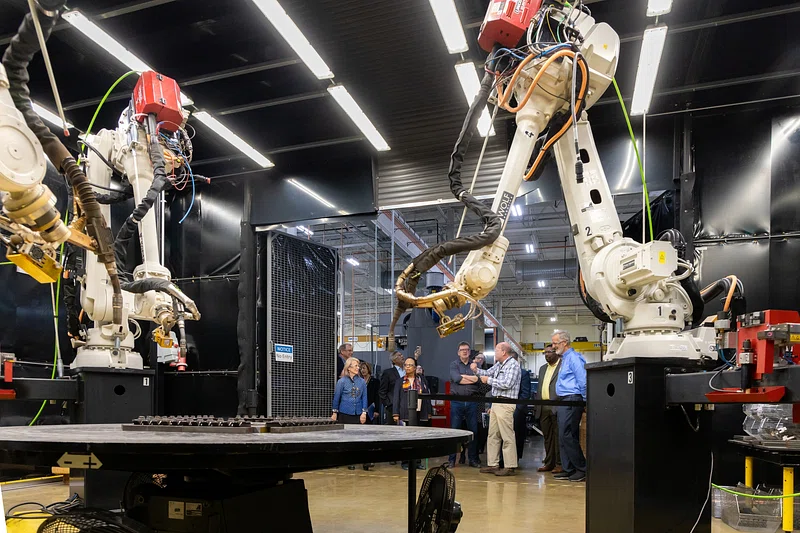
Industrial robots have evolved from their inception in the early 1960s into highly capable automation tools across manufacturing, assembly, inspection, and testing. Their ability to execute these tasks hinges on precise detection and identification of targets, a capability driven by machine vision systems. In the 5G communication era, with its high-speed data transfer and improved security, integrating advanced artificial intelligence algorithms into robot vision systems offers significant performance gains.

Traditional positioning and recognition algorithms often struggle in complex industrial environments, leading to large positioning errors, slow recognition speeds, and low accuracy. To address these challenges, researchers have applied deep learning (DL) techniques, specifically convolutional neural networks (CNNs), to enhance image processing through convolution, pooling, and classification. This approach optimizes visual recognition systems for industrial robots.
The study focused on detecting bottled objects in both controlled and complex environments. Two key algorithms were evaluated: an improved Fast R-CNN for target detection and an enhanced VGG-16 classification network incorporating the Hyper-Column scheme. The Hyper-Column method fuses neuron responses from multiple convolutional layers, mitigating the loss of small-target information in high-level features and improving angle prediction accuracy.
In the improved VGG-16 architecture, three modifications were implemented: fusion of Conv3-4, Conv4-4, and Conv5-4 layers to strengthen small-object detection; decoupling of classification regression loss from angle prediction for independent training; and removal of the fully connected layer in favor of a fully convolutional network to reduce parameters, prevent overfitting, and speed up training.
Laboratory verification of the Fast R-CNN involved 1,800 images at 1400×1050 resolution, with bottles as the target objects. Hyperparameters were tuned to balance positive and negative samples at a 1:1 ratio. The model achieved a false detection rate of 3.2% and a missed detection rate of 8.7%, with detection times around 220 ms. Angle predictions were accurate, with most detections within 5 degrees of the true orientation.
Field tests of the Hyper-Column-based VGG-16 were conducted at a waste treatment plant in Xi’an, using 1,600 images under challenging real-world conditions. Despite poor image quality, the decoupled loss model yielded lower false and missed detection rates compared to coupled models, with detection times between 0.24 and 0.28 seconds. Even when objects were barely discernible to the naked eye, the algorithm maintained reliable detection performance.
Comparative analysis on the Matlab simulation platform using the NYU Depth V2 dataset showed the improved VGG-16 achieving an accuracy of 82.34%, outperforming other advanced CNNs such as AlexNet, GoogleNet, LeNet, ZF-Net, and ResNet by at least 3%. This performance gain is attributed to effective feature fusion and faster training speeds.
When comparing Fast R-CNN and the improved VGG-16, both demonstrated strong positioning and recognition capabilities. In controlled environments, Fast R-CNN achieved detection times of 0.2 seconds, while in complex real-world settings, the Hyper-Column-based VGG-16 maintained accuracy with slightly longer detection times. The average false detection rate across tests was under 5.5%, and the average missed detection rate was 17%, indicating suitability for industrial applications.
The integration of deep learning into industrial robot vision systems, particularly in a 5G environment, underscores the potential for higher precision and efficiency. By leveraging convolution and pooling operations alongside advanced classification strategies, robots can better navigate complex visual tasks. The research demonstrates that artificial intelligence, with its superior feature extraction capabilities, is poised to play a pivotal role in advancing industrial automation in the Industry 4.0 era.