Adaptive Control of Microswimmers in Noisy Environments
Artificial microswimmers are engineered to emulate the self-propulsion strategies of microscopic living organisms, yet they often lack the adaptive responsiveness and physical memory that biological systems exhibit. At microscopic scales, both living and synthetic swimmers contend with Brownian motion, a constant randomization of position and propulsion direction driven by thermal fluctuations. This stochastic influence complicates navigation and control, making adaptive strategies essential for reliable operation.

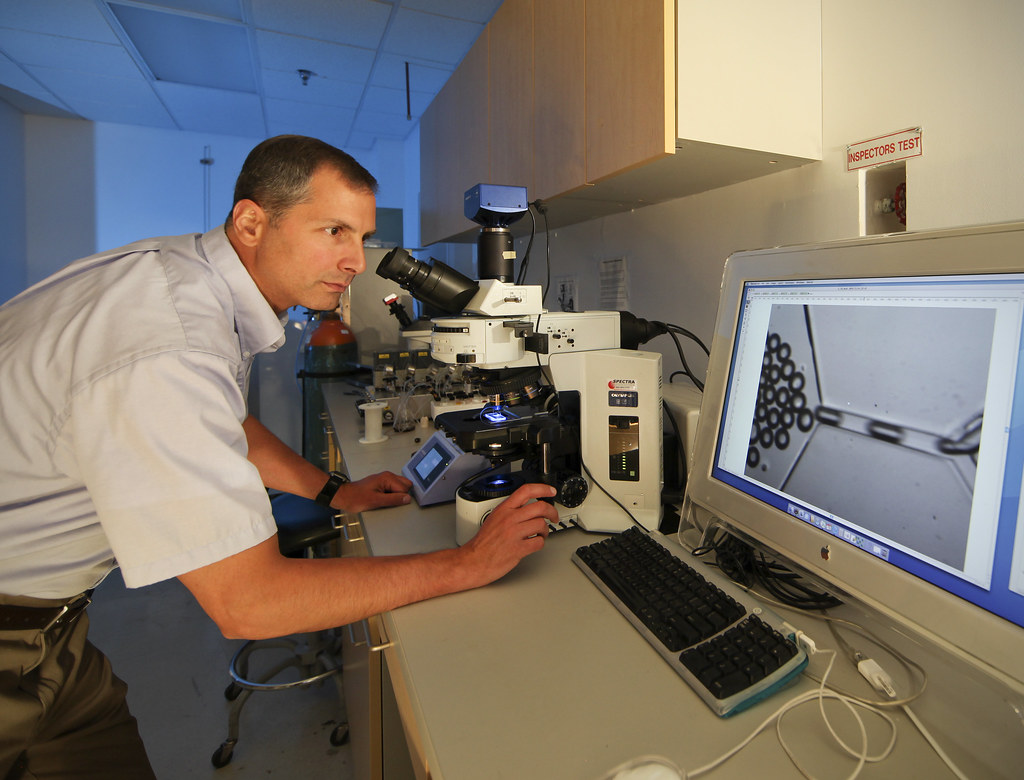
Researchers have combined real-world self-thermophoretic active particles with reinforcement learning algorithms to investigate how such systems can adapt in noisy environments. By employing real-time control, they demonstrated that even under the unavoidable perturbations of Brownian motion, artificial microswimmers can solve standard navigation tasks. The active particles were propelled by localized heating from a defocused laser beam, a method that allows precise modulation of speed and direction through photon nudging.
The study revealed that collective learning is achievable when multiple swimmers share control feedback. However, noise plays a significant role in shaping the learning process. It was found to slow the rate at which optimal strategies emerged, alter the nature of those strategies, and intensify the decisiveness of the control actions taken. This aligns with observations in biological systems, where environmental noise influences foraging, chemotaxis, and predator avoidance behaviors.
A notable finding was the identification of an optimal velocity linked to feedback delay in the control loop. This optimum is reminiscent of the run-and-tumble dynamics observed in bacteria, where propulsion intervals are tuned to balance exploration and exploitation in noisy conditions. The researchers conjectured that such an optimal speed may be a universal feature of systems with delayed responses operating in stochastic environments.
Directional noise was characterized experimentally as a function of swimming velocity, revealing that higher speeds tend to amplify angular deviations. Analytical modeling provided further insight into how noise impacts navigation efficiency, and Q-matrix value iteration was used to refine control policies over successive trials. The reinforcement learning framework enabled the swimmers to improve navigation toward a target, even when virtual obstacles were introduced.
Supporting experiments showcased various configurations: single-swimmer navigation before and after learning, obstacle-laden environments, and multi-swimmer coordination. In each case, the adaptive control system leveraged environmental feedback to adjust propulsion commands, gradually enhancing performance.
The work draws on a broad foundation of prior research in active matter, robotics, and machine learning. Studies of asymmetric colloidal particles have shown gravitactic responses, while investigations into smart microswimmers have demonstrated efficient navigation in complex flows via reinforcement learning. In robotics, multi-agent cooperative learning has been applied to tasks such as predator avoidance, and swarm systems have been designed to optimize collective behaviors through information flow and evolutionary algorithms.
From a mechanical design perspective, the challenge lies in integrating precise actuation with robust sensing and control at scales where inertia is negligible and viscous forces dominate. The low Reynolds number regime imposes constraints on propulsion mechanisms, necessitating strategies that exploit asymmetries in shape, surface properties, or local energy gradients. Self-thermophoresis, as used in this study, offers a controllable and reversible means of generating motion without moving parts.
Ethically, the development of adaptive microswimmers prompts consideration of their potential applications and impacts. Possible uses include targeted drug delivery, environmental remediation, and microscale assembly, all of which benefit from autonomous navigation capabilities. However, the deployment of such systems in natural environments requires careful assessment of ecological interactions and long-term effects.
By bridging experimental active matter systems with reinforcement learning, the research advances the understanding of how artificial microswimmers can operate effectively in inherently noisy conditions. The insights into noise-modulated learning speed, altered optimal strategies, and the emergence of universal velocity scales contribute to both the theoretical framework and practical engineering of adaptive microscopic robots.