LS-Nikko’s Smart Factory Push to Optimize Copper Smelting
At LS-Nikko Copper’s Onsan plant in Ulsan, South Korea, the control room for its flash-smelting furnace is a dense landscape of screens and live data streams. Voltage, temperature, and flow rates from thousands of pieces of equipment feed into the displays, alongside real-time tracking of hundreds of vessels carrying copper concentrate from across the globe. With a single click, engineers can determine the total copper content in incoming raw materials. “We manage the yield by keeping the copper content in the raw material constantly used in the smelting facilities, utilizing data on raw material warehousing,” said Park Sung-sil, senior vice president and head of the technology department, on September 14. “This is the fruit of a project to establish a smart factory we’ve been working on for the last two years.”

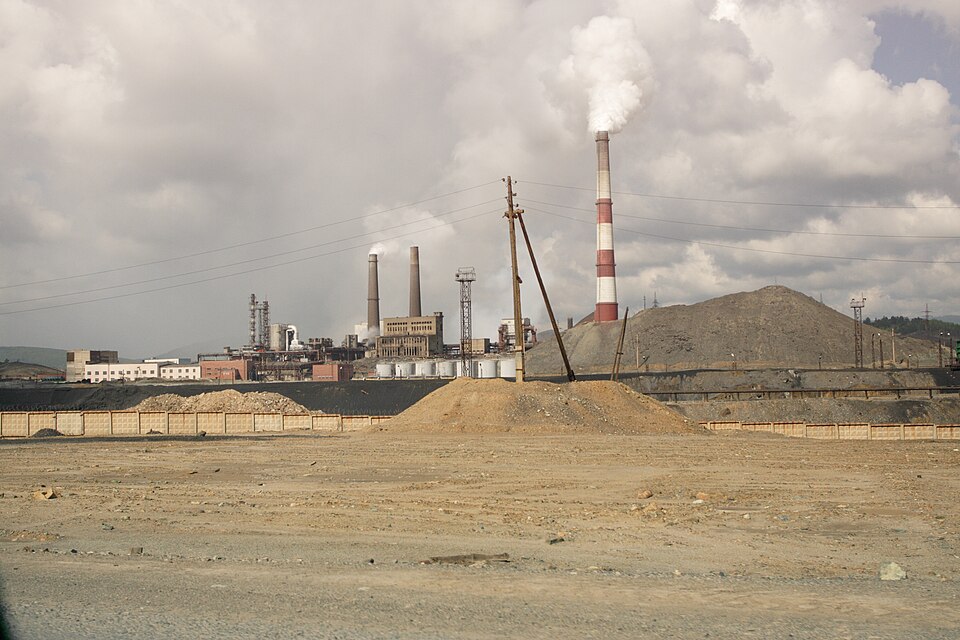
The Onsan facility, with an annual electrolytic copper capacity of 680,000 tons, processes ores from roughly ten countries, including Indonesia, Chile, and Peru. From these, it produces not only copper but also gold, silver, and palladium. LS-Nikko, a joint venture between LS Group and Japan Korea Joint Smelting, launched its Onsan Digital Smart factory (ODS) project in 2019 with a planned investment of 50 billion won (about $42.7 million) through 2024. The goal: fully digitalize and automate the chain from raw material warehousing to product shipment.
The first phase, completed last year, saw the adoption of a manufacturing enterprise system (MES) and advanced planning and scheduling (APS) tools. These systems collect approximately 40,000 data points from thousands of plant devices, enabling optimization of raw material mixtures and production output adjustments. Such integration mirrors trends in advanced manufacturing where data acquisition and process control converge to create feedback loops that continuously refine operations.
In the second phase, scheduled to begin in the first half of 2022, LS-Nikko will apply artificial intelligence to derive optimal solutions for each process stage. AI-driven analytics in heavy industry can detect subtle process inefficiencies and suggest parameter adjustments that human operators might overlook. The third phase aims to implement digital twin technology—a virtual replica of the smelting process. Digital twins allow engineers to simulate operational changes and test new configurations without disrupting real-world production, a capability increasingly valued in sectors from aerospace to automotive manufacturing.
Even before full implementation, the ODS project has delivered measurable gains. The company cut costs by 2 billion won in 2020 and expects a further 6 billion won reduction this year. From 2024, once the second stage is established, annual savings are projected at 10–15 billion won, representing 4–6% of the company’s average operating profit over the past decade. “The production innovation always leads to a higher operating profit,” said Jeon Dong-hyuk, manager for the ODS completion task force team. “It will help to overcome the highly volatile non-ferrous metal cycle.”
The drive toward smart manufacturing comes amid tightening margins in the global copper smelting industry. While electrolytic copper prices surged to $9,000–10,000 per ton this year from around $6,000 in 2020, treatment charges—a critical revenue stream for smelters—have halved over five years to roughly $50 per ton. The drop is attributed to aggressive capacity expansions in countries such as China and Indonesia, intensifying competition and eroding profitability. LS-Nikko’s operating profit has been on a downward trajectory, forecast at about 200 billion won this year compared with 228.5 billion won in 2020 and 315.4 billion won in 2019.
Alongside efficiency gains, LS-Nikko is reinforcing its environmental, social, and governance (ESG) commitments. The company plans to invest 120 billion won in environmental and safety measures, having already spent 50 billion won on dust collection systems to curb harmful emissions and improve air quality. “Environmental and safety management is directly related to productivity at a smelter which should not stop 24 hours a day,” said CEO Doh Suk-goo. “We will have the world’s best ESG capabilities through preemptive investment.”
The integration of AI, MES, APS, and digital twin technologies into a traditional heavy industrial process underscores a broader shift toward data-driven, sustainable manufacturing. For engineers and technologists, LS-Nikko’s approach illustrates how legacy industries can leverage advanced digital tools to remain competitive while addressing environmental imperatives.