

Industrial Robotics Gains Momentum Amid Labor Shifts
The World Robotics 2021 Industrial Robots report documented a record 3 million industrial robots in operation worldwide, marking a 10% increase over the previous year. Even with pandemic-driven disruptions to global supply chains, shipments of new robots in 2020 reached 384,000 units, a modest 0.5% rise that still secured 2021 as the third most successful year in the sector’s history. Industry analysts anticipated that 2022 would surpass those figures, underscoring the resilience of the robotics market.

Industrial robotics encompasses programmable machines and automation systems deployed in manufacturing and other industrial environments. These systems have been increasingly adopted to counter declining availability of human labor while boosting throughput and precision. The COVID-19 pandemic accelerated this trajectory. Lockdowns and distancing mandates forced many factories to reduce or halt operations, creating acute labor shortages. In response, companies turned to automation to sustain or expand production capacity. Market projections reflected this shift, with the global industrial robotics market expected to reach $59.3 billion by 2026, growing at a compound annual rate of 9.3% from 2020.
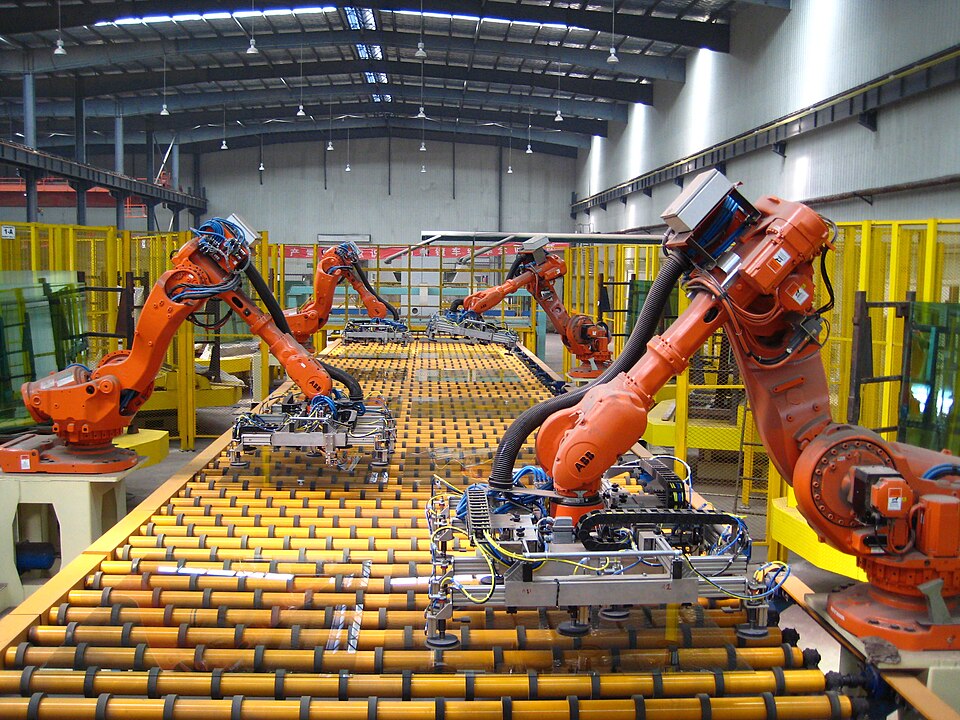
On the assembly line, robots deliver consistent efficiency, accuracy, and safety, while reducing operational costs. Their deployment spans automotive manufacturing, metals and machinery processing, electrical and electronics assembly, plastics and polymers fabrication, and food and beverage production. By automating repetitive or hazardous tasks, manufacturers have improved quality control and achieved higher production rates. Economic research from 2020 noted that when labor costs rise, firms often increase investment in industrial robots. The resulting productivity gains outweigh the added wage expenses, lowering per-unit production costs while maintaining higher pay for human workers.
An industrial robot is an integrated machine composed of multiple subsystems, each critical to overall performance. At its core, the primary system control module—housed in the control panel—functions as the robot’s “brain,” orchestrating motion sequences and task execution. Sensor and vision arrays enable environmental awareness, object recognition, and obstacle detection. Mechanical subsystems, including articulated arms and specialized end effectors, provide the dexterity to manipulate components or materials. Power regulation and management hardware ensures stable energy delivery, while ruggedized connectors and cable assemblies handle signal transmission and interface with external equipment. Networking and communication modules link robots to other machines and supervisory control systems, facilitating coordinated operations across a production line.
The complexity of these interdependent systems has driven the need for standardized definitions and classifications, such as those in ISO 8373, to ensure interoperability and reliability. Printed circuit board assemblies (PCBAs) are foundational to nearly every subsystem, from motion control to vision processing, and their design quality directly impacts the robot’s operational stability.
Looking ahead, advances in sensing, actuation, and control software are expected to expand the capabilities and application range of industrial robots. As labor shortages persist and wages trend upward, adoption is likely to accelerate in both established and emerging industries. However, the sector faces technical and economic challenges. Developing robust, adaptable software for complex tasks—particularly in industries such as automotive manufacturing, heavy machinery, and electronics—remains a demanding endeavor. Additionally, the capital and maintenance costs associated with robotic systems can deter smaller enterprises from transitioning to automation.
Despite these hurdles, the momentum behind industrial robotics reflects a broader shift in manufacturing strategy. The integration of precise electromechanical systems, advanced control architectures, and standardized interfaces positions industrial robots as a central element in the evolving landscape of global production.