3D Printing’s Expanding Role in Modern Health Care
3D printing has advanced from niche experimentation to a pivotal manufacturing tool in health care, reshaping how clinicians prepare for surgery, design implants, and respond to supply chain pressures. The technology’s maturation is evident in its adoption rates: in 2010, only three hospitals operated centralized 3D printing facilities for point-of-care manufacturing. By 2019, that number had grown to 113, according to Statista. This expansion coincided with the U.S. Food and Drug Administration’s approval of hundreds of medical products made using additive techniques, as noted by Pew Trust.

The COVID-19 pandemic underscored the strategic value of in-house 3D printing. Hospitals turned to the technology for rapid production of personal protective equipment and critical medical devices when conventional supply chains faltered. Medical device manufacturers, facing fluctuating demand and cost pressures, increasingly rely on additive manufacturing to meet supply targets with greater consistency.
At its core, 3D printing constructs solid objects from digital models by depositing material layer by layer, often using polymer filament and ultraviolet curing. The absence of traditional tooling allows for accelerated production cycles. In one example, the fabrication time for hearing aids dropped from over a week to a single day.
Dental implants marked one of the earliest FDA-approved medical applications for 3D printing. Since then, the scope has widened to include complex orthopedic devices. A 2021 study in the *Journal of the American Academy of Orthopaedic Surgeons* stated that 3D printing has “significantly impacted bone and cartilage restoration and has the potential to completely transform how we treat patients with debilitating musculoskeletal injuries.” Prosthetic design has also benefited. The volunteer network e-NABLE has produced more than 8,000 prosthetic hands and arms globally, leveraging the affordability and accessibility of desktop 3D printers to deliver customized devices.
Surgeons are increasingly using 3D-printed anatomical models to plan intricate procedures. These models, often derived from patient imaging data, provide tactile, accurate representations of organs, bones, or vascular structures. In 2022, researchers at Florida Atlantic University and the University of Virginia developed a robotic spine model to evaluate surgical interventions before operating. Their study demonstrated that the system could determine disc implant candidacy in five distinct postures with 100% accuracy. Clinical studies have quantified the operational benefits: a 2020 *Academic Radiology* report found that 3D surgical guides reduced procedure times by an average of 62 minutes, saving $3,720 per case. Another study in 2021 reported reductions of 1.5 to 2.5 hours in lengthy surgeries when such models were employed.
Beyond implants and models, additive manufacturing is enabling rapid production of customized surgical instruments. Forceps, clamps, hemostats, and retractors can be tailored to surgeon specifications, with modifications implemented in hours rather than weeks. This capability proved critical during ventilator shortages, when a team at Oregon Health & Science University designed a low-cost ventilator that could be produced for under $10 in materials using 3D printing.
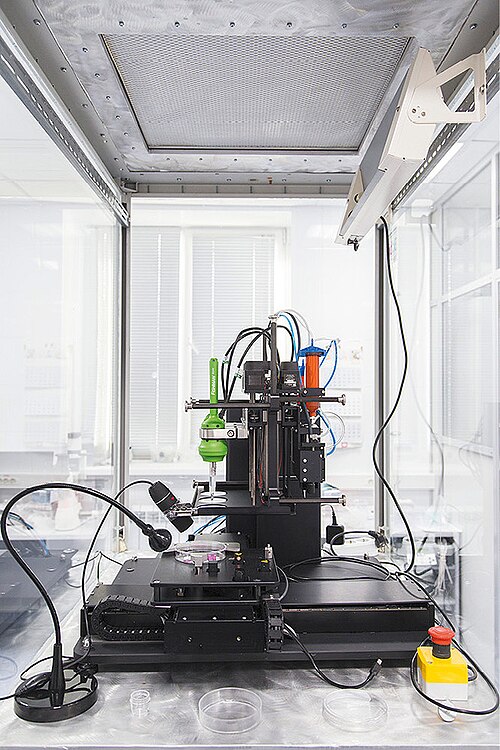
Research institutions are pushing the boundaries of bioprinting. In 2019, bioengineers at the University of Washington School of Medicine and the UW College of Engineering reported in *ScienceAdvances* a novel method for printing living tissues. Similar efforts at the University of California, Berkeley and other laboratories aim to fabricate functional blood vessels, bones, and organs on demand. These breakthroughs suggest a future in which patient-specific biological structures could be manufactured within clinical settings.
However, integrating 3D printing into mainstream health care is not without obstacles. Reimbursement frameworks for printed medical devices remain inconsistent, and safety validation processes must keep pace with the rapid evolution of the technology. Regulatory compliance, material biocompatibility, and long-term performance testing are essential considerations for hospitals and manufacturers seeking to expand additive manufacturing capabilities.