Why Automakers Can’t Afford to Slow Tech Innovation
In the global automotive sector, the tension between innovation and reliability is a constant. The 2022 U.S. Tech Experience Index (TXI) Study from J.D. Power underscores this dynamic, revealing that while advanced vehicle technologies often introduce new challenges, they remain essential for brand growth and customer retention. Kathleen Rizk, senior director of user experience benchmarking and technology at J.D. Power, stated, “J.D. Power transactional data shows that getting the right mix of technology features owners want is important to perception, profits, and sales.” When those features meet expectations, owners share their positive experiences, amplifying brand reputation.

The TXI Study examines how new technologies perform as they enter the market, complementing the Initial Quality Study (IQS) and the Automotive Performance, Execution and Layout (APEAL) Study. It evaluates adoption rates and execution quality, using the established problems per 100 vehicles (PP100) metric. A lower PP100 score signals better quality. However, in 2022, nearly half of the advanced technologies surveyed had PP100 scores exceeding the most problematic attribute in the IQS, sometimes by a large margin.
Execution varies widely among manufacturers. Rear-seat reminder systems, for example, ranged from 1.9 to 26.2 PP100 across brands, demonstrating that careful engineering and integration can minimize issues. J.D. Power’s data suggests that successful deployment of a new technology can influence repeat purchases, making innovation a strategic necessity despite potential setbacks. As Rizk emphasized, “Innovation is non-negotiable. The fact that the average PP100 for a technology is high should not discourage automakers from innovating, as there is often a wide range of total problems experienced for a technology across the brands. This means that some are innovating more flawlessly for a particular tech, while others struggle with their execution.”
The study’s findings highlight specific problem areas. Fingerprint readers, included for the first time, recorded a PP100 score of 54.3—the worst in the study’s history—and a satisfaction rating of 6.08 out of 10, surpassing interior gesture controls as the lowest-performing technology over the past two years. Regional preferences also shape technology adoption. U.S. consumers prioritize EV-related features, Chinese buyers lean toward infotainment and connectivity, and Japanese drivers express strong interest in emerging automation systems.
Dealer engagement emerges as a critical factor in customer satisfaction. Owners whose sales consultants thoroughly demonstrate advanced features are less likely to abandon them after initial use. This underscores the importance of human factors in technology adoption, complementing the engineering effort behind the systems.
Brand rankings in the 2022 TXI Study reveal leaders in both premium and mass-market segments. Genesis topped the premium category with an Innovation Index score of 643, followed by Cadillac at 584 and Mercedes-Benz at 539. Hyundai led the mass-market category with 534 points, trailed by Kia at 495, and a three-way tie among Buick, GMC, and Subaru at 482. Tesla, while not officially ranked due to incomplete data from 15 states, achieved an unofficial score of 681 based on verified owner responses from the remaining states.
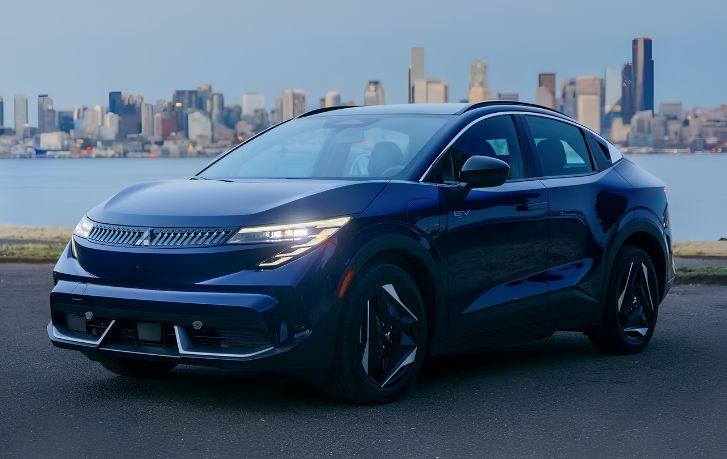
The TXI Study analyzed 35 advanced automotive technologies across four categories: convenience, emerging automation, energy and sustainability, and infotainment and connectivity. Award highlights include the Cadillac Escalade and Subaru Ascent for rearview camera mirror technology in convenience; the Lexus IS for front cross-traffic warning and Mitsubishi Outlander for reverse automatic emergency braking in emerging automation; the Mini Cooper for one-pedal driving in energy and sustainability; and the BMW X3 for phone-based digital key technology in infotainment and connectivity.
Based on responses from 84,165 owners of new 2022 model-year vehicles, surveyed within 90 days of ownership between February and May 2022, the TXI Study offers a detailed snapshot of how innovation intersects with user experience. For engineers and technologists, these findings illustrate the fine balance between pushing the boundaries of automotive capability and ensuring robust, user-friendly execution.