Simulation Technologies Reshape Electric and Autonomous Vehicle Design
The automotive sector is undergoing a transformation of remarkable scale and speed. Electric vehicle (EV) adoption has surged in recent years, with global numbers climbing from just over one million in 2015 to approximately 16 million by 2021, according to EV charging infrastructure provider Virta. This shift is driven by regulatory pressure, evolving consumer preferences, and massive investment in electrification, connectivity, and automation. McKinsey & Co. reports more than $400 billion invested in these areas over the past decade, with roughly $100 billion since early 2020.

Regulatory frameworks are setting ambitious targets. The European Union’s Fit for 55 programme aims to cut net greenhouse-gas emissions by at least 55% by 2030, while the U.S. administration has set a goal for EVs to make up half of all vehicle sales by the same year. Consumers are increasingly receptive to sustainable mobility, and new entrants, from Tesla to Chinese OEMs, are capitalizing on the opportunity. Gilles Gallee, Technology Evangelist at Ansys, notes: “New technologies, safety regulations and innovations in energy are making it possible for newcomers… to arrive in the market. It is also creating opportunities for massive mergers… and strong partnerships between automotive and electronics specialists.”
For engineers, the transition to electrified powertrains demands significant adaptation. Warren Dias, Director of Business Development at Altair, describes the pace of EV development over the past five years as “probably comparable to the last 50 years of the research and development of cars with internal combustion engines.” He characterizes the change as evolutionary, not revolutionary, due to the deep reliance on historical vehicle architecture data. Without legacy data for battery-integrated structures, simulation becomes indispensable. Altair’s optimization technology, refined over 25 years, enables early concept studies using consistent physics models, streamlining validation.
Designing electric powertrains introduces complex multiphysics challenges involving batteries, motors, and power electronics. Altair’s tools allow electromagnetic simulations, structural stress mapping, acoustic analysis, and fluid simulations for thermal management. The acquisition of Powersim in March 2022 expanded capabilities with PSIM software, offering Monte Carlo, sensitivity, and fault analyses to support DFMEA for power converters.
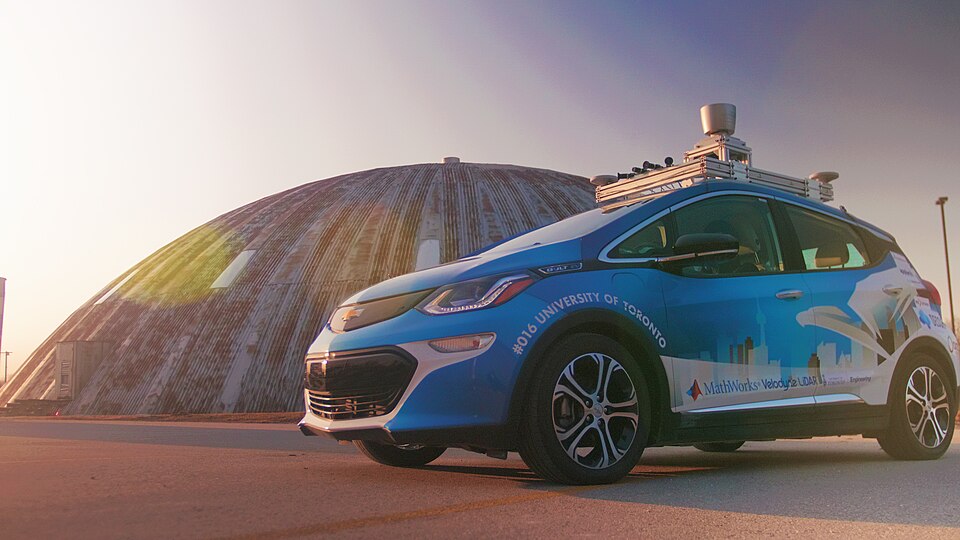
Autonomous vehicle (AV) development presents even greater hurdles. Gallee outlines two paths: incremental deployment from Level 2+ to Level 3 autonomy by traditional OEMs, and direct pursuit of Level 5 robotaxis by newcomers and IT giants. High-level autonomy depends on an array of sensors—radar, cameras, LiDAR, and ultrasonic—feeding sophisticated software that processes environmental data, plots paths, and controls actuators. Toyota Motors President Akio Toyoda has stated: “Total autonomy will only be 100% accident-free by testing a minimum of 14.2 billion kilometres, which… would take decades of real-world driving.”
To accelerate progress, AI-based simulations run thousands of scenarios in parallel, identifying potential failures early. Gallee emphasizes: “Simulation for autonomous driving testing is extremely complex. We need to simulate millions of scenarios… to quickly identify failures and quantify the probability of failure of the overall system.” Weather variability poses a particular challenge, as adverse conditions can degrade sensor performance. Physical testing in weather labs or on-road trials is slow and limited in scope.
Ansys addresses this through coupling computational fluid dynamics (CFD) with optical simulation, enabling early-stage design optimization of sensors and their control software. Ansys Fluent can simulate wind, rain, fog, snow, and dust, along with phenomena like icing, condensation, and sensor soiling. These high-fidelity datasets feed optical simulations to refine sensor placement and configuration for robust performance in adverse conditions.
Regulatory adaptation is another critical barrier. Existing safety frameworks for conventional vehicles do not fully address the operational and update cycles of AV technologies. Gallee remarks: “It is not the driver’s job to test the new Beta version of an automatic software pilot when it is released.” Simulation and virtual testing will be essential for rapid homologation of updated software.
Ansys has partnered with the BMW Group to develop an end-to-end safety-guided toolchain for advanced driver-assistance systems (ADAS) and autonomous functions. BMW aims to be among the first to deliver Level 3 autonomy to consumers, using Ansys solutions to define test plans, execute them, and compile critical safety data. According to Gallee, this approach provides “the major building blocks of a persuasive toolchain… dealing with millions of simulated scenarios in the cloud and providing the continuous measurement and traceability of safety data throughout the development process, up to the homologation stages.”
As disruption reshapes the automotive landscape, advanced simulation technologies remain central to overcoming the engineering, safety, and regulatory challenges inherent in both electrification and autonomy.