Honda Expands Hydrogen Fuel-Cell Applications Across Sectors
Honda has revealed further details about its next-generation hydrogen fuel-cell module during the 2023 European Hydrogen Week in Brussels, marking a significant step in the company’s broader hydrogen strategy. Co-developed with General Motors, the module was first showcased at the 2023 Tokyo Auto Show and is already confirmed for deployment in North America. While Honda had previously announced a Europe-bound energy storage system integrating renewable energy with hydrogen, this latest disclosure extends the scope to passenger cars, commercial vehicles, construction machinery, and stationary power generation.

Ingo Nyhues, deputy general manager for Europe business planning and development at Honda Motor Europe, highlighted key advancements over prior systems. “Improvements over previous fuel-cell systems include compact dimensions, as well as quick startup times—even in low temperatures,” Nyhues stated. Such attributes are critical for real-world usability, especially in regions with harsh winters where startup reliability can determine operational viability.
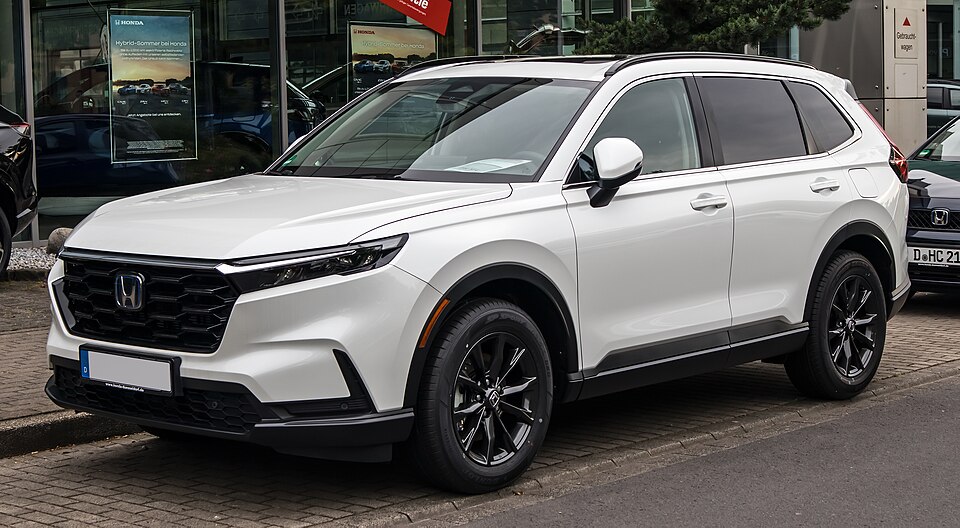
The first North American application will be in a hydrogen-powered variant of the Honda CR-V, slated for production in Ohio starting in 2024. This model follows the Clarity Fuel Cell, which debuted in 2017 with Honda’s last-generation stack. The CR-V’s integration of the new module signals Honda’s continued commitment to fuel-cell passenger vehicles, a path not all automakers have chosen to pursue.
Beyond passenger cars, Honda is collaborating with Isuzu to develop a fuel-cell-powered semi-truck. Demonstration runs of a prototype on public roads are scheduled to begin by the end of March, with commercial production targeted for 2027. This aligns with a broader industry push toward hydrogen in heavy-duty transport, where the energy density and refueling speed of hydrogen can offer advantages over battery-electric alternatives for long-haul applications.
General Motors, Honda’s partner in developing the module, has underscored its own focus on fuel-cell semis, working with Navistar to produce a fleet of 2,000 hydrogen-powered trucks. However, GM has moved away from fuel-cell passenger cars, despite decades of research in that area, reflecting divergent strategic priorities between the two companies.
Honda’s hydrogen ambitions also extend to internal combustion applications, particularly for motorcycles. In such systems, hydrogen is burned directly in a combustion engine rather than used in a fuel cell to generate electricity. While less efficient than fuel cells, hydrogen combustion offers a pathway to leverage existing engine architectures and manufacturing expertise, potentially accelerating adoption in niche markets.
Despite the technological progress, infrastructure remains a formidable barrier. The U.S. Department of Energy reports just 59 hydrogen stations nationwide, with all but one publicly accessible. This sparse network is concentrated in California, where state-level initiatives have driven deployment. The California Air Resources Board projected in 2021 that 100 retail hydrogen stations would be operational by the end of 2023, but industry-wide delays have kept actual numbers well below that target.
For engineers and enthusiasts, the evolution of Honda’s fuel-cell module underscores the interplay between design optimization, cross-sector adaptability, and strategic partnerships. Compact packaging can open opportunities in space-constrained platforms, while cold-weather performance expands geographic applicability. The collaboration with GM leverages shared R&D investments, reducing costs and accelerating timelines.
In heavy-duty transport, the integration of fuel cells into semis addresses operational demands for rapid refueling and extended range, areas where battery-electric solutions face challenges. The Isuzu project reflects a recognition that commercial fleets, with predictable routes and centralized refueling, may be early adopters of hydrogen technology.
Hydrogen combustion for motorcycles illustrates Honda’s willingness to explore parallel pathways, potentially serving markets where fuel-cell integration is impractical. However, without significant expansion of hydrogen production and distribution, both fuel-cell and combustion approaches will remain limited in reach.
The developments presented in Brussels highlight Honda’s multi-pronged approach to hydrogen, spanning from consumer vehicles to industrial applications. Each deployment scenario carries distinct engineering challenges, from thermal management in cold climates to durability under heavy loads, and the next-generation module’s design appears tailored to meet these demands.