Weather Delays SpaceX Launch of Indonesia’s N5 Satellite
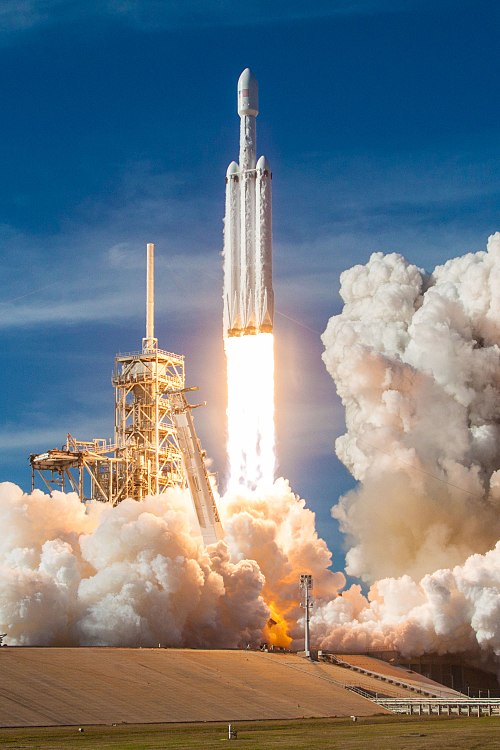
For the second consecutive evening, poor weather over Florida forced SpaceX to stand down from launching Indonesia’s Nusantara Lima (N5) communications satellite. The Falcon 9 mission, originally scheduled earlier in the week, is now targeting liftoff from Cape Canaveral Space Force Station’s Space Launch Complex 40 at 8 p.m. EDT (0000 UTC) on Wednesday.

The launch campaign has been hampered by persistent instability in the atmosphere. The U.S. Space Force’s 45th Weather Squadron placed the probability of favorable conditions at just 15 percent at the opening of the launch window, improving only slightly to 30 percent later in the evening. Those odds apply to both Tuesday and Wednesday attempts. Meteorologists have warned of a “high likelihood of showers and storms,” including “the overnight and morning hours,” with wind gusts reaching 30 to 40 mph near stronger cells. “Deep atmospheric moisture will remain in place across Florida through early to mid-week,” weather officers noted, citing a stalled frontal boundary over northern Florida as a key driver of the unsettled conditions.
The N5 satellite is a product of Satelit Nusantara Lima (SNL), a subsidiary of Pasifik Satelit Nusantara (PSN), Indonesia’s first private satellite operator. Its name draws from Old Javanese, with “nūsa” meaning “island” and “antara” meaning “outer,” while “lima” translates to “five” in Indonesian. Built by Boeing Space Systems on the 702MP VHTS (Very High Throughput Satellite) platform, N5 is engineered to deliver 160 gigabits per second of capacity via 101 Ka-band spot beams. The spacecraft is designed for an operational life exceeding 15 years.
The Falcon 9 assigned to this mission will fly with booster B1078, a veteran first stage making its 23rd launch. Its previous flights have included NASA’s Crew-6 mission, the U.S. Space Force’s USSF-124, and deployment of AST SpaceMobile’s BlueBird 1–5 satellites. Following stage separation, B1078 will target a landing on the autonomous drone ship *A Shortfall of Gravitas* stationed in the Atlantic Ocean. A successful recovery would mark the vessel’s 124th booster retrieval and SpaceX’s 502nd overall.
Deployment of N5 from the Falcon 9’s upper stage is planned for just over 27 minutes after liftoff, with signal acquisition expected 15 to 30 minutes later. The satellite will then begin its climb to a geostationary slot at 113 degrees East longitude, where it is scheduled to enter service in early 2026. Boeing anticipates N5 will be on station by mid-January.
“Boeing’s satellite business has a rich history of serving Indonesia and the Asia Pacific region, dating back to the Palapa A1 satellite in 1976,” said Ryan Reid, president of Boeing Satellite Systems International. “With Nusantara Lima, we’re proud to continue that legacy, delivering a reliable, high-throughput solution tailored to Indonesia’s unique geography and connectivity needs. PSN has been an outstanding partner throughout this program.”
N5 was first announced in 2022 as a relay complement to the Satria-1 satellite, which launched in June 2023. The new spacecraft is intended to expand broadband access across Indonesia’s vast archipelago, a geography that presents significant infrastructure challenges for terrestrial networks. Although originally slated for a 2023 launch, N5’s schedule slipped, and PSN has not publicly commented on the cause of the delay.
The Boeing 702MP bus underpinning N5 has seen extensive use in the commercial satellite sector. It is the same platform employed for Intelsat’s IS-33e, which suffered a catastrophic anomaly on October 19, 2024, leading to the total loss of the spacecraft and its fragmentation into multiple pieces. IS-33e had been launched in August 2016 and entered service in January 2017. The root cause of that failure has not been disclosed.
If weather permits, the upcoming launch will represent another step in Indonesia’s drive to enhance national connectivity through advanced space-based infrastructure, while also adding to SpaceX’s record of high-cadence operations and reusable rocket milestones.