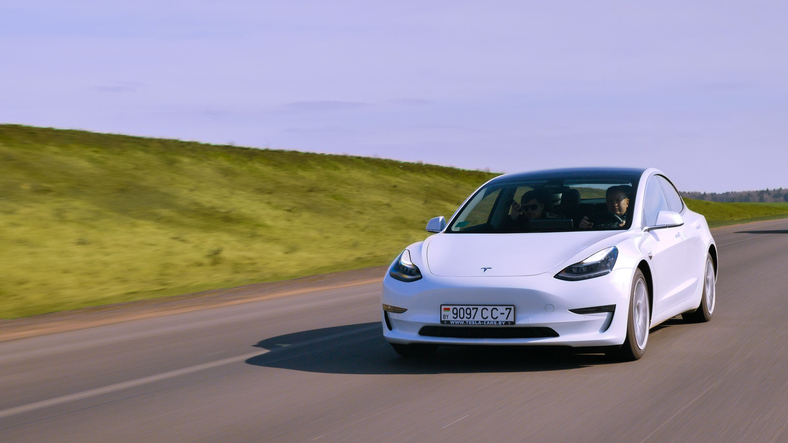
EPA Unveils Toughest Car Emission Standards Yet
The United States Environmental Protection Agency has announced what it describes as the “strongest ever” regulations targeting tailpipe emissions from passenger vehicles, marking a significant step in the nation’s ongoing shift toward electric mobility. The new rules, released in Washington, are intended to accelerate adoption of electric vehicles and cut greenhouse gas emissions from the transportation sector, which remains the largest single source of climate pollution in the country.

EPA projections indicate that between 30 and 56 percent of new cars sold from 2030 to 2032 will be electric under the updated standards. This represents a scaling back from last year’s forecast, which anticipated 60 percent EV penetration by 2030 and 67 percent by 2032. In 2023, EVs accounted for roughly eight percent of new vehicle sales in the U.S., underscoring the scale of transformation required.
Administrator Michael Regan emphasized the broader impact of the policy, stating, “With transportation as the largest source of US climate emissions, these strongest-ever pollution standards for cars solidify America’s leadership in building a clean transportation future and creating good-paying American jobs, all while advancing President Biden’s historic climate agenda.” He noted that the standards are expected to cut more than 7 billion tons of climate pollution, improve air quality in communities disproportionately affected by emissions, and expand consumer choice while reducing operating costs.
The regulatory push aligns with President Biden’s 2021 executive order setting a target for half of all U.S. car sales in 2030 to be zero-emission vehicles. However, the policy landscape remains contested. Automakers have expressed concerns about the pace of change, citing supply chain constraints, battery production challenges, and the need for expanded charging infrastructure. Industry engineers point to the complexity of scaling EV production while maintaining profitability, especially as battery chemistries evolve and manufacturing plants adapt to new drivetrains.
Political opposition has also been vocal. Republicans have questioned whether the nation’s electric grid and charging network can handle a rapid increase in EV adoption. Congressman Tim Walberg criticized the EPA’s move, writing, “Despite consumer needs, grid & infrastructure concerns, & costs, Biden’s EPA is proceeding with its disastrous mandate. EVs may be a good option for some, but Americans should have the right to buy whatever car best suits their family.”
Former President Donald Trump has repeatedly attacked the administration’s EV agenda, warning of economic harm to the domestic auto industry. In January, he argued, “There’s no such thing as fair transition that destroys over 100,000 auto manufacturing jobs.” His remarks have resonated with segments of the workforce concerned about job displacement during the transition to electrification.
Supporters of the new rules highlight the economic and public health benefits. The EPA estimates nearly $100 billion in annual net benefits to society, including $13 billion from improved air quality and $62 billion in reduced fuel, maintenance, and repair costs for drivers. Democratic Congressman Jerry Nadler characterized the standards as a victory for “environment and public health,” noting their potential to lower consumer expenses over time.
From an engineering perspective, the standards will drive innovation in vehicle design, propulsion systems, and energy storage technologies. Automakers will need to invest in advanced materials for lightweighting, optimize aerodynamics, and integrate more efficient power electronics to meet compliance targets. The shift also places pressure on upstream industries, including mining and refining of critical minerals such as lithium and cobalt, as well as the development of sustainable supply chains.
The broader transition intersects with global trends. Nations in Europe and Asia are moving aggressively toward electrification, creating competitive pressures for U.S. manufacturers. Biden has argued that American companies must adapt to remain viable in a market that is already shifting worldwide.
For engineers and technologists, the new EPA standards represent both a challenge and an opportunity: a mandate to rethink mobility systems while balancing economic, environmental, and infrastructural realities.