AI Reinforcement Learning Tackles Fusion Plasma Instabilities
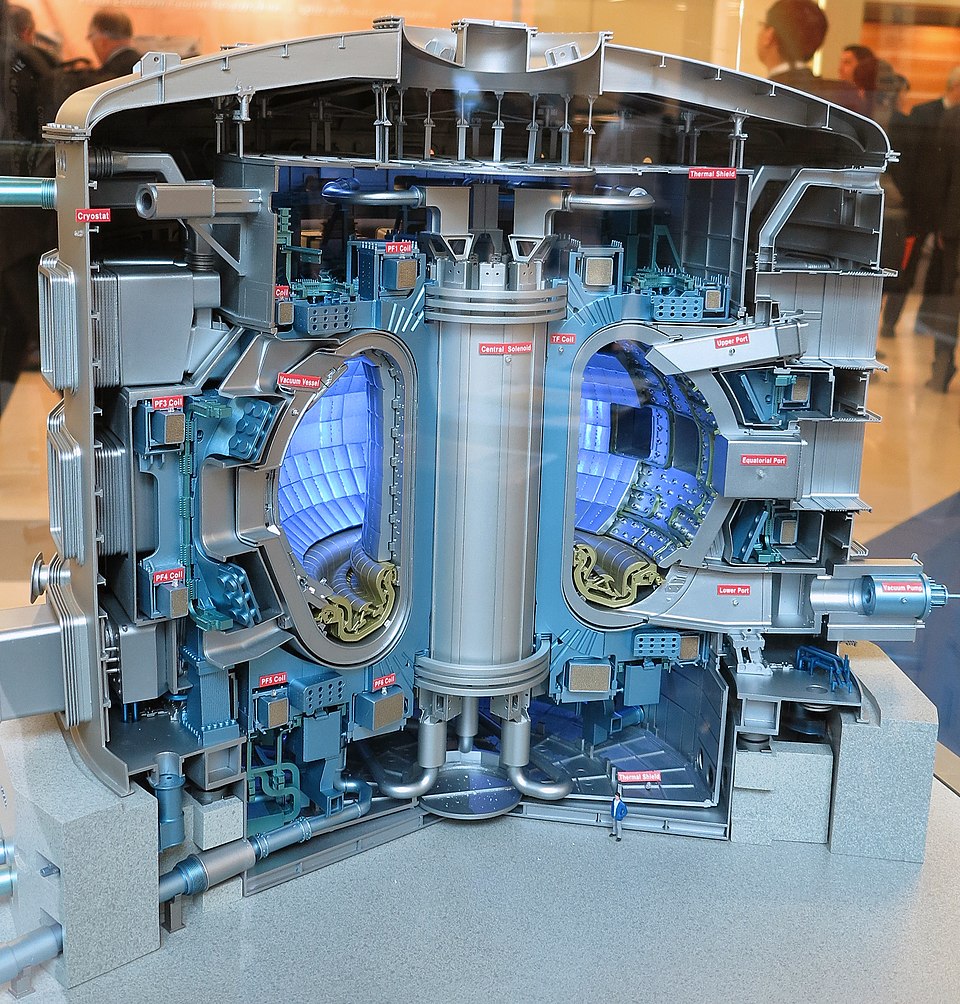
The DIII-D National Fusion Facility in San Diego, operated by General Atomics, houses the largest and most advanced magnetic fusion device in the United States. The DIII-D tokamak features a major radius of 1.67 meters, a minor radius of 0.67 meters, and can generate a toroidal magnetic field up to 2.2 tesla. Plasma currents reach 2.0 megaamperes, with external heating power up to 23 megawatts. Equipped with high-resolution real-time diagnostics—such as Thomson scattering, charge-exchange recombination spectroscopy, and EFIT-based magnetohydrodynamic reconstruction—the facility can profile electron density, temperatures, ion rotation, pressure, current density, and safety factor in real time. Eight neutral beams, modulated at high frequency, allow precise control over total beam power and torque, making DIII-D an ideal testbed for advanced AI-based plasma control.

Central to this capability is the advanced Plasma Control System (PCS), a hierarchical real-time control architecture spanning from low-level magnetic control to high-level profile control. The tearing-avoidance algorithm developed in this work integrates into the PCS alongside existing controllers for plasma boundary and individual beam modulation.
Tearing instability arises from magnetic reconnection, where magnetic field lines break and reconnect due to resistive diffusion of magnetic flux. In tokamaks, reconnection at rational safety factor surfaces forms magnetic islands. If these islands grow unstable, tearing instability develops. Classical tearing growth depends on the stability index Δ′; positive values indicate instability. Even with negative Δ′, neoclassical tearing instability can occur due to geometric effects or particle drifts, potentially coupling with other magnetohydrodynamic events.
In ITER’s baseline scenario (IBS), designed for 500 MW fusion power and a gain Q of 10 sustained over 300 seconds, low edge safety factor (q95 ≈ 3) and low torque create conditions where tearing instability at the q = 2 surface can lock to the wall and cause disruptions. DIII-D can access IBS-like conditions, but tearing instabilities have frequently terminated experiments. This study tested an AI controller under q95 ≈ 3 and torque ≤ 1 Nm—conditions prone to disruption.
A dynamic prediction model was built by labeling experimental phases as tearing-stable or unstable using n = 1 Mirnov coil signals. This deep neural network model ingests plasma profiles and actuator settings to predict tearability—the likelihood of tearing instability within 25 milliseconds. Tearability values range from 0 to 1, with higher values indicating greater risk. Although the model is a black box, it serves as a surrogate environment for reinforcement learning (RL) training, avoiding costly real-world trials.
The RL controller, trained using the deep deterministic policy gradient method via Keras-RL, observes five plasma profiles—electron density, electron temperature, ion rotation, safety factor (as 1/q), and pressure—mapped over 33 magnetic flux grid points. It controls total beam power and plasma top triangularity within IBS-consistent ranges. Ornstein–Uhlenbeck noise was added during training to avoid local optima. The controller’s actions are evaluated by the dynamic model, which predicts βN and tearability; rewards are computed to encourage high βN and low tearability.
Compared to earlier bang-bang beam power control approaches, the RL controller achieves higher normalized fusion gain G at lower q95 and weaker torque—conditions more relevant to ITER’s operational challenges. It navigates the non-monotonic relationship between βN and tearing instability, guiding plasma through regions of minimal tearability while sustaining performance.
A key advantage lies in multi-actuator, multi-objective control. By adjusting both beam power and plasma shape, the controller simultaneously raises βN and suppresses tearability, even under unfavorable conditions. Unlike prior models that assessed current stability only, this approach predicts future tearability in response to upcoming actuations, enabling longer-term optimization.
Top triangularity adjustments, significant in magnitude compared to typical operations, were verified to be within ITER’s magnetic coil limits when rescaled. Robustness tests included adding 1.8 MW of radiofrequency heating during AI control. Despite an unrelated plasma current fluctuation that increased q95 and temporarily raised tearability above threshold, the controller stabilized conditions until disruption from insufficient current occurred.
Analysis of 1,000 random experimental samples showed that in 98.6% of unstable phases, the controller reduced tearability, and in 90.7% of stable phases, it increased βN—matching the intended reward-driven behavior. This demonstrates the RL controller’s adaptability across diverse plasma conditions and actuator configurations, marking a significant step toward stable, high-gain fusion operation.