LG Reveals Affectionate Intelligence for AI-Defined Vehicle Cabins
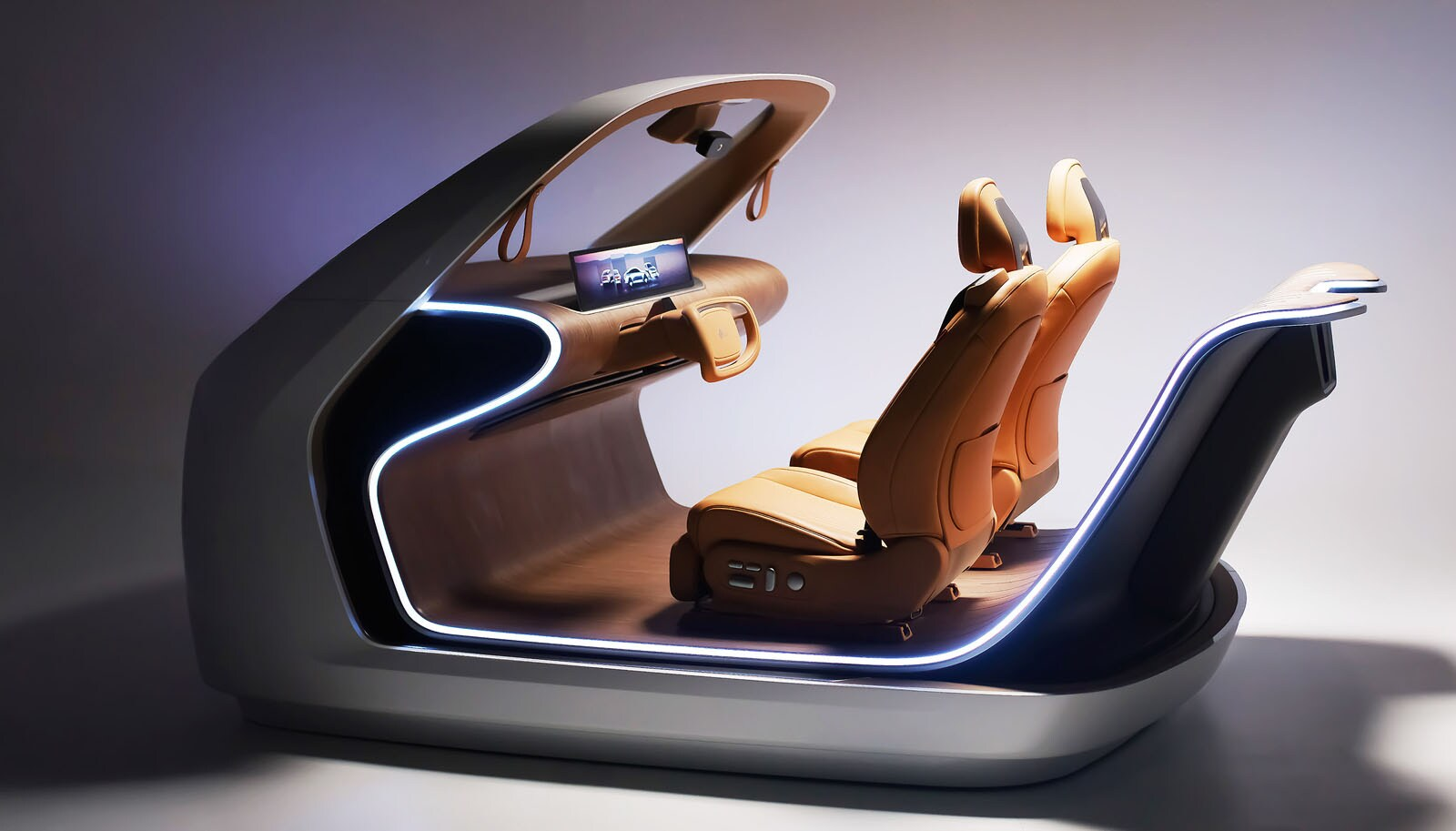
Can the cabin of a car actually understand its passengers? Apparently, it’s not a distant dream. At least, not according to LG Electronics’ plans, which it showcased at CES 2026 with a new line of in-car solutions leveraging AI technology it calls “Affectionate Intelligence.” The idea is to turn the world of mobility into a more human-centric one.
It is the company’s debut at CES and marks an important milestone for the LG Vehicle Solution Company, which is celebrating its first CES 2026 Best of Innovation Award win within the category of In-Vehicle Entertainment. “We are bringing our future mobility vision to life by embedding AI across our solutions many of which, including in-cabin sensing, are already in production with global OEMs,” stated Eun Seok-hyun, president of the company’s vehicle solutions business. “By accelerating these innovations to market, we aim to pioneer the era of AI-driven vehicles in the years ahead.”
Three experiential solutions are placed at the core of the showcase. The Mobility Display Solution seeks to transform the windshield into a transparent OLED display, largely conveying only those necessary pieces of information that are relevant to a given mobility scenario. Approach to a traffic signal, for instance, requires that the system display the remaining waiting time atop the traffic light—neither cluttering nor distracting. When in autonomous mode, it is an AI that analyzes the environment and provides thematic graphics, which may be cherry blossom petals gently drifting along roads lined with cherry trees or tunnels turned into digital rainforests, establishing a nearly virtual reality ambiance.
The Automotive Vision Solution embarks on a new frontier of in-cabin sensing, detecting passenger movement, glance, attention, clothing color, and gesture in real time. The solution also uses eye tracking, gesture control, and anamorphic graphics that enhance immersion. In one example, a passenger looking at an advertisement outside prompts product information relevant to that advertisement to appear on their screen, allowing a seamless purchase while staying on route without disrupting the travel flow.
In-cabin sensing solutions adapt to find new uses, and current trends suggest that these solutions are no longer mere safety applications. Industry specialists today see new opportunities emerging, as these solutions transition away from mere automotive applications and into platforms that offer personalized user experiences.
The In-Vehicle Entertainment Solution introduces a more emotional element with the use of artificial intelligence to connect the exterior scenery to the internal personal media content of the users. Seeing a familiar sight could trigger showing photographs linked to previously visited places, which the passengers can share instantaneously with friends using live video calls. Personalized recommendations for entertainment are also introduced for users to take advantage of during long drives. Sign language translation to text on the screen allows for easy communication with the hearing impaired.
All of these are built on the foundation of the LG AI Cabin Platform, which is specifically created for high-performance computing inside the automotive industry using the Snapdragon Cockpit Elite developed by Qualcomm. Furthermore, the incorporation of Generative AI enables the usage of context-conscious dialogue, thereby enabling the system to overcome the limitations associated with command-based systems. Hence, the focus lies on the creation of AI companions, thereby emphasizing the importance of AI in the industry.
However, these developments also come with their own set of difficulties. The nature of generative AI systems makes them challenging to handle, and this attribute calls for efficient processing systems, which, in turn, has brought about the need for small language models that are capable of processing in a local environment and are not always connected online. This, in a way, not only cuts down on latency, which is relatively high in online systems, but also provides solutions to privacy issues as that information is stored in the vehicle and in the control of car users.
For those in the auto tech space and mobility pioneers in general, the advent of LG’s Affectionate Intelligence marks the dawn of a new era in the development of in-car design. It goes beyond being comfortable and convenient to being an understanding link between man and machine in the in-car space, an understanding where every glance, every gesture in the vehicle can influence the journey. This will all be evident at the CES 2026 as all involved catch a glimpse into the future.