


Starship and China’s 2026 Lunar Rocket Signal New Era in Heavy-Lift Race

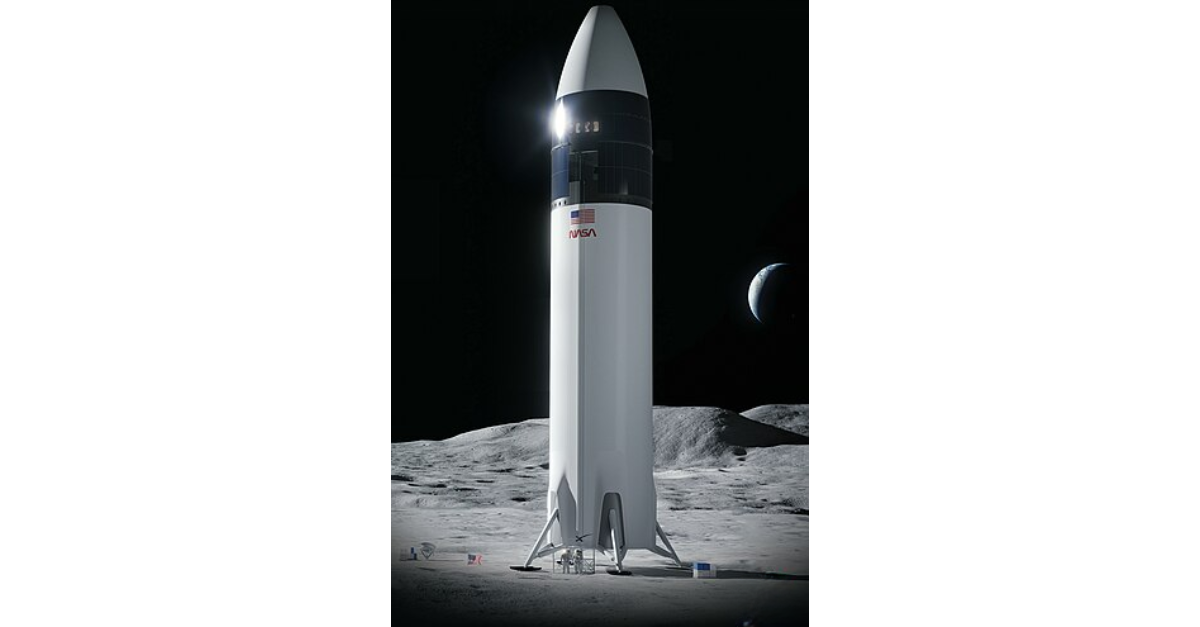
The Starship is indeed rewriting the scaling of rockets, being about 52 feet taller than the Statue of Liberty, and propelling with almost twice the force of the Saturn V rocket. Measuring 394 feet, this rocket boasts 33 Raptor engines and an estimated 16 million pounds of thrust, beating every record for space-born vessels currently in use, including those of the SLS, which is 321 feet and was made by NASA, and the N1, which boasted 10 million pounds of thrust and was owned by the Soviet Union. A new chapter unfolds within the world of rocket competition, and a rival waits in the wings-a lunar-aimed rocket by China.
1. Starship’s Record-Breaking Design
The integrated boost system and spacecraft have the capability for complete reusability, which is already a feat pulled off by the Falcon 9 from SpaceX’s reusable boosters and landers. Initial Mission Profile The initial mission profile will take Starship up to an altitude of 146 miles (234 kilometers), flying “nearly around the world” and then splashing down “in or very close to the Hawaiian Islands,” with the Super heavy boost system touching down “in the Gulf of Mexico.” The system will be quite capable of ensuring quick turnarounds between missions, an important factor in NASA’s Artemis mission, whose lunar lander for Artemis 3 will be the Starship in 2025.
2. China’s Long March 10 and Lunar Ambitions
CALT’s state-owned Long March 10 series is in development for lunar missions with human crews and is planned to make its first flight in 2026. The triple-core and three-stage Long March 10 will propel a Mengzhou spacecraft and a lunar lander into translunar orbit that will enable rendezvous in low lunar orbit before lunar touchdown. A two-stage variant of the Long March 10 rocket, nicknamed Long March 10A, will carry satellites into low Earth orbit for servicing of the Tiangong space station orbit. CALT had previously tested static engines, ground abort tests, and lander tests and introduced the Linghangzhe recovery ship for stage capture that uses a net to catch and recover instead of landing legs.
3. Long March 9: Starship-like Mega Rocket
Designs for a fully reusable Long March 9, strikingly similar in appearance to Starship, with propulsive flaps on its upper stage, liquid oxygen and liquid methane propellants, and a first stage with 30 YF-215 engines, appeared at the China Air Show 15, also known as the Chengdu Air Show. The rocket is to stand 374 feet (114 meters) tall, along with a 150-ton payload to LEO, which is close to Starship’s sizing and carrying capacity. But it is set to debut only in 2033.
4. Global Heavy-Lift Competition Intensifies
In the heavy lift sector, too, SL sees an expanding market. Vulcan Centaur-which flew a successful first flight in January 2024-offers 27.2 tons to LEO with rapid launch rate rampups envisioned. Ariane 6 launched in July 2024 aims to restore launch independence after Soyuz withdrawals. Blue Origin’s New Glenn, carrying 45 tons to LEO, is due to make its maiden launch while Relativity Space’s Terran R and Rocket Lab’s Neutron are designed for partial reusability. This flood of new entrants is meant to take down SpaceX’s stranglehold on launch requirements in the West.
5. Advances in Reusable Rocket Technology
Reusable launch vehicles can change the economics of space and have the potential to reduce the environmental impact from the current single-use launch vehicles. Technological advances in vertical takeoff and landing capabilities, grid fin re-entry, gimbaling, or improved Global Positioning System navigation provide accurate booster touch-downs. The use of materials such as nickel superalloys or 3-D printing extends the boosters’ lifespan. Enhanced repurposing processes are being used worldwide, from the demonstration stages of CALLISTO in Europe to ship designs in China.
6. Strategic Implications for Lunar Exploration
The two-launch lunar mission mode of the Chinese space plan is like the past NASA Apollo model, but with the latest technology on reusability. Its Long March 10 initiative will prepare a post-Shenzhou era that could be able to make lunar exploration possible before 2030. In the US, success with Starship is critical to a schedule set in the Artemis plan: the temporary head of NASA said the administration is “looking for alternatives” in the case of a delay.
7. Infrastructure & Launch Cadence Challenges
“As the rate of launches increases, spaceport infrastructure is becoming a limiting factor,” says the Augustine Committee’s report. The launch support infrastructure in the Eastern Range at Cape Canaveral has increased from 74 in 2021 to 146 in 2023, with the Western Range at Vandenberg launching three times as many missions as in the preceding years. Infrastructure upgrades from the 1960s, access privileges to spaceport facilities, or mobile launch adapters like the GS0 for ABL are crucial in maintaining the pace of growth. The arrival of these record-shattering vehicles- Starship, China’s upcoming Long March 10, and the trend of heavier-lift vehicles in general-become testament to a new era in space travel. Reusability is no longer a norm, nor is a lunar mission up for grabs; it isn’t, in fact, about reaching orbit anymore but about doing so quicker, cheaper, and more often and therefore exploring our solar system more.


