SENAI CIMATEC Becomes Brazil’s Largest Industrial 3D Printing Hub
Data provided by ABIMAQ (Brazilian Association of the Machine and Equipment Industry) shows that there are countless opportunities for industrial development through AM technology in the country. An exemplary case is shared by one of Brazil’s greatest academic institutions: Ten years after opening its doors, SENAI CIMATEC has launched a 3D printing service bureau to open access to industrial-grade additive manufacturing technologies and it will be the largest facility of its kind in the whole Country. The region/country’s first CIMATEC Park (in Camaçari, BA), which is the result of a strategic partnership with Petrobras, makes up one more important giant step for Brazil and its advanced manufacturing and industrial innovation civilizational capability.

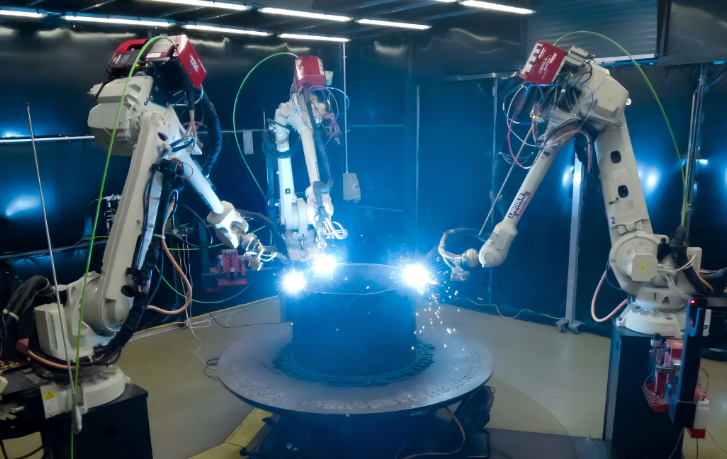
High-performance polymer printing from 3D System Certified Shops can also be combined with metal (directed energy deposition) at the upgradedbureau and both methods will offer full service AM centre. This binary potential serves to create a light weight polymer structure or a heavy weight metal part for rugged industial application. The facility is anything but your average print shop and offers a Machining and Post-processing Bureau that has been equipped with the very best in precision to finish parts up to even the most demanding standards which can be crucial across industries like these where tolerances and surface finishes can mean everything.
We are very proud to have this functionality, which is so important in the automotive, construction and textile industries on the continent of Eastern Europe, Bruno Caetano, executive manager business for SENAI CIMATEC said. “The expansion of the Additive Manufacturing Bureau generates gains for the industry, such as reduced inventory costs, shorter lead time, greater production flexibility and advances in sustainability. The initiative expands the capacity to serve research, development, and Innovation projects, with more agile solutions aligned with the real demands of the productive sector, in addition to strengthening the training of professionals specialized in industrial 3D printing.”
Theexpansion follows the rapid growth of Brazil’s 3D printing market beyond prototyping now fulfilling a niche for industry markets such as oil and gas, aerospace, health and automotive. Meanwhile, the country’s AM ecosystem today is rich in primecompanies that can be numbered Farcco Tecnologia, Cliev er orTrideo as well as numerous start-ups and corner-shop service providers. The SENAICIMATEC extension assures greater competitiveness to Brazil in that job, since it provides a today centralized high preforming infrastructure that can deal with either national or international projects.
The Petrobras partnership is one ofa blossoming trend in industrial partnerships around using additive manufacturing for mission-critical work. In addition, metallic DED is a game changer in the industry of oiland gas. Valves, flanges and heat exchangers which took months to make are now made in weeks and repairs which were impossible to make on site using traditional methods may be repaired down shop or on decks. Local production networks also shave logistics costs and the carbon footprint of supply chains, something that’s important for Petrobras as it develops sustainability programs.
The bureaufurther deepens its technical expertise through collaborations with technologyleaders such as ZEISS. In laser based AM, process parameters including material recyclability, powder aging and defect control are the focus area of RJPs. These steps have been established to preserve critical oil and gas assets from corrosive processenvironments above and below ground.
A second opportunity is to be more active indriving the digitization of spare parts, as we are doing through partnershipswe have established with players like Spare Parts 3D in Brazil, whichhave allowed Brazilian companies to dissect and begin digitizing their spareparts inventory so they can build strong business cases for manufacturing a fullrange of parts additively — reducing delivery times from potential six monthsto just weeks. It’s mixing digital workflows with physical production, bridging the gap to Industry 4.0 – and knocking a few carbon points off by producing locally.
The bureau’s infrastructure addresses what has perhaps been one of the most resistant challenges in metal 3D printing, post-processing. Hand-finishing intricate metal parts can be time-consuming, inconsistent and itself can be an expensive process to scale. Using its sophisticated machining and post processing processes, SENAI CIMATEC is also set up to apply emerging automation technologies–robotic SVAs with machine vision, for example–providing repeatable quality, tighter tolerance and safer working conditions. This is feature that creates a production increase by adding more parts without loss in qualityor as part function.
Round table discussions, visits to plants and companies and business matchmaking between high technology players also took place during the expansion event. Guests took a walk around the additive manufacturing, reverse engineering and machine shops togeta feel of how deep these capabilities run in the facility. For Brazilian manufacturing decision-makers, the bureau has long been the nation’s go-to benchmark in additive production capacity and offered an end-to-end solution from design and prototypingto production to finishing.