Robots Folding Laundry, Investors Printing Billions

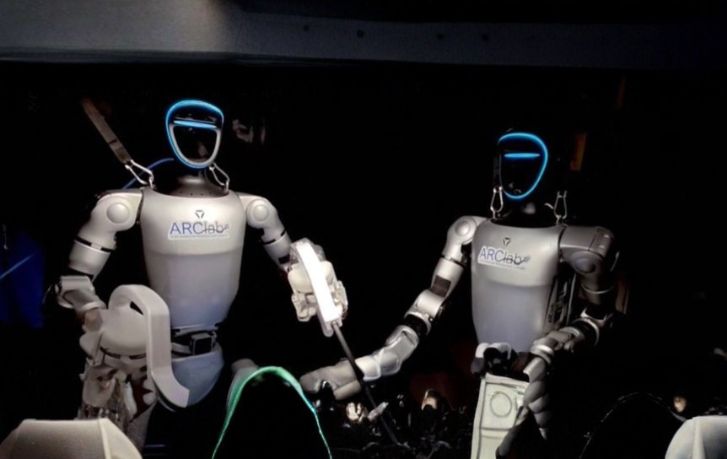
A robot displaying its capability to carefully fold shirts in a window display in a clothes-laundry store in Mountain View, California, at the Humanoids Summit, caught the attention of passersby. Meanwhile, inside the conference venue, humanoid robots demonstrated their capabilities with regards to various chores up to theme park hosting. But what was unfolding in this scene was not merely entertainment, since what was really taking place involved venture capital investment in humanoid robots in California.
1. Venture Capital’s Humanoid Frenzy
By 2025, investments made in U.S. humanoid robotics startups rose exorbitantly to nearly $2.8 billion, a dramatic jump from $42.6 million recorded in 2020. California-based startups alone-pocketed close to $1.6 billion. This further establishes California as the major player concerning humanoid robotics. FIGURAI, with robots capable of aiding with domestic chores, has crossed the $1 billion mark with a valuation of $39 billion. This also highlights the general mood of the funding in the robotics field. In the first six months of 2025, over $6 billion has been raised by robotics startups worldwide.
2. Expanding Applications Beyond the Lab
Humanoid robots are moving from research-based models to operational models. California-based startups such as Weave Robotics are starting to install laundry-folding machines in laundry facilities, and Agility Robotics’ Digit is lifting up to 35 pounds in warehouses for customers including Amazon. In the area of entertainment, Disney is launching autonomous Olaf figures. Start-up companies such as Foundation are developing humanoid models that are combat-ready and plan on producing 50,000 units of the models by 2027.
3. Technical Breakthroughs in Components
Technological improvements in components of robots are making the possibility of advanced humanoids a reality. Researchers from Johns Hopkins University have developed a hybrid hand designed for a prosthetic that replicates the sensation of human touch with a high accuracy rate of 99.69 percent. This technology not only aims to help patients with a new prosthesis but also improves the dexterity of humanoids to perform delicate tasks regarding glassware and textiles.
4. Market Forecasts and Adoption Timelines
Morgan Stanley estimates that the potential market for humanoids may be $5 trillion by the year 2050 and may double the entire automobile industry. Bank of America predicts a mass-market uptake from the year 2028 and may attain an average monthly sale of 1 million units by the year 2030. By the year 2060, world sales may attain an average of 3 billion units. The cost may come down to $50,000 by the year 2050 from $200,000 in the year 2024.
5. Investor Strategies and Key Players
Large VCs such as Sequoia Capital, Andreessen Horowitz, and Lightspeed are investing in humanoid projects, along with corporate investors like Nvidia’s NVentures and the Industrial Innovation Fund from Amazon. Component makers are also being targeted, with the “Humanoid Tech 25” list by Morgan Stanley featuring companies such as Nvidia, Samsung, AMD, and lidar company Hesai Technologies. Strategic investments have also been in companies like Synopsys, an AI chip designer that was just invested in by Nvidia for $2 billion.
6. Skepticism and Technical Limitations
Despite the optimism, experts caution that humanoids remain far from matching human versatility. Gartner’s Bill Ray notes, “They’re impractical. They are limited in functionality. They’re not nearly as clever as they demo.” Many current models rely on pre-programmed movements or human teleoperation. Safety, privacy, and public acceptance also pose hurdles, with surveys showing consumers split on having human-sized robots in their homes.
7. Global Competition and Supply Chain Dynamics
China is aggressively pursuing humanoid leadership, backed by over $10 billion in government funding and a self-sufficient supply chain. By 2050, it is expected to have 302 million humanoids in use, compared to 77.7 million in the U.S. Chinese firms like Galbot have raised hundreds of millions, while domestic component makers refine actuators, sensors, and AI algorithms to close performance gaps with Western counterparts.
8. Consumer Insights and Design Preferences
A survey of 1,000 U.S. consumers found 65% interested in owning a home robot, but 69% unwilling to pay more than $5,000—far below current price points. Softer, less imposing humanoid designs tested better than taller, more mechanical forms like Tesla’s Optimus. Desired functions skew toward practical chores: cleaning, laundry, cooking, and security. Comfort levels are evenly split, with safety and privacy as top concerns.
9. Logistics and Industrial Integration
The Apptronik Apollo robot is an example of how the industry can adopt technology. The purpose of the Apptronik Apollo was to serve side by side with humans in a warehouse environment. The humanoid design makes it easy for the robot to coexist in an environment designed for humans without having to redesign the space, which could prove to be expensive. The Apptronik Apollo has advanced force control to make it safe to use in an environment where humans and robots can coexist in order to
Perhaps no aspect delighted the crowds at Humanoid Summit meetings like the laundry-folding robots, but for investors and those in the know, these represent not only a rapidly developing area of technology, because of billions of dollars in new money and innovative advances, but a transition area for humanity poised to move from speculation to practicality. But not without challenges.